Long-Term Safety
Proper reduction prevents the hazardous, weak regrowth associated with bad lopping.
Safe, compliant canopy reduction and tree management.
Providing intelligent tree height management in Battery Point and Sandy Bay.
If your trees have outgrown their space, our Tree Lopping Battery Point service provides a professional alternative to manage height and spread.
Battery Point's gardens were planted a century ago. Many trees are simply too large for modern block sizes. We manage that conflict with expert arborist techniques, not chainsaws and guesswork.
Proper reduction prevents the hazardous, weak regrowth associated with bad lopping.
Your trees will look natural and balanced, retaining their architectural value.
Doing it right the first time avoids the constant, expensive maintenance lopped trees require.
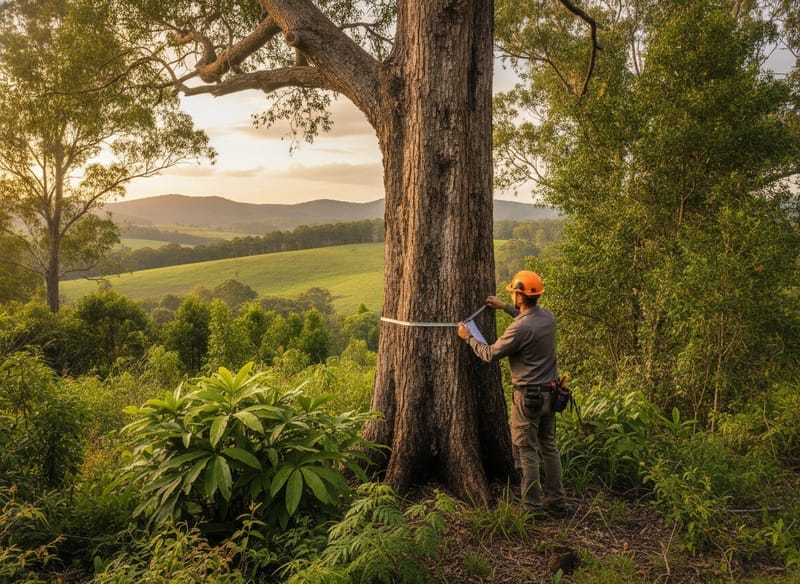
We discuss your goals—whether it's more light, better views, or safety.
We recommend the best AS4373-compliant method to achieve your goals without killing the tree.
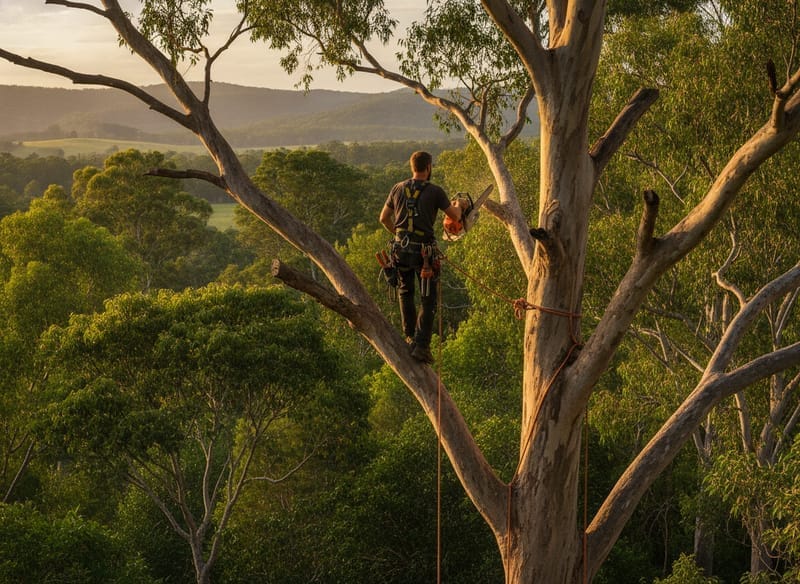
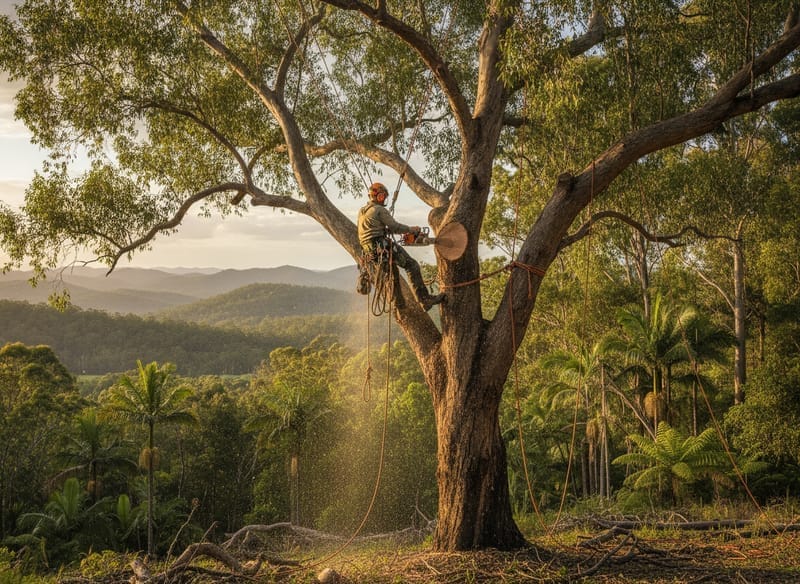
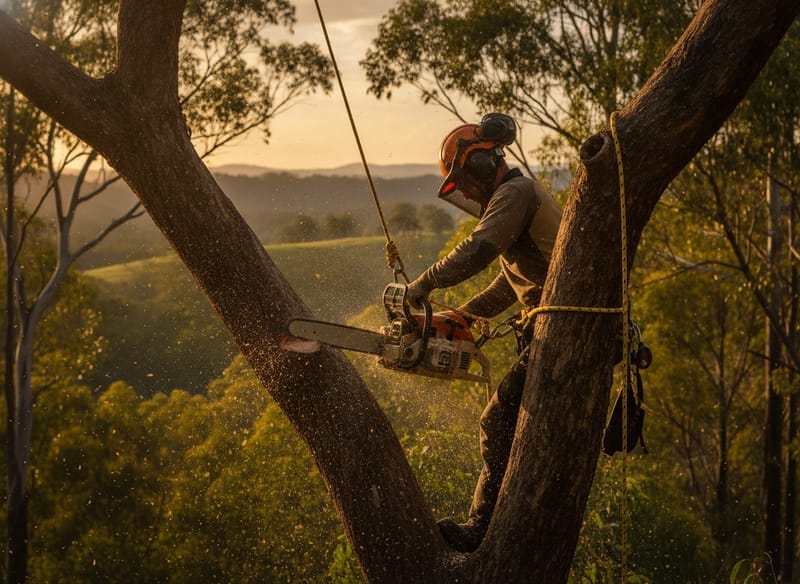
Our team climbs and carefully reduces the canopy to appropriate growth points.
All branches and debris are chipped and removed.
When historic gardens meet tightly packed streets, maintaining your mature canopy safely requires professional tree lopping Battery Point locals can rely on. Our team at Hobart Arborist understands the unique challenges of managing heritage oaks, elms, and established eucalypts in this iconic, densely built suburb.
Whether your mature canopy is blocking harbour views, dropping heavy limbs over your roof, or catching the fierce westerly winds that roll off kunanyi / Mount Wellington, we provide safe, targeted reductions. Many homeowners ask us to simply "chop the top off" a problem tree, but true professional lopping—technically known as crown reduction or targeted pruning—requires a careful, qualified hand.
We focus on reducing the size and spread of your trees while maintaining their structural integrity. By taking a tailored, code-compliant approach, we ensure your property remains safe, your sunlight is restored, and your garden stays aligned with local heritage protections.
We see it all too often across the inner suburbs and Sandy Bay: large, beautiful trees that have been severely "topped" or poorly lopped by under-qualified operators. Taking a chainsaw and arbitrarily hacking branches off a trunk leaves large, jagged stubs. This aggressive practice, which is strictly discouraged under Australian Standard AS4373, creates a cascade of long-term structural and health failures for the tree.
When a tree is topped, it reacts in panic by rapidly pushing out weak, epicormic shoots to replace its lost foliage and generate energy. These new shoots are weakly attached to outer layers of decaying wood rather than the solid heartwood. As they grow heavy, they become a major hazard. The next major westerly wind event could easily snap these poorly attached branches, sending them crashing onto your 1880s roofline, a neighbour's fence, or parked cars.
Furthermore, poor lopping drastically shortens a tree's lifespan by introducing rot and decay into the main trunk, ultimately ruining the aesthetic of a heritage property.
Our approach is entirely different. When you contact us to reduce a tree, we use AS4373-compliant crown reduction and selective pruning techniques. Instead of leaving ugly, dying stubs, our climbers cut back to appropriate branch collars. This allows the tree to heal correctly, limits the spread of decay, and results in a stronger, smaller, and vastly more attractive canopy. We solve your clearance or size issues permanently, without creating a dangerous hazard down the track.
While many residents ask for "lopping" to make a tree smaller or clear a view, our qualified arborists achieve these goals using specific, AS4373-compliant reduction techniques that protect the tree.
We reduce the overall height and spread of the canopy by selectively cutting back leader branches to lateral growth points. This safely reduces wind load and overall size while preserving the tree's natural shape, completely avoiding the destructive practice of topping.
For trees with heavy lower limbs encroaching on pathways, narrow driveways, or heritage homes, we carefully remove the lowest branches. This provides essential vertical clearance for pedestrians and vehicles without compromising the upper canopy structure.
If your goal is to let more winter light into your property or reduce wind resistance during storms, we selectively remove secondary branches within the canopy. This maintains the tree's height but makes it significantly more permeable to wind and sunlight.
We target specific problem limbs that are rubbing against rooflines, chimneys, or service wires. This precision work resolves immediate safety hazards and property damage risks while leaving the remainder of the healthy tree completely intact.
Following severe storm damage, windthrow, or heavy snow loads from the mountain, we perform urgent, strategic height reductions to stabilize compromised trees. This ensures immediate site safety before a final removal or recovery plan is executed.
We have refined our canopy reduction process to ensure absolute safety and minimal disruption to your home, garden, and neighbours. Here is how our team manages your project from the first phone call to the final cleanup.
Every reduction or clearance job our crews undertake complies fully with AS4373 - Pruning of Amenity Trees. Adhering strictly to this standard ensures your tree remains structurally sound, disease-resistant, and legally compliant with council regulations.
Our operations are led by AQF Level 3 climbing arborists, trained in advanced rope access and complex rigging—skills that are non-negotiable for the tight-access blocks common in our historic suburbs. We are fully public liability insured and carry comprehensive WorkCover for our entire team. From setting up traffic management on narrow, winding streets to utilizing Elevating Work Platforms (EWPs) where access permits, our rigorous safety protocols protect your property, the public, and our climbers at all times.
Operating in this historic maritime village requires strict adherence to the Tasmanian Planning Scheme - Hobart. Many mature oaks, macrocarpa, and elms here are protected under the Local Historic Heritage Code or explicitly listed on the City of Hobart Significant Tree Register. While minor pruning for health is often exempt, aggressive lopping or significant crown reduction on a listed tree usually triggers the need for a discretionary permit and an accompanying arborist report.
Beyond council tape, the physical environment dictates exactly how we work. Terraced gardens, 1880s architecture, and blocks with zero rear vehicle access mean we rarely have the luxury of parking an elevated work platform next to the tree. Instead, our climbers rely on rope access and highly technical rigging to navigate tight spaces safely.
We frequently manage Tasmanian blue gums and peppermint eucalypts on the steeper fringes, strategically reducing their wind sail. This protects properties from the fierce winter westerlies that funnel off Mount Wellington, all while preserving the historic and highly valued character of the suburb.
After a significant crown reduction, your tree will require a brief recovery period. We recommend maintaining regular, deep watering during dry summer months to help the root system support the newly pruned canopy and reduce environmental stress.
Keep an eye out for the development of any rapid, clustered shoots along the main trunk or major branches. While our AS4373-compliant cuts heavily minimize this reaction, some vigorous species may still produce minor epicormic growth. Do not attempt to trim these high shoots yourself. We suggest scheduling a brief visual inspection with our team every two to three years to ensure the canopy is maintaining its new form safely, allowing us to manage any minor clearance issues before they become major structural hazards.
Pricing for height management depends on the scope and tree species.
We provide honest advice and free quotes for all tree reduction works.
Managing tree height safely across the inner city.
Contact us for professional canopy reduction in Battery Point.
Get a Free Quote