Reduced Risk
Lower the height and weight of hazardous trees without creating weak, dangerous epicormic growth.
Safe height reduction and canopy management. We solve overgrown tree problems with methods that ensure long-term stability.
Providing expert canopy management across Dynnyrne and the Hobart western shore.
If your trees have outgrown their space, you might be looking for Tree Lopping in Dynnyrne. As qualified arborists, we address overgrown trees using targeted reduction techniques that achieve your goals without creating a future hazard.
Many older gardens in Dynnyrne feature massive oaks and macrocarpa that were lopped decades ago. This creates weak, heavy regrowth that fails easily in winter storms. We can safely manage or remove these legacy issues.
Lower the height and weight of hazardous trees without creating weak, dangerous epicormic growth.
Keep branches safely away from your roof, chimney, and powerlines.
Avoid council fines by using approved pruning techniques rather than prohibited lopping on heritage trees.
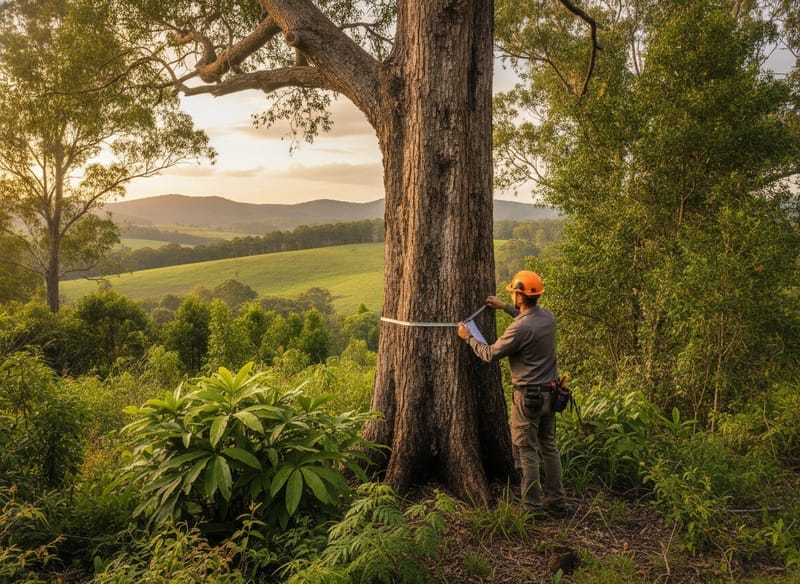
We inspect the overgrown tree and determine the safest way to reduce its size.
We recommend either crown reduction, targeted pruning, or full removal.
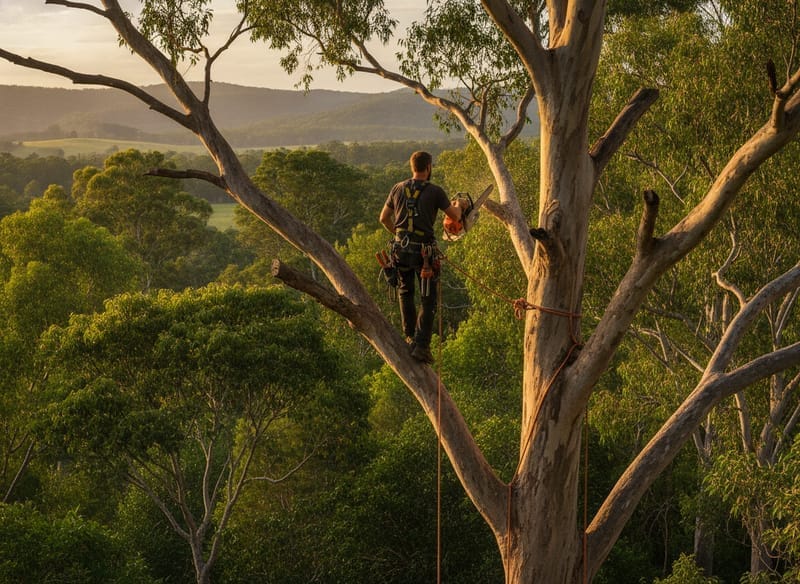
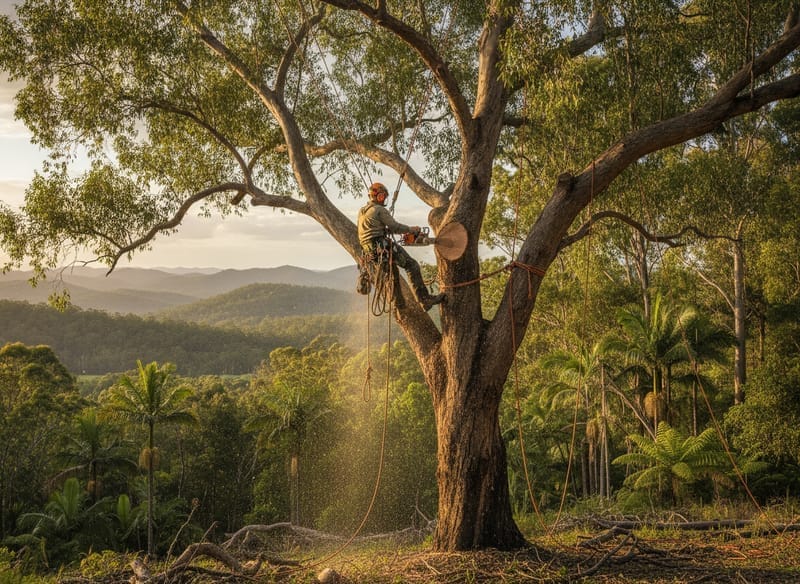
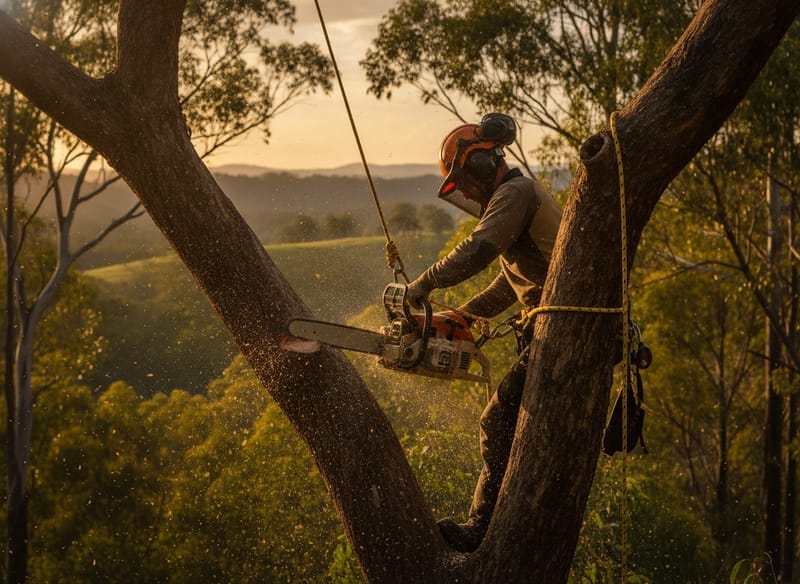
Our climbers carefully reduce the canopy to appropriate growth points.
All cut branches are chipped and removed from your property.
Looking for professional Tree Lopping Dynnyrne? You are not alone. Many homeowners and property managers in our beautiful foothills often look up to find that a towering eucalypt or sprawling garden elm has simply outgrown its space. Whether it is encroaching on your roofline, blocking essential winter sunlight, or creating a hazard during the fierce westerly winds that sweep off kunanyi / Mount Wellington, managing canopy size is a crucial part of property maintenance in our area.
Here in Dynnyrne, steep terrain and terraced gardens mean that bringing a tree's size down requires precise, highly skilled work. As your local Hobart arborists, our team understands that what you actually need is a safe, effective way to reduce the tree's profile without destroying its health or creating future risks. We provide expert canopy management designed to fit the unique landscape of the slopes, protecting both your home and the leafy character of our local streets.
It is a common misconception that "lopping" simply means hacking the top off a tree to make it shorter. Unfortunately, under-qualified operators or enthusiastic DIYers often do exactly this. Indiscriminate topping cuts leave large, ugly stubs. Worse, these cuts strip the tree of its food-producing foliage, forcing it to push out rapid, weakly attached epicormic growth. In a suburb like Dynnyrne, where high winds are a regular winter occurrence, these poorly attached branches become dangerous windthrow hazards. Furthermore, large topping wounds invite rot and decay, significantly shortening the tree's life.
The solution is professional pruning aligned with the AS4373 Pruning of Amenity Trees standard. When you call us for Tree Lopping Dynnyrne, we use scientifically backed methods to achieve your goals.
Instead of butchering a tree, our climbers use targeted crown reduction and selective pruning. We make clean cuts at the branch collar, which allows the tree to heal naturally. This approach gives you the clearance, safety, and light penetration you need, while preserving the structural integrity of the tree. The result is a canopy that looks natural, resists storm damage, and will not require another desperate lopping job a year down the track.
When you request tree lopping, we assess your specific tree and apply the correct arboricultural technique to safely reduce its size or clear obstructions.
We carefully reduce the overall height and spread of a tree by cutting back to appropriate lateral branches. This retains a natural shape while making the tree smaller, ideal for large European trees like oaks or elms that have outgrown tight terraced gardens.
We remove the lower branches of the canopy to provide clearance for driveways, pedestrian paths, or under-canopy views. This is an excellent alternative to whole-tree lopping when you just need space beneath the tree.
We selectively remove secondary branches to reduce canopy density without changing the overall size of the tree. This allows winter sunlight to penetrate and drastically reduces wind resistance during Hobart's intense north-westerly fronts.
We target specific problem branches, such as a heavy Tasmanian blue gum limb extending dangerously over your roofline, without compromising the rest of the tree structure.
We shape young trees early in their life to encourage a strong, structurally sound scaffold, preventing the need for drastic corrective canopy reduction in the future.
Getting your trees safely reduced should not be a hassle. We have refined our process to make tree management in Dynnyrne as seamless as possible.
Tree work on the slopes of Dynnyrne carries inherent risks, which is why strict adherence to safety and compliance is non-negotiable. Our team operates strictly under AS4373 (Pruning of Amenity Trees) to ensure all cuts promote tree health and safety.
Every climber on our crew holds an AQF Level 3 in Arboriculture, giving them the technical expertise required for complex rope access and elevated work platform (EWP) operations. For properties requiring formal council applications, our consulting arborists hold AQF Level 5 qualifications to provide necessary arborist reports. Furthermore, our business is fully covered by comprehensive Public Liability insurance and WorkCover, giving you complete peace of mind while our trucks and crew are on your property.
Working in Dynnyrne requires a specific understanding of both the local environment and the Tasmanian Planning Scheme - Hobart. The suburb climbs the eastern foothills of kunanyi, meaning we regularly deal with shallow soils over dolerite and steep blocks with minimal rear access. Rope access and precision rigging are standard practice for our team here.
The local canopy is a mix of native dry sclerophyll eucalypts like white peppermint and stringybark, sitting alongside aging, majestic garden plantings like English oaks and elms. Under the Local Historic Heritage Code, any tree on the City of Hobart Significant Tree Register requires a permit for lopping or significant reduction. While everyday garden pruning is exempt, reducing a listed tree is not. Additionally, with the Landslip Hazard Code applying to many sloped blocks, our AQF Level 5 arborists can provide the necessary reporting to ensure your canopy reduction meets all local regulations.
After a professional crown reduction or selective prune, your tree will need a little time to adjust. We recommend ensuring the root zone is adequately watered during the drier summer months, as this helps the tree recover from the loss of foliage. Applying a layer of organic mulch over the root zone can also improve soil moisture retention on Dynnyrne's well-draining slopes.
Monitor the tree for the next year. If you notice any unusual dieback or sudden fungal growth at the base, give our team a call. A well-pruned tree generally will not need another major reduction for 3 to 5 years, keeping your property safe and manageable for the long term.
The cost depends on the tree's size, access, and the amount of reduction required.
We provide honest advice and free quotes to give you the best options for your overgrown trees.
We manage overgrown trees across Dynnyrne and the surrounding foothills.
Contact our expert team for safe, effective canopy reduction in Dynnyrne.
Get a Free Quote