Immediate Safety
Eliminate the crushing hazard of suspended limbs or uprooted trunks instantly.
Rapid response to dangerous, fallen, or storm-damaged trees threatening your home.
Immediate response for Glebe, Mount Stuart, and West Hobart.
Our Emergency Tree Removal Glebe service is designed to secure your property swiftly during high-stress situations.
Glebe's exposure to intense westerly winds often results in sudden limb failure in large, mature trees. Our local presence means we get there fast when the weather turns.
Eliminate the crushing hazard of suspended limbs or uprooted trunks instantly.
Stop a resting tree from breaching your roof cavity or collapsing a structural wall.
Get the documentation you need to process your storm damage claim quickly.
Call us 24/7. We will assess the situation over the phone and dispatch a crew immediately if required.
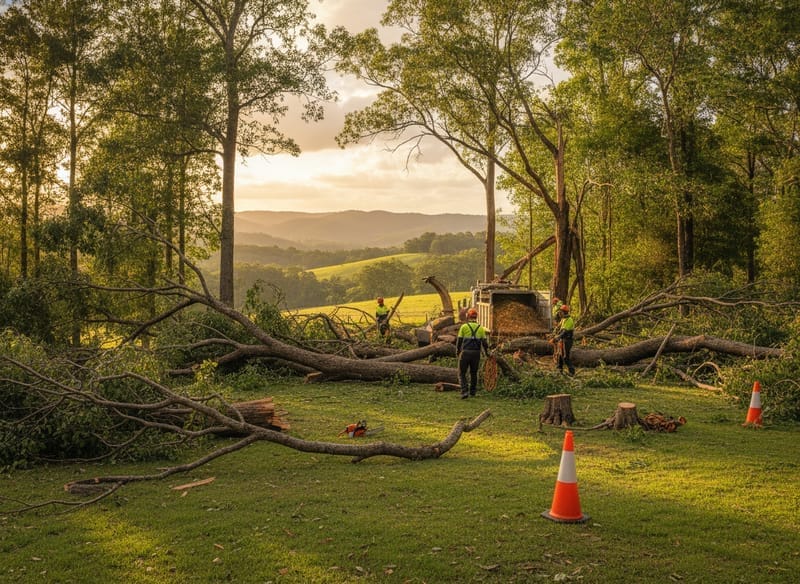
Upon arrival, we secure the perimeter and assess the fastest, safest way to remove the hazard.
Using chainsaws, rigging, and EWPs, we lift or cut the tree away from structures.
We take photos and provide a written summary to justify the emergency exemption for Hobart Council and your insurer.
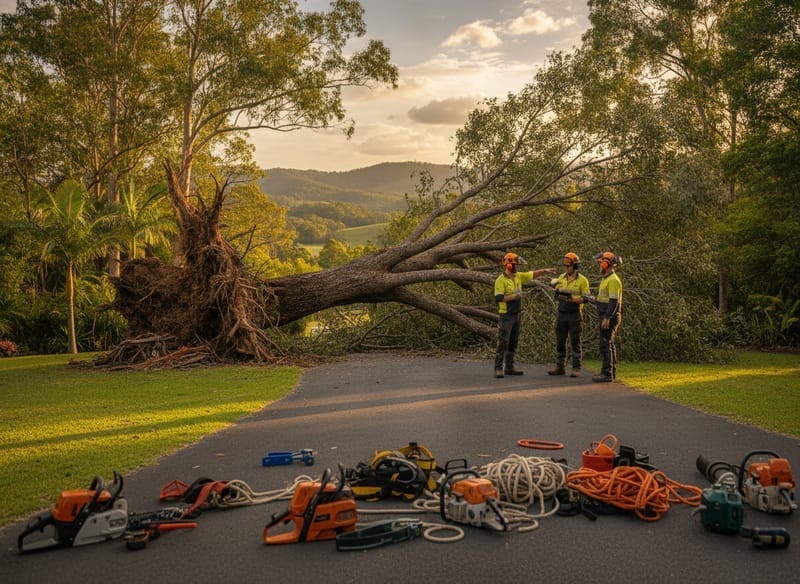
When severe westerly winds whip down from kunanyi / Mount Wellington or sudden winter squalls hit the Derwent, mature trees can become immediate and unpredictable hazards. If you are facing a massive fallen branch on your roof, a partially uprooted eucalypt, or a cracked trunk leaning dangerously toward your home, fast and professional intervention is critical. Our team at Hobart Arborist provides the dedicated Emergency Tree Removal Glebe residents can rely on 24 hours a day, 7 days a week.
We understand the unique pressures of this area, from historic properties with established European garden plantings like oak and elm, to steep hillside blocks dominated by heavy Tasmanian blue gums and white peppermints. When a tree fails, you need a local, highly qualified team equipped with the right gear. From rope-access climbers to crane-assisted dismantling, our crews arrive ready to secure your property, mitigate further damage, and ensure your family's safety without delay.
Dealing with an unstable, storm-damaged, or fallen tree is arguably the most dangerous aspect of arboriculture. Attempting a DIY cleanup or hiring under-qualified operators for an emergency tree removal can lead to catastrophic property damage, severe injury, or worse. Tension wood, unpredictable weight distribution, and trapped branches can cause chainsaws to violently kick back or entire tree sections to snap without warning.
Furthermore, storm-damaged trees often rest on fragile structures like roofs, brick fences, or active powerlines. An inexperienced operator can easily misjudge a cut, sending tonnes of timber crashing through your living room. There is also the critical issue of insurance. If a 'cheap tradie' damages your property and lacks proper public liability cover, you will be left footing an enormous bill.
The solution is bringing in our AQF-qualified climbing arborists. We apply strict industry safety standards to every emergency scenario. Using advanced rigging, load-calculation techniques, and crane-assisted lifts when necessary, our team systematically dismantles the hazard. We know exactly how to relieve tension in trapped limbs and lower heavy timber safely to the ground. By choosing Hobart Arborist, you guarantee that the job is executed flawlessly, keeping your property safe while fully documenting the site for your home insurance claims.
Every storm-damaged or imminently failing tree presents a unique puzzle, especially on the narrow streets and steep slopes common throughout Hobart. Our team utilises a range of specialised techniques and heavy machinery to safely extract dangerous trees from even the tightest residential blocks.
On steep terrain or when a tree has fallen directly onto a roof, traditional felling is impossible. We use mobile cranes to take the weight of massive timber sections before making the cut. This zero-impact method lifts the tree off your structure piece by piece, bypassing terraced gardens and ensuring no further structural damage occurs to your property.
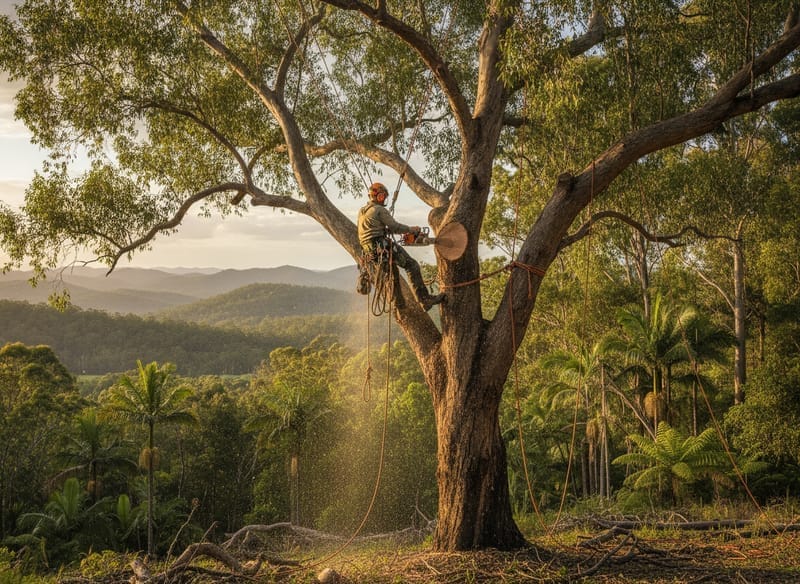
For tight hillside blocks lacking vehicle access, our AQF Level 3 climbing arborists deploy double-rope techniques and advanced friction-device rigging. We scale the remaining safe structure of the tree—or adjacent stable trees—to systematically rig and lower dangerous limbs to a designated drop zone, avoiding your house, outbuildings, and delicate landscaping.
When a tree is too structurally compromised to safely climb (such as a split trunk or severe root failure in saturated soil), we utilise cherry pickers and spider lifts. These machines give our operators secure, isolated access to the canopy, allowing us to safely dismantle shattered manna gums and storm-damaged elms without placing a climber at risk.
Once the hazard is on the ground, we rapidly process the timber using high-capacity 12-inch wood chippers, ground saws (including MS500i and 572XP), and skid steers. We remove all debris in our tipper trucks, leaving your driveway and yard clean so repair contractors and insurance assessors can immediately access the site.
When disaster strikes and you require Emergency Tree Removal Glebe wide, our process is designed for speed, uncompromised safety, and seamless integration with your home insurance provider.
Step 1: Immediate Contact & Triage When you call us for an emergency response, we rapidly assess the severity of the situation over the phone. If a tree is resting on your house, blocking vital access, or threatening powerlines, we prioritise your property for an immediate make-safe deployment.
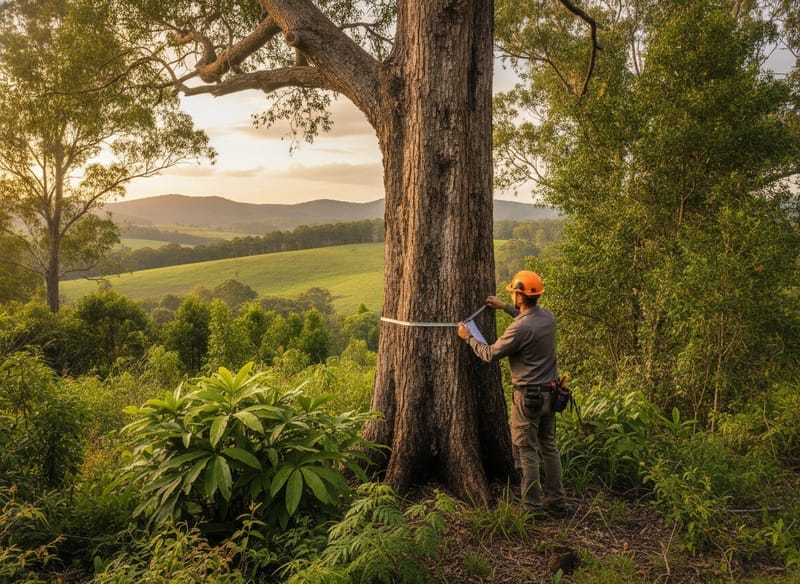
Step 2: On-Site Hazard Assessment Upon arrival, our senior arborist conducts a rapid risk assessment. We evaluate the tree's structural integrity, identify dangerous tension points, and isolate the hazard zone. We take detailed 'before' photographs to support your insurance claim and council exemption requirements.
Step 3: Make-Safe and Dismantle Our primary goal is stabilising the site. Using cranes, EWPs, or rope access, our team carefully lifts and cuts away the sections of the tree that are impacting your home or posing an immediate lethal threat. We systematically lower the remaining compromised timber.
Step 4: Cleanup and Reporting Once the tree is safely dismantled, we chip the branches, load out the heavy logs, and tidy the site. We then provide you with a fully itemised invoice and an arborist's statement detailing the emergency nature of the work, streamlining your insurance claim and Council compliance.
Safety and compliance are at the absolute forefront of our emergency response. We hold full public liability and WorkCover insurance, ensuring absolute protection for you and your property. Our crews operate strictly under Australian WHS standards, holding current Working at Heights, EWP, and First Aid certifications.
Under the Tasmanian Planning Scheme - Hobart, removing a tree on the Significant Tree Register normally requires a permit. However, standing exemptions apply for an unacceptable safety risk or vegetation immediately damaging a building. As qualified arborists, we assess the site, execute the make-safe removal, and provide the essential written assessment and photo documentation required by the City of Hobart to prove the tree was an imminent hazard, keeping you entirely compliant.
Glebe and the surrounding Hobart suburbs present unique challenges for emergency arboriculture. The local terrain sits on the eastern foothills of kunanyi / Mount Wellington, featuring steep inclines, shallow soils over dolerite, and terraced blocks with incredibly difficult access. During winter westerlies and intense storm systems, shallow-rooted species can fail abruptly in saturated ground.
We frequently handle emergency callouts for mature European garden plantings, such as heavy oaks and elms that have dropped significant limbs over historic homes, as well as native Tasmanian blue gums and silver peppermints that have suffered complete root-plate failure. The City of Hobart protects trees primarily through its Local Historic Heritage Code and the Significant Tree Register. Because Glebe has numerous heritage precincts, everyday tree removal requires complex applications. However, in an emergency where a listed tree has failed or poses a lethal threat, our AQF-qualified team handles the immediate make-safe removal and supplies the required written evidence to satisfy local council requirements without delaying your safety.
After an emergency tree removal, your property may require some follow-up attention. First, check your roof, gutters, and fencing for any hidden structural damage once the timber has been cleared, and coordinate with your insurer using our provided documentation.
If the emergency involved a snapped trunk or uprooted root ball, we often return once the site is completely stable to perform comprehensive stump grinding. Additionally, heavy winds that brought down one tree may have severely compromised others nearby. We highly recommend booking our AQF Level 5 consulting arborist to inspect your remaining mature eucalypts or heritage garden trees for hidden fractures or root heave, ensuring your property is fully secure before the next storm hits.
Emergency Tree Removal Glebe involves higher risk and rapid deployment. We provide clear pricing upfront.
Call immediately for urgent rates and rapid deployment.
Rapid emergency response available across Glebe and the inner Hobart foothills.
Call our 24/7 rapid response team now to make your Glebe property safe.
Call 0400 000 000 Now