Restored Access
Quickly unblock your driveway or pathways so life can return to normal.
Efficient, safe cleanup of fallen trees and broken branches following Hobart's severe weather events.
Post-storm recovery across Glebe and the Derwent foothills.
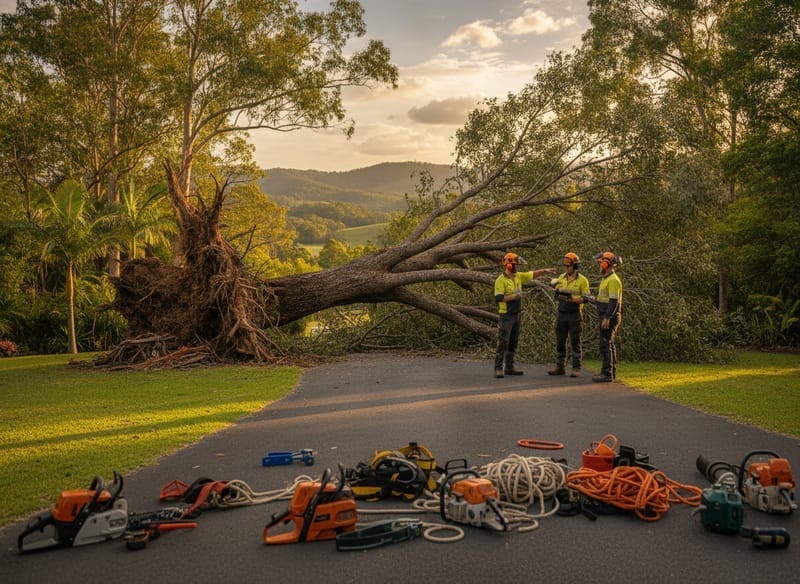
Our Storm Damage Tree Removal Glebe service tackles the heavy lifting of post-storm recovery.
Glebe's established gardens feature massive heritage trees that can shed huge limbs during north-westerly fronts. We have the woodchippers and trucks to handle massive volumes of green waste fast.
Quickly unblock your driveway or pathways so life can return to normal.
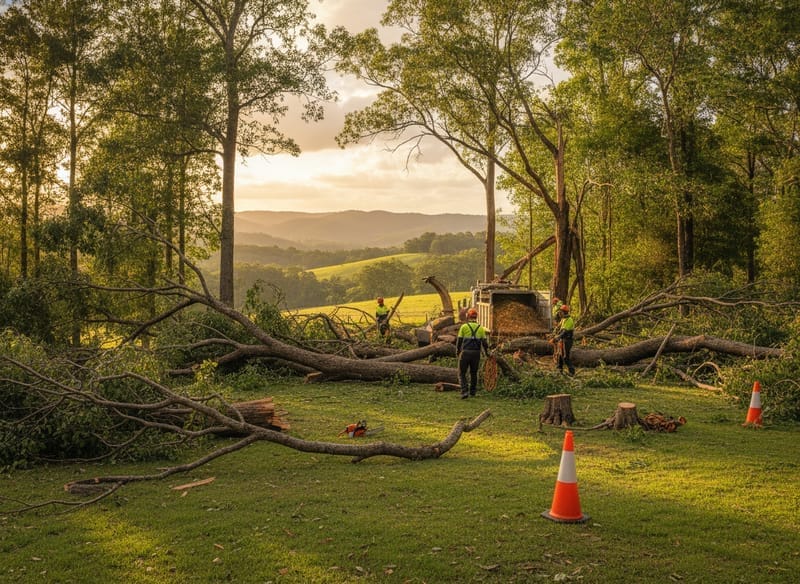
We rake and clear the site, turning storm chaos back into a manageable garden.
Identifying and pruning weakened branches prevents secondary failures days after the storm.
We identify all hazards, including tensioned branches and unstable root plates.
We first remove debris blocking access or resting on fences and structures.
All foliage is fed into our heavy-duty chippers, and large logs are cut and hauled away.
We visually inspect the remaining canopy to ensure no dangerous widow-makers are left hanging.
When fierce westerly frontal systems sweep across Hobart, mature trees often bear the brunt of the weather. For local residents, fast and reliable Storm Damage Tree Removal Glebe is essential to protect homes, clear access, and restore safety. Glebe's elevated position, steep terrain, and mix of historic European plantings and native eucalypts make it particularly vulnerable to limb failure and windthrow during severe weather events. The shallow soils over dolerite mean that saturated winter ground can easily lead to complete root plate failures.
Our team of qualified Hobart arborists understands the urgency of a post-storm emergency. Whether you are dealing with a Tasmanian blue gum that has dropped a massive limb over your driveway, or an old English oak that has suffered structural failure, we have the specialized equipment and local expertise to handle it. We respond quickly to make your property safe, working efficiently on Glebe's steep and narrow blocks to clear the hazard without causing further damage to your home or garden.
Storm-damaged trees behave unpredictably. When a tree is uprooted, twisted, or hung up in another canopy, the wood is placed under immense, unnatural tension and compression. Attempting DIY cleanup with a chainsaw is one of the most dangerous things a homeowner can do. One wrong cut on a tensioned limb can cause the branch to snap back with lethal force, or cause a partially fallen trunk to roll unexpectedly, causing catastrophic damage to underlying structures.
Beyond the physical danger, bringing in unqualified operators can jeopardize your insurance claims. Incomplete or incorrectly formatted quotes often delay approvals, leaving your property exposed to further weather damage. Insurers require professional, evidence-backed assessments before they authorize comprehensive removals.
Our professional arborists provide a completely different level of service. We approach every storm damage scenario with a strict risk assessment, utilising advanced rigging and elevated work platforms where necessary. Our climbers are trained to read tension wood and safely dismantle compromised canopies piece by piece. Furthermore, we provide detailed, itemised quotes with comprehensive photographic evidence, ensuring your insurer has exactly what they need to process your claim swiftly. We take the stress, delay, and danger out of post-storm recovery.
Dismantling a structurally compromised tree requires advanced arboricultural techniques. Our crews utilize specialized methods to safely process storm-damaged vegetation across Glebe's challenging terrain.
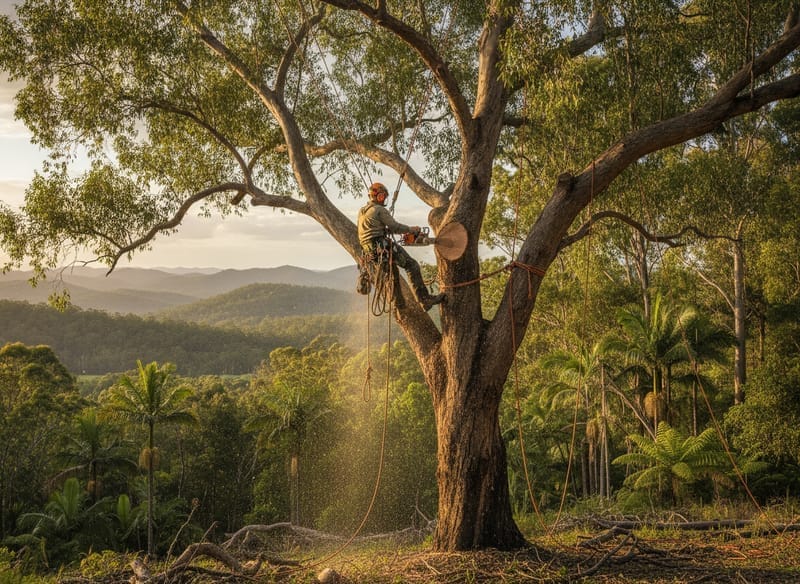
We prioritize hazards immediately upon arrival, deploying elevated work platforms (EWPs) or rope-access climbers to secure or safely remove immediate threats, such as hung-up limbs over roofs, powerlines, or driveways.
Our AQF Level 3 climbers use advanced chainsaw techniques to safely release tensioned wood. This prevents snap-backs and uncontrolled rolls on fallen or twisted trunks, protecting both the operator and the property.
For severely compromised trees on Glebe's narrow or steep blocks where traditional felling is impossible, we use crane rigging to lift heavy sections of timber safely over homes, heritage structures, and terraced gardens.
We utilize high-capacity 12-inch wood chippers and mini-loaders to process vast amounts of storm debris quickly, converting hazardous fallen branches into reusable mulch while efficiently clearing your property.
Recovering from severe weather requires a systematic, efficient approach. When you contact us for emergency tree work, we follow a strict process to secure your property safely and quickly.
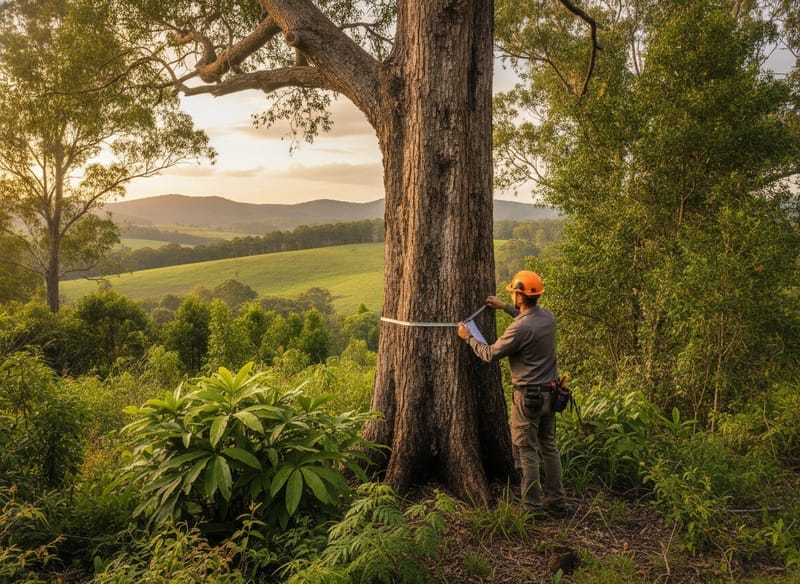
First, we conduct an immediate site triage. Our consulting arborists walk your property to identify the highest priority hazards, such as trees resting on roofs, blocking driveway access, or hung up in other canopies. We categorize the damage and then provide a comprehensive, itemised quote complete with photographic evidence, formatted specifically for your insurance provider to expedite the approval process.
Once authorized, our crews commence make-safe operations. We focus entirely on neutralizing the immediate danger, safely lowering broken limbs and stabilizing uprooted trunks. Because Glebe properties often feature terraced gardens, narrow heritage streets, and tight rear access, we deploy specialized rigging, spider lifts, or top-handle climbing saws to work within confined spaces without impacting surrounding structures.
Finally, we complete the full removal and cleanup. We process the heavy timber, chip the brush using 12-inch wood chippers, and can utilize self-propelled stump grinders to remove hazardous uprooted root plates if required. Before leaving, we rake the site completely clean, ensuring your property is safe, accessible, and ready for any secondary building repairs or landscaping work.
Safety and compliance are non-negotiable in emergency arboriculture. Our tree removal services strictly adhere to the Australian Standard AS4373 (Pruning of Amenity Trees) and AS4970 (Protection of Trees on Development Sites).
Every operator on our team holds the required AQF Level 3 Certificate in Arboriculture, alongside current Working at Heights and EWP tickets. We are fully covered by comprehensive public liability and WorkCover insurance, protecting your property and our staff during high-risk storm cleanup. When required for significant trees, our AQF Level 5 consulting arborists can provide the necessary hazard assessments to satisfy local authorities and insurers.
Glebe is known for its beautiful mix of historic streetscapes and native backdrops, but this brings specific challenges during the storm season. The cool temperate maritime climate and fierce westerly winds rolling off kunanyi / Mount Wellington regularly test the structural limits of aging English oaks, elms, and native white peppermints common to the area.
When dealing with Storm Damage Tree Removal Glebe, local planning regulations still apply. The City of Hobart protects many of these historic garden plantings and significant street trees through the Significant Tree Register and the Local Historic Heritage Code. Ordinarily, lopping or removing a listed tree requires a formal permit under the Tasmanian Planning Scheme, which can take time.
However, standing exemptions exist for trees that present an unacceptable safety risk. If a severe storm leaves a significant tree dead, dying, or immediately dangerous to people or property, our AQF Level 5 arborists can provide the required written statement to confirm the hazard. We handle the documentation and liaise with the council so you can focus on making your home safe without falling foul of local overlays or risking hefty fines.
Once the emergency is resolved, it is crucial to assess the surviving trees on your property. High winds can cause hidden micro-fractures in branches or partial root plate lifting that may not be immediately obvious.
We highly recommend scheduling a follow-up structural assessment for any large eucalypts or exotic shade trees that endured the storm. Formative pruning, deadwooding, and targeted weight reduction can significantly reduce wind resistance before the next westerly front hits. If you notice any new leans, soil cracking around the base, or hanging deadwood in the weeks following a weather event, call our team immediately for an inspection.
Pricing for Storm Damage Tree Removal Glebe depends on the scale of the cleanup.
Contact us for a prompt, transparent quote to clear your storm damage.
Providing post-storm cleanup services throughout Glebe and neighbouring Hobart suburbs.
Contact us to remove storm debris and secure your Glebe property today.
Request Storm Cleanup