Managed Size
Reduce the dominance of a large tree while maintaining a natural, attractive shape.
We provide structurally sound height reduction and pruning instead of damaging, outdated lopping practices.
Providing expert canopy care across Glebe and inner Hobart.
When customers ask for Tree Lopping Glebe, they usually want to manage an oversized tree. We deliver the results without the damage.
Glebe's mix of steep slopes and large heritage trees means poor lopping practices can quickly lead to dangerous limb failures in high winds.
Reduce the dominance of a large tree while maintaining a natural, attractive shape.
Avoid the structural failures that inevitably follow harsh lopping cuts.
Ensure your tree work doesn't trigger fines under the Hobart Planning Scheme.
We discuss why you want the tree lopped (e.g., shading, view blocking, fear of failure).
We recommend an AS4373-compliant pruning method or full removal to meet your goals.
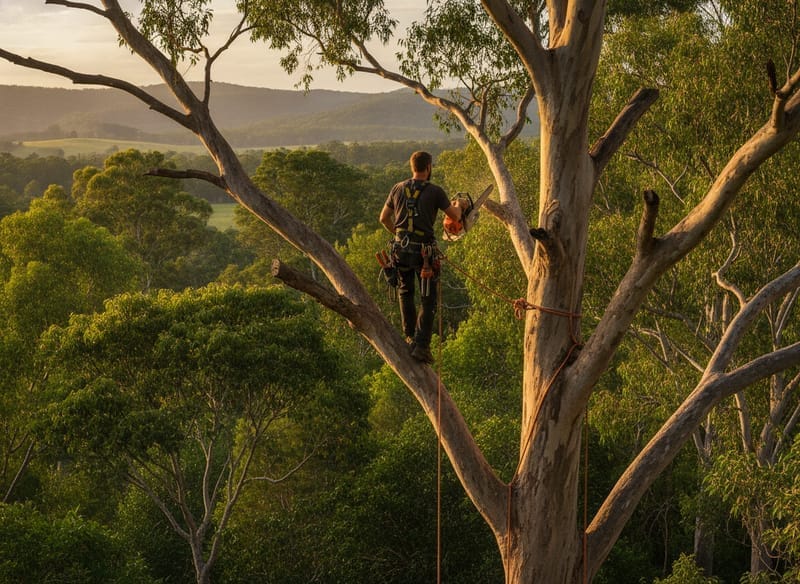
Our qualified climbers carefully reduce the canopy to appropriate growth points.
All foliage and timber are chipped and removed, leaving your yard clean.
Maintaining established trees on steep blocks and heritage gardens requires deep local expertise. When property owners need professional Tree Lopping Glebe, they rely on our experienced team at Hobart Arborist to deliver safe, effective, and compliant canopy management. Whether you are managing an oversized Tasmanian blue gum encroaching on your roofline, or maintaining historic oaks and elms that define our older suburbs, we provide tailored solutions that prioritise both property safety and long-term tree health.
Our climbers and ground crews understand the unique challenges of working in Glebe and the steep eastern foothills of kunanyi / Mount Wellington. From navigating narrow winding access roads and terraced gardens to dealing with the regular impact of destructive westerly winds, we know exactly what it takes to manage local canopies.
When you call us for tree lopping, you are getting fully insured, AQF-qualified arborists who combine high-level technical skill with a deep understanding of the City of Hobart's specific planning controls. We do not just hack trees; we manage them intelligently, ensuring your property looks pristine and remains secure year-round.
In strict horticultural terms, "lopping" refers to indiscriminate heading-back cuts that leave large stubs. When untrained operators or DIY enthusiasts hack away at a tree, the results are often disastrous. Hard topping removes too much foliage, stressing the tree and triggering a flush of weak, poorly attached epicormic regrowth. Over time, these stubs invite advanced decay, structurally compromising the tree and turning it into a major falling hazard during our fierce winter storm seasons.
However, we know that when clients ask our team for tree lopping, they usually just want their tree made smaller, shorter, or safer. Our solution is to apply proper, AS4373-compliant pruning techniques to achieve your goals without destroying the structural integrity of the plant.
Instead of butchering branches, our AQF Level 3 climbing arborists use targeted crown reduction, thinning, and selective pruning. We always cut to the branch collar, which allows the tree to compartmentalise and heal over the wound naturally. This approach ensures your Glebe property gets the clearance, light penetration, and safety you need, while extending the safe useful life of your valuable garden assets.
When you request tree lopping, we assess your specific site requirements and apply the correct AS4373-compliant technique. Here is how our arborists safely reduce and manage your trees in Hobart.
We carefully reduce the height or spread of the canopy by cutting branches back to a suitable growth point. This provides the size reduction clients want from lopping, but maintains the tree's natural shape and structural integrity.
Our climbers remove the lowest branches to create vertical clearance over driveways, footpaths, and roofs. This is ideal for properties in Glebe where overhanging branches obstruct narrow accessways or street frontages.
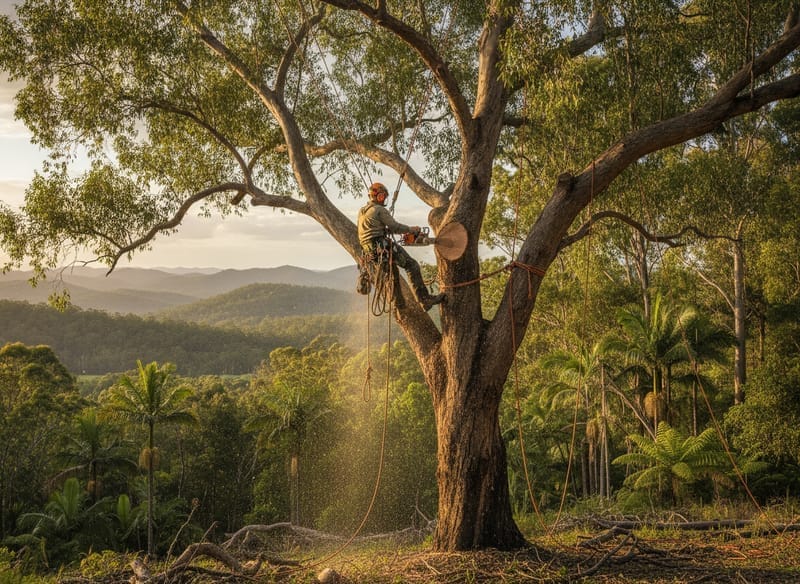
We target specific problem limbs that are encroaching on powerlines, rubbing against structures, or showing signs of defect. We safely dismantle these limbs using rope access techniques without impacting the rest of the canopy.
We selectively remove secondary and small live branches throughout the crown. This reduces wind resistance—crucial during Hobart's westerly gales—and allows more natural light to penetrate terraced gardens without altering the tree's overall dimensions.
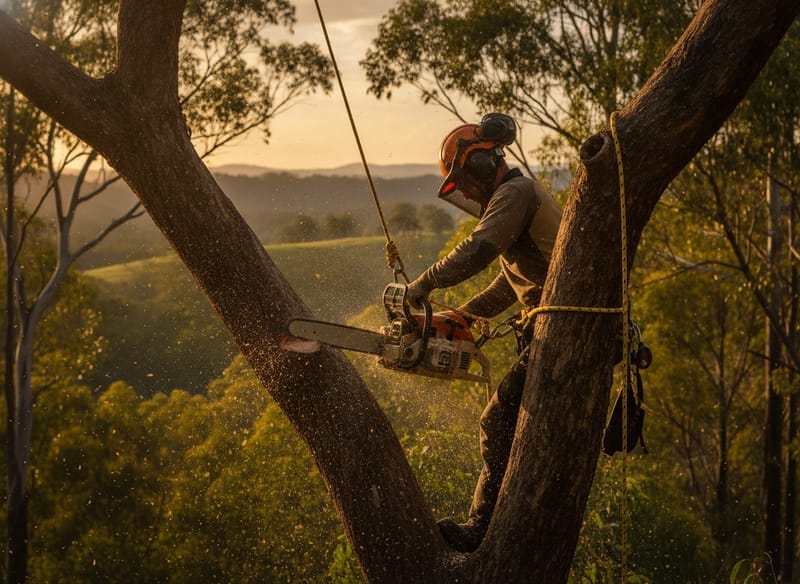
Following severe weather, we perform urgent reduction work to make damaged or uprooted trees safe. We use advanced friction rigging and top-handle chainsaws to safely dismantle hanging or fractured limbs before they cause property damage.
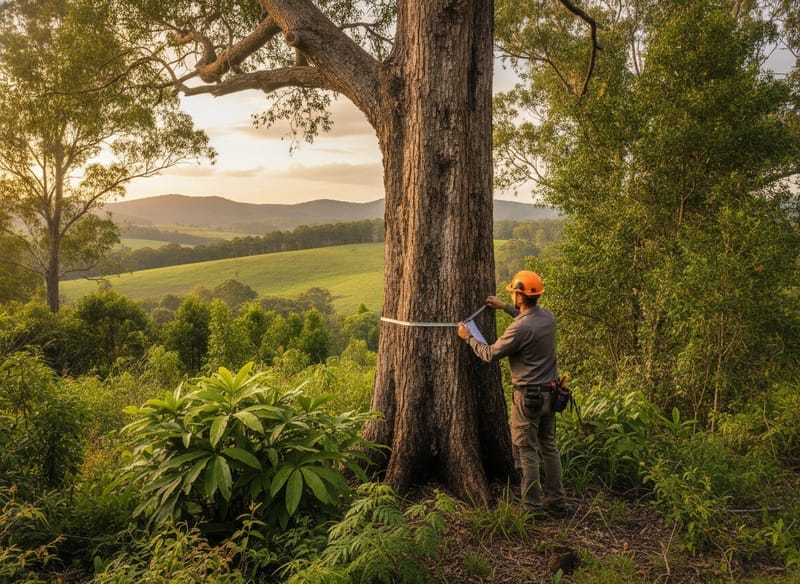
We have refined our tree lopping process to ensure minimal disruption to your property. Step one is a comprehensive on-site assessment. Our team will visit your Glebe property, evaluate the tree's health, and discuss your exact goals. We check if the tree is listed on the City of Hobart Significant Tree Register or sits within a local heritage precinct, advising upfront if a formal permit is required before any cutting begins.
Step two is providing a transparent, itemised quote. Once approved, we schedule the work. Step three is the execution. For steep, gully properties or blocks with no rear vehicle access, our AQF Level 3 arborists use advanced double-rope climbing techniques and friction rigging. We carefully lower heavy branches to the ground, completely avoiding damage to your home, retaining walls, and understory plants.
Step four is processing and clean-up. We use high-capacity wood chippers to process limbs on-site, turning the green waste into valuable mulch. Our tipper trucks remove all excess logs and debris, leaving your yard impeccably tidy. From the first cut with our top-handle climbing saws to the final sweep of your driveway, we handle the entire process seamlessly.
Every pruning and reduction job we undertake adheres strictly to AS4373 (Pruning of Amenity Trees). This ensures that all cuts are made accurately to the branch collar, preventing decay and promoting healthy structural growth. Safety is our primary focus when working on steep and challenging Hobart blocks.
Our business is fully insured with comprehensive public liability cover and WorkCover for all employees. Our crew holds all mandatory qualifications, including AQF Level 3 in Arboriculture, Working at Heights, First Aid, and specialised chainsaw operation tickets. When roadside work is required on the narrow, winding streets of Glebe, we implement formal traffic management plans to keep pedestrians, parked cars, and motorists entirely safe.
Executing Tree Lopping Glebe projects requires a deep understanding of the local environment and specific council regulations. Glebe and the surrounding foothills feature steep terrain, shallow soils over dolerite, and a unique mix of dry sclerophyll eucalypts—like white peppermint and Tasmanian blue gum—interspersed with historic European garden plantings.
Under the Tasmanian Planning Scheme - Hobart, everyday garden pruning is generally exempt. However, the Local Historic Heritage Code strictly regulates the lopping or removal of any tree on the City of Hobart Significant Tree Register, or those situated within heritage precincts. Pruning a listed tree purely to improve its health or appearance is allowed without a permit, provided its normal growth habit is not retarded. Hard reduction or destructive lopping is not permitted. Furthermore, the Landslip Hazard Code matters heavily on our sloped blocks. Our AQF Level 5 consulting arborists can provide the required written statements and reports if your project involves a significant tree, ensuring full compliance.
After we have completed your tree lopping and reduction work, the tree will need time to adjust. We highly recommend spreading the fresh mulch we leave behind over the tree's structural root zone to retain moisture, especially during Hobart's dry summer months. Keep the mulch pulled slightly away from the trunk to prevent collar rot and fungal infections.
Monitor the tree for any signs of stress or unusual epicormic growth. Depending on the species and its location, we recommend scheduling a follow-up canopy inspection every two to three years. You should also call our arborists immediately after any major westerly wind event to check for newly suspended limbs or structural cracks.
The cost of managing oversized trees depends on the volume of reduction and access.
Contact us for a free quote to safely manage your oversized trees.
We provide professional canopy management across Glebe and surrounding steep suburbs.
Contact us for professional, safe canopy reduction instead of harmful lopping.
Get a Free Assessment