Smooth DA Approvals
Avoid council delays with perfectly formatted, compliant documentation.
Comprehensive, council-compliant arborist reports by AQF Level 5 consultants.
Providing expert consulting across Lenah Valley and the City of Hobart.
When council demands a written statement from a suitably qualified person, you need a formal Arborist Report in Lenah Valley.
In Lenah Valley, tree work often triggers the Local Historic Heritage Code or sits within an established garden precinct. The City of Hobart is strict on protecting significant trees. We provide the mandatory AQF Level 5 reports needed to justify removals due to failing health, or to establish tree protection zones during construction on these tightly packed sites.
Avoid council delays with perfectly formatted, compliant documentation.
Have written, expert evidence for insurance or dispute matters.
Know the exact health and risk profile of the large trees on your property.
We discuss the purpose of the report (e.g., DA, safety, health).
Our AQF Level 5 arborist conducts a thorough on-site assessment of the trees.
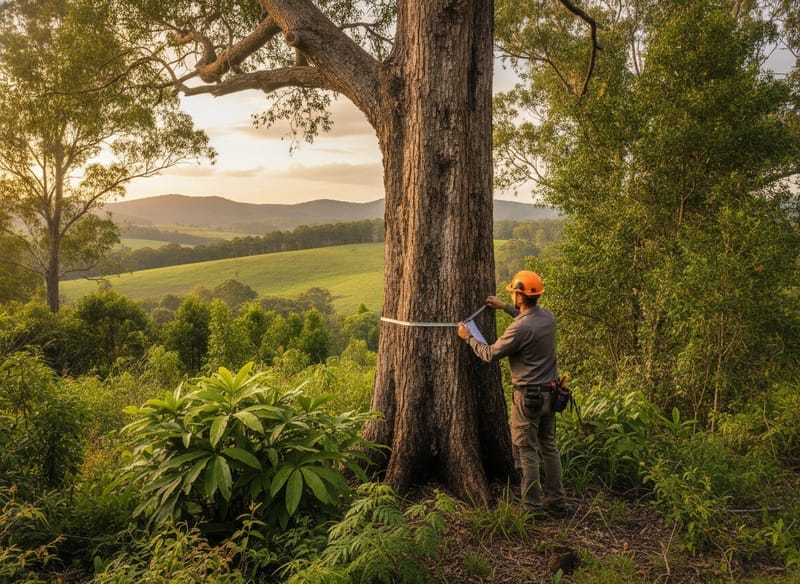
We measure DBH, canopy spread, health indicators, and identify structural faults.
A comprehensive written report is compiled referencing all relevant Australian Standards.
You receive a PDF copy ready for submission to the City of Hobart.
If you are planning a new build, managing a steep hillside block, or dealing with a hazardous significant tree in the foothills of kunanyi, securing a comprehensive Arborist Report Lenah Valley is the essential first step. Our AQF Level 5 consulting arborists provide the detailed, council-compliant documentation required by the City of Hobart to keep your project moving smoothly.
Whether you need a structural root mapping plan for a subdivision, a hazard assessment for a mature Tasmanian blue gum leaning precariously over your roofline, or formal justification for removing a protected heritage oak, our team has you covered. Lenah Valley’s unique mix of established gardens, steep dolerite terrain, and proximity to native wet sclerophyll bush means property owners face strict and highly specific planning overlays.
We are local experts who understand exactly what the local council requires to assess your trees. By bringing us in early, you ensure your development application or removal request is backed by rigorous, scientifically sound data, keeping your property safe and compliant.
It is incredibly frustrating to submit a Development Application or tree removal request to the City of Hobart, only to have it delayed for weeks or months because the supporting documentation was inadequate. Unqualified tree assessments, brief letters from tree loppers, or DIY condition reports are almost always rejected by local planning authorities.
When property owners try to bypass a formal consulting arborist, they often face costly project delays, stop-work orders, or even significant fines under the Tasmanian Planning Scheme. A frequent and costly pitfall is failing to provide a compliant Tree Protection Plan for construction works. Without exact Structural Root Zone (SRZ) and Tree Protection Zone (TPZ) calculations, builders risk permanently damaging the root systems of mature trees, leading to long-term liability and safety hazards.
Similarly, attempting to prune or remove a declining tree that is listed on the City of Hobart Significant Tree Register without a proper condition assessment will trigger immediate council pushback. The Tasmanian Planning Scheme requires written statements from suitably qualified professionals for any discretionary application over a listed tree.
The solution is engaging our AQF Level 5 consulting arborists before you lodge your paperwork. We provide precise, scientifically backed reports that meet all local and Australian Standards. By detailing a tree's Safe Useful Life Expectancy (SULE) and undertaking a formal Visual Tree Assessment (VTA), our team ensures your application is processed efficiently, saving you time, money, and unnecessary stress.
Our consulting arborists utilise industry-standard methodologies to assess canopy health, structural integrity, and development impacts across Hobart. We ensure every document is robust, defensible, and legally compliant.
We conduct comprehensive tree inventories for new builds, extensions, and subdivisions. This includes precise species identification, recording the Diameter at Breast Height (DBH), calculating canopy spread, and providing clear retention or removal recommendations to satisfy City of Hobart planning requirements.
For projects retaining mature trees, we calculate exact Tree Protection Zones (TPZ) and Structural Root Zones (SRZ) in accordance with Australian Standard AS4970. We outline the required temporary fencing, root mapping procedures, ground protection mulch, and supervised work zones required during the construction phase.
Utilising formal Visual Tree Assessment methodologies and QTRA (Quantified Tree Risk Assessment) principles, we document structural defects, basal decay, and the likelihood of failure. This is essential for large canopy trees situated over targets like homes, driveways, or public footpaths in high-wind areas.
When dealing with trees protected under the Local Historic Heritage Code or the Significant Tree Register, we provide the mandated AQF Level 5 sign-off. We scientifically justify removal based on declining health, unacceptable safety risks, or irreparable structural failure, ensuring compliance with local exemptions and discretionary rules.
We offer thorough condition assessments for prospective buyers wanting to understand the liability and maintenance costs of mature trees on a new property. Our reports are also utilised for resolving boundary disputes, insurance claims following storm damage, and formal duty-of-care documentation.
We have streamlined our consulting process to ensure you receive the documentation you need without unnecessary delays. Here is how our team handles your Arborist Report Lenah Valley from start to finish.
1. Initial Consultation and Briefing When you first contact us, we determine the exact purpose of the document. Whether it is for a DA, a pre-purchase hazard assessment, or a heritage exemption request, understanding your specific goal ensures we target the right local planning controls and Tasmanian Planning Scheme requirements.
2. On-Site Assessment and Data Collection Our AQF Level 5 arborist visits your property to conduct a thorough physical inspection. We accurately measure the Diameter at Breast Height (DBH), assess overall canopy health, map the root zones, and take detailed, time-stamped photographs. We actively look for structural defects, signs of decay, and evaluate the surrounding site context, including targets and terrain.
3. Council Overlay and Scheme Review Back at the office, we cross-reference our field data with the latest local planning instruments. We check for Local Historic Heritage Code triggers, Landslip Hazard Code mapping, and verify if the tree is on the City of Hobart Significant Tree Register.
4. Report Drafting and Delivery We compile all findings into a comprehensive, signed PDF report. This formal document includes clearly defined recommendations, risk mitigation strategies, and CAD-ready tree protection plans if required, ready for direct submission to your local council or private certifier.
When our team produces an arborist report, it is underpinned by rigorous adherence to all relevant Australian Standards. Our development and construction reporting strictly complies with AS4970 Protection of Trees on Development Sites, while any pruning specifications we recommend are written to AS4373 Pruning of Amenity Trees. For replanting obligations, we reference AS2303 Tree Stock for Landscape Use.
Crucially, our consulting arborists hold an AQF Level 5 Diploma of Arboriculture, which is the required qualification for formal council submissions in Tasmania. Furthermore, Hobart Arborist is fully public liability insured, professional indemnity insured for our consulting work, and strictly compliant with WorkCover. This gives you complete peace of mind, whether we are assessing a single dangerous manna gum or surveying a complex, steep multi-lot subdivision.
Lenah Valley presents a unique environment for tree management. Properties climbing the steep eastern foothills of kunanyi often feature shallow soils over dolerite bedrock, making mature dry sclerophyll eucalypts like white peppermint, stringybark, and Tasmanian blue gum highly susceptible to winter windthrow from strong westerly frontal systems. Additionally, the lower suburban streets boast a legacy of 19th-century European plantings, meaning you are just as likely to need an assessment for an enormous, aging English oak or elm.
Because the City of Hobart protects trees primarily by listing them on a register rather than using blanket size triggers, navigating the Local Historic Heritage Code is a frequent necessity here. Routine garden work may be exempt, but removing a listed heritage tree is not.
Furthermore, if your property falls under the Landslip Hazard Code—which is very common on these steep kunanyi slopes—clearing vegetation often triggers strict council scrutiny to prevent soil erosion. Our team understands these local overlays intimately. When we draft an Arborist Report Lenah Valley, we directly address the specific environmental, climatic, and regulatory nuances of your exact address, ensuring a smooth path to approval.
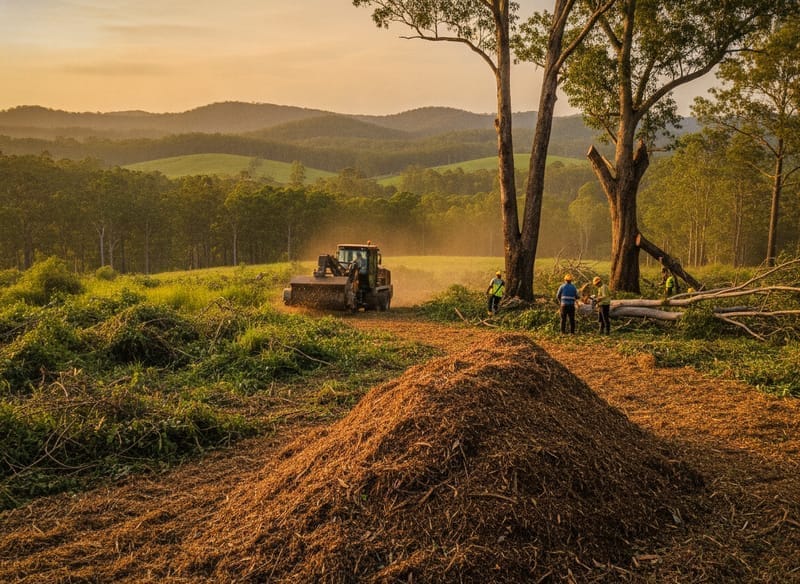
Once your arborist report is finalised and council approval is granted, it is time to execute the recommendations. If your report outlines a Tree Protection Plan for a construction site, you must install the specified AS4970-compliant fencing and signage before any heavy machinery enters the site. We can guide you on proper root-zone mulching and watering schedules during the build.
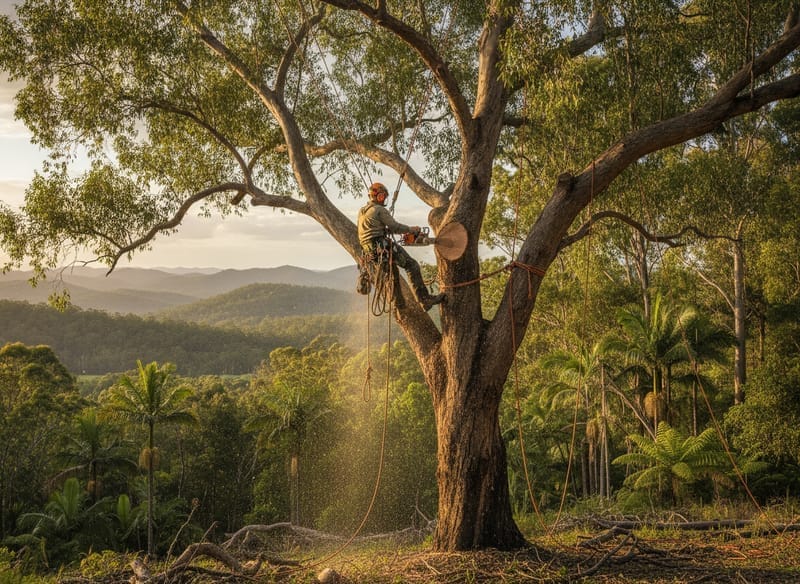
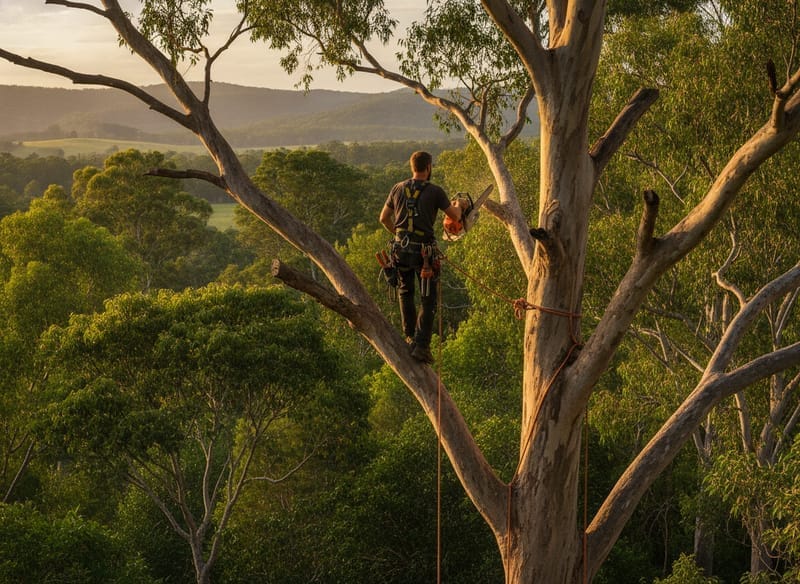
For reports recommending hazard reduction pruning, deadwooding, or complete removal, our AQF Level 3 climbing arborists are ready to step in. We seamlessly transition from the consulting phase to the physical tree work, ensuring all cuts and complex dismantling operations strictly follow the report's specifications. Reach out to our team whenever you are ready to schedule the physical works.
Consulting work is priced based on the complexity of the report and the number of trees assessed.
Contact us for a fixed-fee proposal for your arborist reporting needs.
Consulting services provided for all Hobart council areas.
Ensure your DA or removal application goes smoothly with expert documentation.
Request a Quote