Stop the Mess
End the constant cycle of picking up dropped fronds and slippery seed pods.
Safe removal and maintenance of overgrown or messy palms.
Managing exotic palms across Lenah Valley and Hobart's older gardens.
While Hobart is known for its European and native canopy, exotic palms in older gardens often become oversized and difficult to manage. Our Palm Tree Removal in Lenah Valley solves the problem.
In Lenah Valley's terraced gardens, a large mature palm can drop heavy fronds and sticky fruit onto paths, creating slip hazards during Hobart's wet winters. Because palm wood is highly fibrous and dulls chainsaws quickly, dismantling them requires specific sharp gear and robust chippers to process the messy waste efficiently.
End the constant cycle of picking up dropped fronds and slippery seed pods.
Prevent heavy fronds from falling on cars or pedestrians during high winds.
Remove out-of-place exotics to make room for canopy more suited to the Hobart environment.
We assess the size of the palm and plan how to maneuver the heavy trunk pieces out.
A clear, upfront price for removal or cleaning.
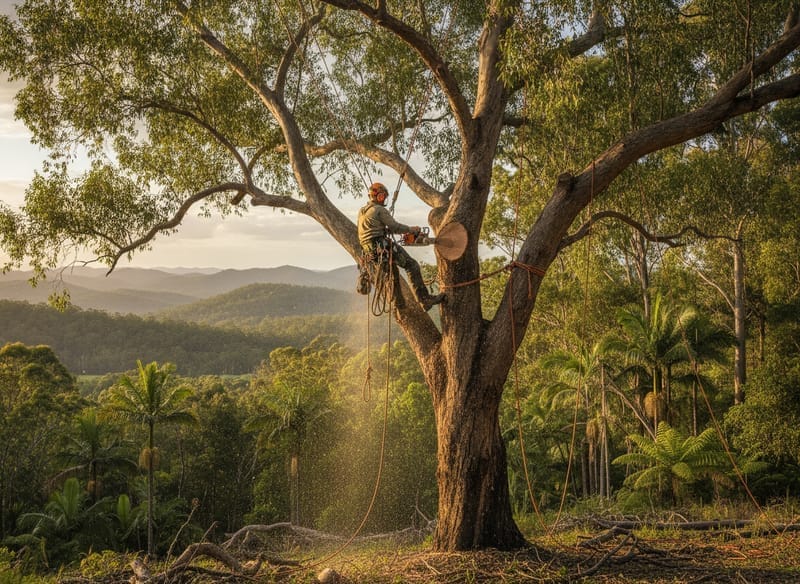
Climbers first strip the fronds and seed pods to reveal the trunk.
The trunk is cut into manageable blocks and lowered safely to the ground.
We remove all fibrous waste, leaving your garden clean and safe.
When established ornamental palms outgrow their space or become hazardous in high winds, securing professional Palm Tree Removal Lenah Valley is essential for protecting your property. At Hobart Arborist, our dedicated team of climbing arborists specialises in dismantling large, difficult-to-access palm trees across the steep foothills of kunanyi / Mount Wellington.
While Lenah Valley is heavily defined by its native dry sclerophyll eucalypt canopy, many older residential blocks feature towering Date palms, Canary Island Date palms, and Washingtonia fan palms planted decades ago. Over time, these specimens can overwhelm terraced gardens, block natural light, and drop massive, heavy fronds onto roofs during winter storm events.
Because palms are structurally unique—featuring incredibly dense, moisture-laden, fibrous trunks rather than solid wood—removing them requires specialised cutting techniques, heavy-duty processing equipment, and highly skilled riggers. We provide a complete, end-to-end service, carefully dismantling hazardous palms piece by piece to ensure zero damage to your garden beds, underground services, or surrounding infrastructure.
Choosing the right team for your Palm Tree Removal Lenah Valley is critical because dealing with palm trees presents entirely different physical hazards compared to cutting standard hardwood trees like oaks or eucalypts. Many homeowners and under-qualified operators severely underestimate the sheer, waterlogged weight of a mature palm trunk.
DIY removal attempts frequently end in disaster. A single dropping trunk section can weigh hundreds of kilograms, swinging unpredictably and carrying enough force to shatter retaining walls, crush underground pipes, or destroy decking. Furthermore, the massive skirts of dead fronds can harbor pests or unexpectedly break free during cutting, creating severe crushing hazards for anyone standing below.
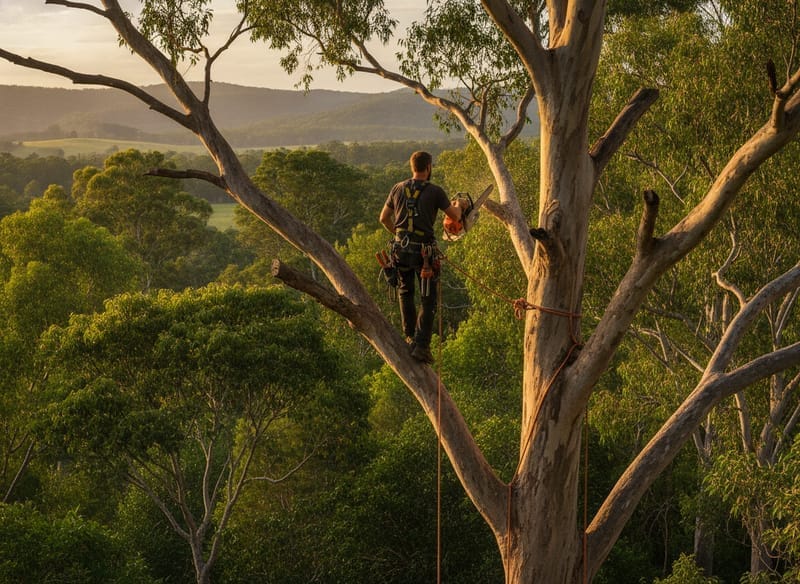
Unlike traditional amenity pruning defined by AS4373 standards—which strictly advises against topping or lopping—a full palm removal requires our AQF Level 3 arborists to safely spike-climb the trunk. Unqualified operators often lack the necessary heavy-duty rigging gear and top-handle climbing chainsaws required to execute this safely. Our experienced team sets up sophisticated rope-access systems to section down the fibrous trunk incrementally, lowering each enormous piece into a controlled drop zone without putting your property at risk.
When it comes to executing flawless palm tree removal on complex sites, we utilise industry-best equipment and highly calculated dismantling methodologies.
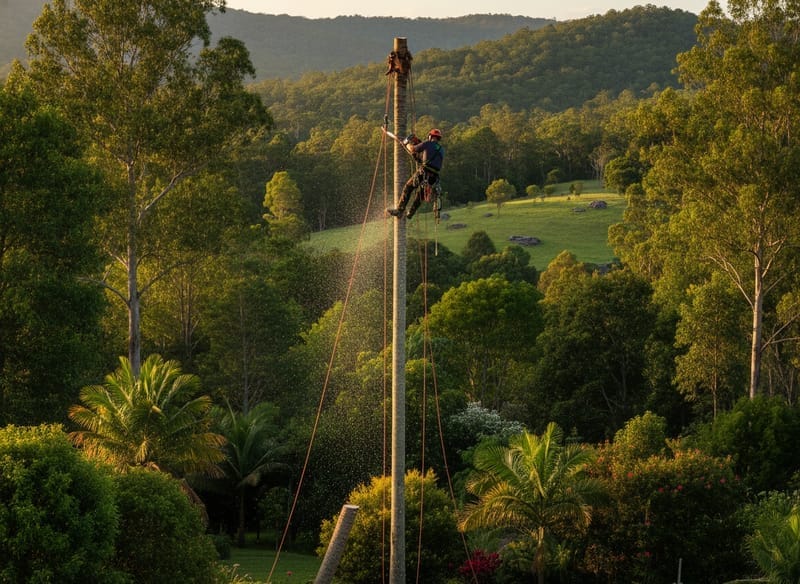
For steep, terraced gully properties common in Lenah Valley where elevating work platforms (EWPs) cannot reach, our AQF Level 3 climbers utilise advanced single-rope and double-rope techniques. Because palms intended for removal have no cambium layer to damage, we use specialised climbing spikes to scale the trunk, dismantling it from the top down into a highly controlled drop zone.
Before felling the main trunk, we conduct a systematic canopy reduction. Climbers carefully sever and rig down the massive, heavy dead fronds and dense fruit/seed clusters. This eliminates aerial hazards and aerodynamic drag, ensuring that wind gusts do not destabilise the tree while our arborists are performing the final trunk cuts.
When extracting massive ornamental palms overhanging houses or perched above delicate retaining walls, we coordinate loader cranes or HIABs. We securely sling the heavy trunk sections and lift them cleanly up and over structures directly onto our tipper trucks, completely bypassing limited side-access paths.
Palm material is notoriously fibrous, stringy, and wet, which routinely jams standard landscaping chippers. We deploy heavy-duty 9-inch and 12-inch capacity wood chippers to process fronds efficiently. The extremely heavy trunk segments are blocked into manageable sizes and hauled away for specialized off-site green waste disposal.
Our structured approach guarantees a safe, efficient, and damage-free result from the initial phone call to the final site clean-up.
Step 1: On-Site Assessment and Strategy. We visit your property to evaluate the palm tree's height, species, and structural integrity. Because the steep slopes of Lenah Valley can trigger the Landslip Hazard Code, we map out the safest access routes for our tipper trucks and determine whether the job requires advanced rope rigging or crane assistance.
Step 2: Compliance and Council Checks. While many standard garden removals are exempt from permits, the City of Hobart Local Historic Heritage Code strictly protects trees listed on the Significant Tree Register. If your mature ornamental palm is located within a heritage precinct, our AQF Level 5 consulting arborists can guide you through the necessary local council permit applications.
Step 3: Safe Dismantling Operations. On the day of the job, our arborists set up structural rigging. Using professional top-handle chainsaws (such as the MS201T) for in-tree work and high-powered ground saws (like the 572XP), we strip the canopy, lower the heavy fronds, and block down the trunk section by section.
Step 4: Complete Site Clean-Up. We load all the heavy, moisture-dense trunk logs into our trucks, chip the fronds, and thoroughly rake the drop zone, leaving your yard immaculate.
Your peace of mind is our priority. Hobart Arborist is fully insured, carrying comprehensive Public Liability and WorkCover insurance for all our employees. We never rely on unvetted sub-contractors; all climbing and dismantling operations are executed by our in-house staff who hold appropriate AQF Level 3 qualifications, Working at Heights tickets (RIIWHS204D), and specialized chainsaw tree felling units.
If your palm removal intersects with a development application on a bushfire-prone interface or requires tree protection plans for nearby retained canopy, our AQF Level 5 consulting arborists produce detailed reports fully aligned with AS4970 - Protection of Trees on Development Sites.
Lenah Valley sits uniquely on the steep eastern foothills of kunanyi / Mount Wellington, characterised by shallow soils over dolerite and winding, restricted access streets. While the natural backdrop features a strong dry sclerophyll canopy of white peppermint and Tasmanian blue gum, residential blocks are heavily dotted with aging, oversized ornamental palms.
The primary environmental driver for palm removals here is the combination of immense tree height and Hobart's notorious westerly and north-westerly frontal systems through winter and spring. When these powerful wind events sweep off the mountain, heavy dead palm fronds are easily torn loose, creating dangerous airborne projectiles that routinely damage roofing and gutter systems.
Furthermore, because so many Lenah Valley homes are built onto sloping blocks with virtually zero rear vehicle access, standard elevated work platforms are rarely viable. Our local crews are specifically trained to overcome these exact access challenges, relying on precision rope access and manual dismantling to protect terraced landscaping and retaining walls during complex jobs.
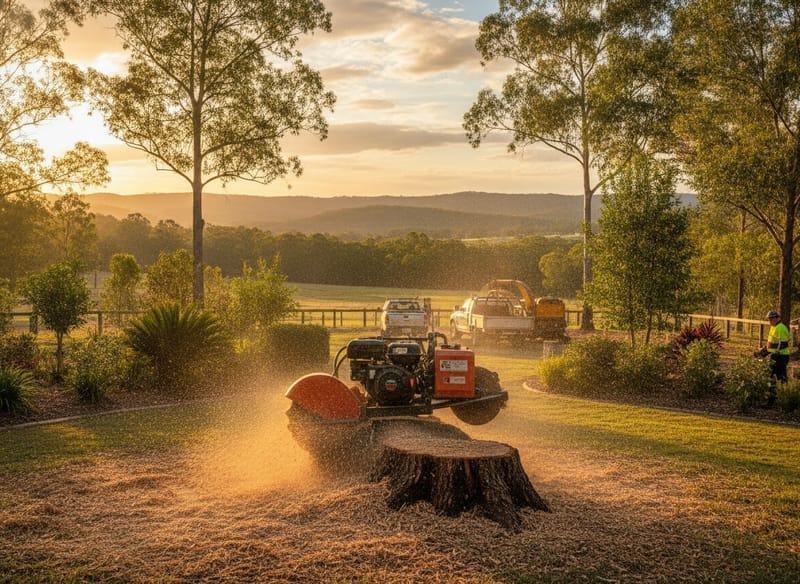
Once your unwanted palm has been dismantled, we strongly recommend professional stump grinding to eradicate the incredibly dense, fibrous root mass. While palm stumps will not shoot epicormic regrowth like eucalypts, they take many years to naturally decay and are incredibly difficult to excavate by hand. Removing the stump entirely frees up the space for new garden plantings.
If you have other palms on your property that you wish to retain, proactive maintenance is vital. We recommend booking our arborists for an annual crown clean to safely remove browning fronds and heavy seed pods before they drop. Contact us ahead of Hobart's windy season to keep your remaining palms safe, healthy, and visually stunning.
Palm removal varies based on the height and the species (some have nasty spikes that make handling slower).
Contact us for a free quote to rid your yard of messy palms.
Available for palm removal and maintenance in the Hobart region.