Restore Order
Get your garden back to normal quickly after a chaotic weather event.
Comprehensive cleanup of fallen trees, snapped branches, and storm debris.
Serving Lenah Valley and all suburbs impacted by Hobart frontal systems.
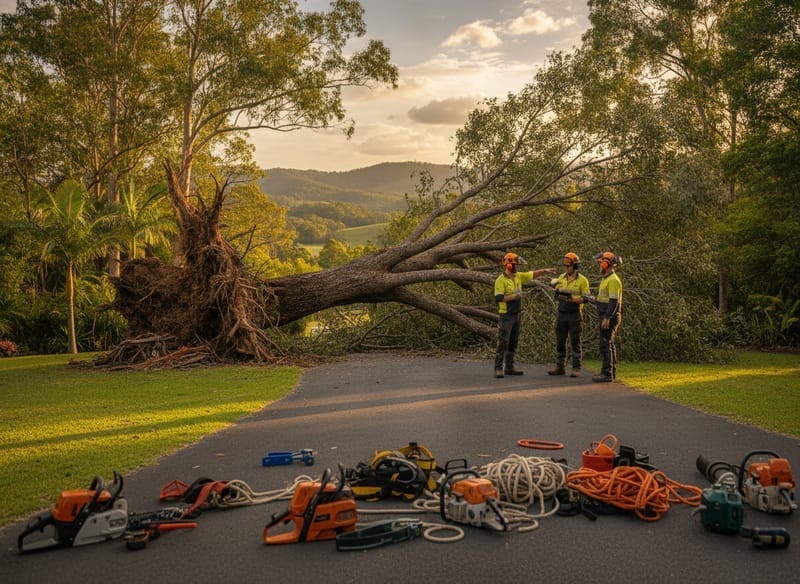
When a winter gale passes through, properties are often left covered in debris. Our Storm Damage Tree Removal in Lenah Valley handles the mess.
During late winter and spring, Hobart experiences intense westerly winds coming directly over kunanyi. Lenah Valley bears the brunt of this turbulence, often resulting in widespread windthrow—where shallow-rooted trees are blown over entirely—and heavy limb shedding from mature eucalypts and oaks. We excel at rapid, multi-site cleanup operations during these peak events.
Get your garden back to normal quickly after a chaotic weather event.
Remove suspended broken branches that pose a hidden threat.
Avoid days of manual labour; our chippers handle the work in hours.
We evaluate the volume of debris and identify any lingering overhead hazards.
We provide a fixed price for the total cleanup of the site.
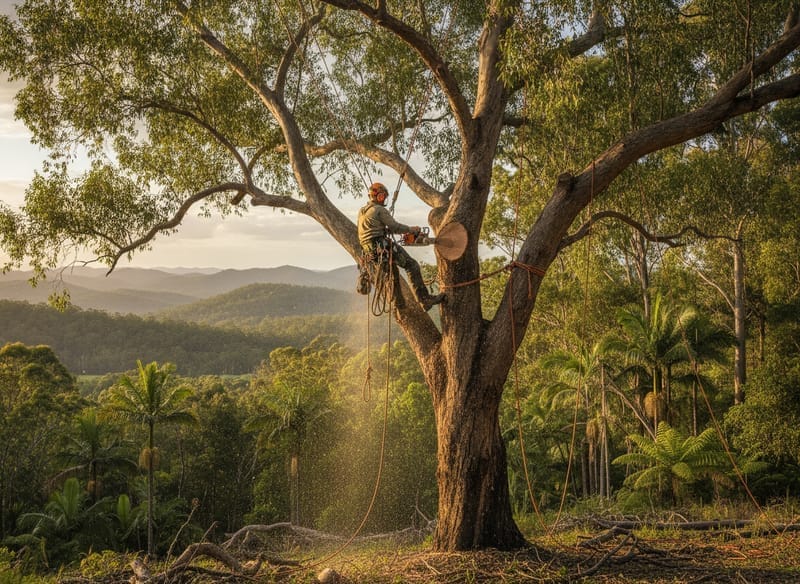
Climbers first remove any dangerous hung-up branches from the canopy.
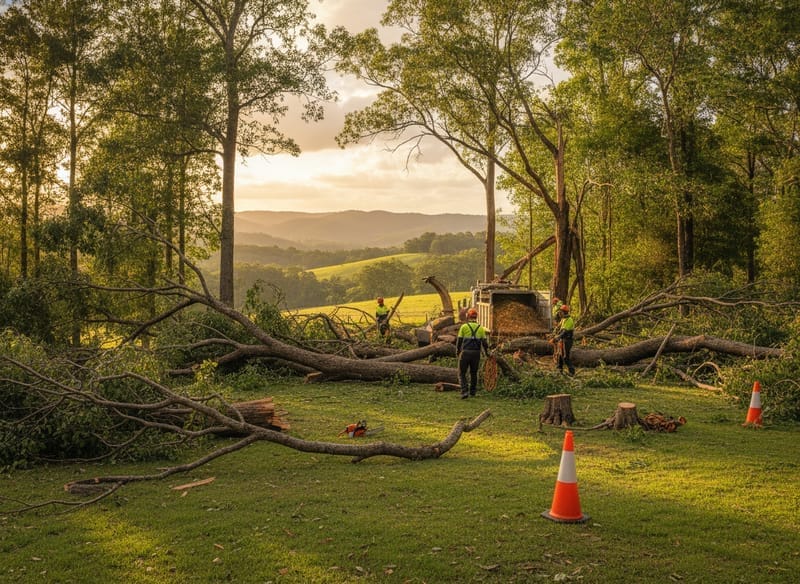
Ground crews process all fallen branches through commercial chippers.
We rake up the remaining leaves and twigs, leaving the yard clean.
When severe westerly frontal systems batter the foothills of kunanyi / Mount Wellington, local properties often bear the brunt of fallen limbs and uprooted trunks. If you are dealing with hazardous, hung-up, or fallen timber, our rapid response team provides expert Storm Damage Tree Removal Lenah Valley locals can rely on.
Lenah Valley is known for its beautiful mix of dry sclerophyll eucalypts—like white peppermint and Tasmanian blue gum—and established European garden canopies. However, these towering trees, situated on steep, rocky dolerite slopes, are highly vulnerable to root-plate failure during heavy rain and snow load in the upper elevations.
We are your local, fully insured climbing arborists. Our trucks and specialised gear are equipped to handle the most complex emergency tree removals, navigating narrow winding streets and steep gradients to make your property safe again quickly and professionally.
Clearing a shattered Tasmanian blue gum or a massive, split oak limb from a roof is not a job for a chainsaw-wielding handyman. Storm-damaged trees are incredibly unpredictable. Hung-up branches, twisted wood under extreme tension, and compromised root plates can snap, roll, or spring back without warning during cutting.
Attempting DIY storm cleanups frequently results in catastrophic secondary damage to homes, powerlines, and fences—not to mention severe personal injury. Furthermore, unqualified operators rarely carry the appropriate public liability insurance or understand the intricacies of safely dismantling timber under heavy load.
Our team approaches every emergency scenario strictly following the AS4373 Pruning of Amenity Trees standard and established safe-work practices. We identify compression and tension points, utilising advanced rope-access techniques and rigging to safely lower wood. By choosing qualified AQF Level 3 climbing arborists, you ensure the hazard is removed meticulously, protecting your home and family from further risk.
Our specialised methods ensure safe, efficient extraction of hazardous timber from steep and difficult-to-access Hobart blocks.
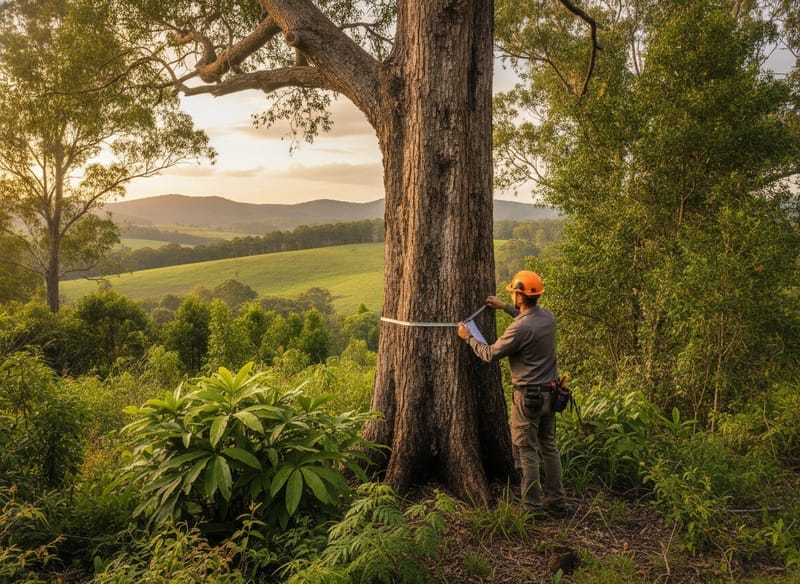
We walk your property to tag affected trees by priority. Immediate hazards over structures or driveways are stabilised first. We assess compromised root plates, hung-up limbs, and standing-but-fractured trees to formulate a safe dismantling plan.
For steep Lenah Valley blocks with no rear vehicle access, our AQF Level 3 climbers use advanced double-rope techniques and friction devices to safely cut and lower fractured limbs piece by piece, avoiding secondary damage to the ground or structures below.
When a massive stringybark or elm has crushed a roof and is structurally unsafe to climb, we utilise crane-assisted removals. This allows us to lift multi-tonne sections of shattered timber safely up and over your house from the roadway.
We deploy high-capacity 12-inch wood chippers, powerful ground saws, and skid steers to rapidly process fallen debris. Limbs are chipped into mulch on-site, and large logs are sectioned for firewood or hauled away in our tipper trucks.
We provide comprehensive pre-work photographic evidence and itemised, professional quotes broken down by tree and job line, formatting everything perfectly for smooth submission to your property insurer.
When a storm hits the kunanyi foothills, time is critical. Our process is designed for rapid response and total safety. First, you contact our team for an emergency call-out. We prioritise properties where trees have compromised homes, blocked driveways, or impacted powerlines.
Upon arrival in Lenah Valley, our senior arborist conducts an immediate site risk assessment. We identify hazards like tensioned wood and widow-makers, formulate a safe extraction plan, and provide a detailed quote complete with the photographic evidence your insurance company will require.
Once approved, our climbers and ground crew get to work. We execute the make-safe phase first—rigging and removing the immediate threat from your roof, fence, or access path. Next, we systematically dismantle any remaining fractured canopies or uprooted trunks using specialised rigging, EWPs, or cranes as site access dictates.
Finally, we process all debris. We chip branches, cross-cut large eucalypt or oak logs, and remove the waste via our tipper trucks. We leave your site clean, safe, and ready for any necessary building repairs.
Your property's safety is our highest priority. Our team is fully insured with comprehensive public liability and WorkCover, giving you absolute peace of mind when we tackle high-risk storm recovery.
All climbing and dismantling work is executed by AQF Level 3 qualified arborists, adhering strictly to Australian Standards, including AS4373 (Pruning of Amenity Trees) and AS4970 (Protection of Trees on Development Sites). Should your storm-damaged tree be listed on the City of Hobart Significant Tree Register or fall under the Local Historic Heritage Code, our AQF Level 5 consulting arborists can provide the required written statements and risk assessments to ensure your emergency works remain entirely compliant with the Tasmanian Planning Scheme.
Lenah Valley presents a unique set of challenges during storm season. Nestled against the steep eastern foothills of kunanyi / Mount Wellington, properties here often feature shallow soils over hard dolerite rock. When heavy rain saturates the ground and fierce westerly winds rip through the valley, shallow-rooted Tasmanian blue gums, white peppermints, and large exotic garden plantings are highly prone to uprooting.
Access is another major local factor. Many terraced gardens and hillside blocks have zero rear-vehicle access, meaning traditional cherry pickers cannot reach the hazard. This is where our local expertise shines. We specialise in complex rope-access and crane-assisted dismantles specifically tailored for these narrow, winding streets.
Whether you are managing bushfire hazard reduction after a summer storm or dealing with winter snow-load branch failures, our team understands the local terrain, the Tasmanian Planning Scheme requirements, and the specific behaviour of Hobart's native and introduced tree species under extreme stress.
Once the hazardous timber is cleared, it is important to monitor the surrounding vegetation. Storms can cause micro-fractures in neighbouring trees that may not be immediately obvious. We recommend keeping an eye on remaining canopies for dying foliage, weeping bark, or newly hanging branches over the coming weeks.
If you notice soil heaving at the base of standing trees or hear creaking during high winds, contact us immediately for a follow-up assessment. For trees we have retain-pruned to correct storm tearing, ensure they receive adequate water during dry spells to support recovery and minimise stress.
Storm cleanup is usually quoted based on the volume of material to be chipped and removed.
We offer transparent cleanup quotes to help you get your property back to normal.
We handle storm cleanups across the mountain-side suburbs.
Call us for fast, efficient storm damage cleanup in Lenah Valley.
Book a Cleanup Quote