Control Tree Size
Keep large trees in check so they fit perfectly within your suburban block.
Effective canopy height reduction and management using arborist-approved techniques.
Managing overgrown trees in Lenah Valley and Hobart's steep foothills.
If your trees have outgrown your yard and you're searching for Tree Lopping in Lenah Valley, our arborists can help you regain control through proper canopy reduction.
Many older properties in Lenah Valley have large trees planted too close to houses. While the instinct is to 'lop' the top off, this creates massive decay columns and structural hazards, particularly dangerous on the windy slopes of Mount Wellington. We provide professional canopy reduction that mitigates risk while keeping the tree alive.
Keep large trees in check so they fit perfectly within your suburban block.
Avoid the weak, hazardous regrowth that follows traditional topping.
Healthy, well-structured trees add value; mutilated trees become expensive liabilities.
We discuss why you want the tree lopped (e.g., views, shading, safety).
We recommend the best reduction method to achieve your goal safely.
You receive a transparent quote for the reduction works.
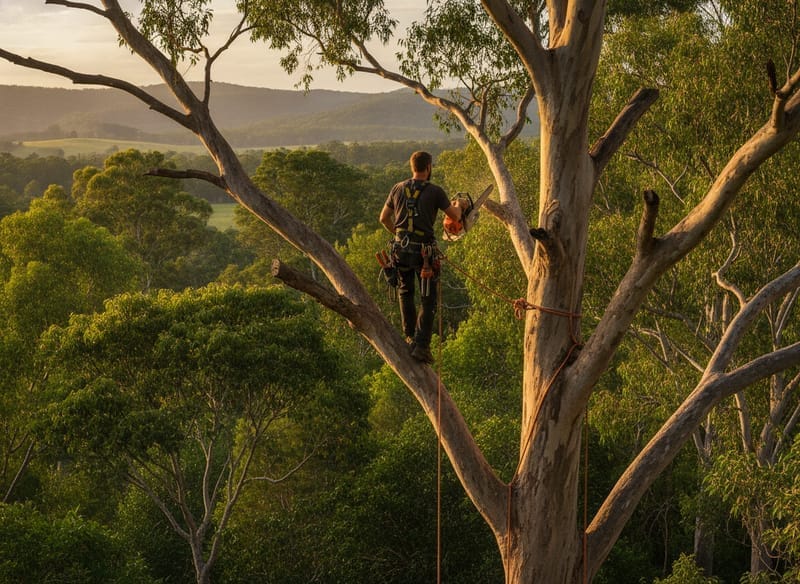
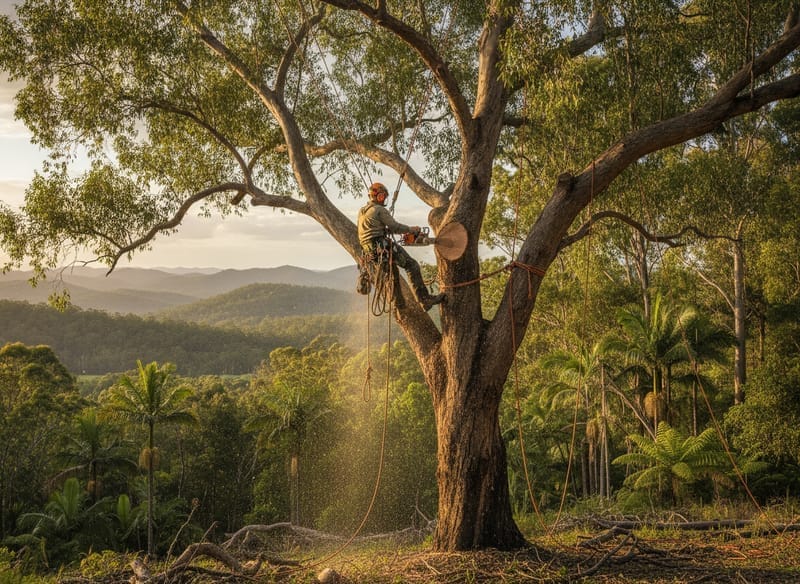
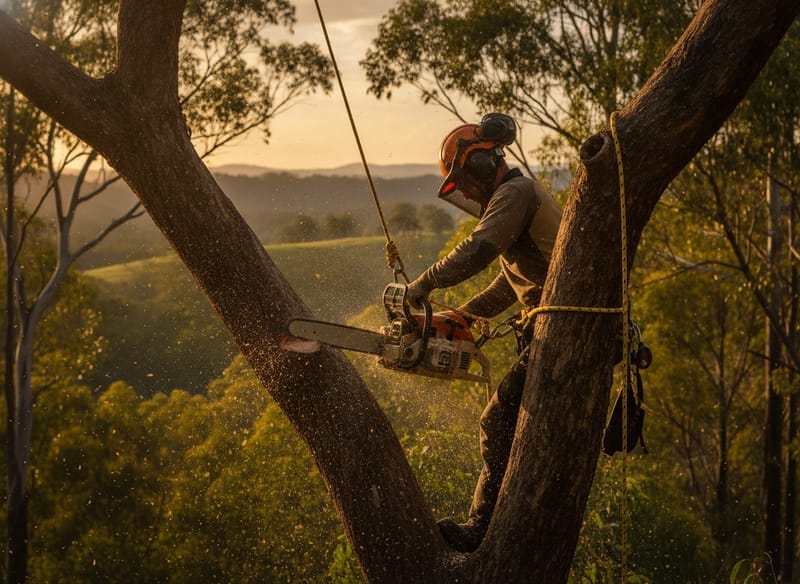
Our climbers perform the reduction to the highest arborist standards.
We chip all removed material and tidy your property completely.
When mature eucalypts or spreading heritage oaks start encroaching on your roofline, maintaining safe clearances becomes a priority. For homeowners and property managers here on the foothills of kunanyi / Mount Wellington, professional Tree Lopping Lenah Valley is essential for managing canopy size without compromising the long-term health of the tree. The steep terrain and shallow dolerite soils in this area mean that overgrown canopies catch the strong westerly winds, placing immense strain on root systems.
While "lopping" is the common term used when you want a tree made smaller, our approach as qualified arborists is to deliver strategic, AS4373-compliant crown reduction and canopy management. Whether you are dealing with a Tasmanian blue gum near your property boundary or a significant street tree dropping limbs onto your driveway, our local team brings the necessary climbing expertise, heavy equipment, and horticultural knowledge to safely reduce height and spread.
Many property owners assume that indiscriminately hacking back branches—often referred to as 'topping' or hard lopping—is the best way to control a large tree. In reality, unqualified tree lopping creates far more problems than it solves. When a tree's canopy is drastically slashed without regard for branch collars, it triggers a panic response. The tree rapidly pushes out weakly attached epicormic growth to replace its lost foliage. Because these new shoots are anchored only to the outer bark, they are highly prone to snapping during Hobart's fierce north-westerly wind fronts.
Furthermore, large stub cuts left by poor lopping practices cannot heal, opening the trunk to fungal decay and permanently compromising the tree's structural integrity.
The solution lies in professional, AS4373-compliant pruning. Rather than leaving blunt stubs, our climbers perform precise target pruning. We assess exactly what you need to achieve—whether that is building clearance, improved sunlight, or weight reduction—and use techniques like crown reduction, selective thinning, and crown lifting. This approach retains the tree's natural shape, preserves its defence systems, and drastically reduces the risk of future branch failure over your property.
While many residents ask for tree lopping, we deliver safe, standards-compliant canopy management to achieve the exact same size reduction and clearance goals. Here is how our arborists manage oversized trees in the foothills.
The horticultural alternative to topping. We carefully reduce the height or spread of the tree by cutting branches back to a suitable internal lateral branch. This lowers the canopy profile while maintaining the tree's natural shape and preventing the flush of dangerous epicormic growth.
Ideal for trees encroaching on driveways, pedestrian paths, or lower rooflines. We remove the lowest branches back to the trunk collar, creating clean vertical clearance without stripping the upper canopy.
By selectively removing secondary branches throughout the canopy, we increase light penetration and reduce wind resistance. This is particularly effective for heavy-canopied species like macrocarpa or established elms, reducing the "sail effect" during severe westerly wind events.
Targeted removal of specific problematic limbs that are rubbing against structures, utility lines, or interfering with neighbouring properties, using precise AS4373-compliant target cuts.
The systematic removal of dead, dying, or diseased branches from within the canopy. This mitigates the immediate hazard of falling timber without altering the live foliage or the structural footprint of the tree.
Our approach to every job is systematic, ensuring safety and clarity from the first phone call to the final site sweep.
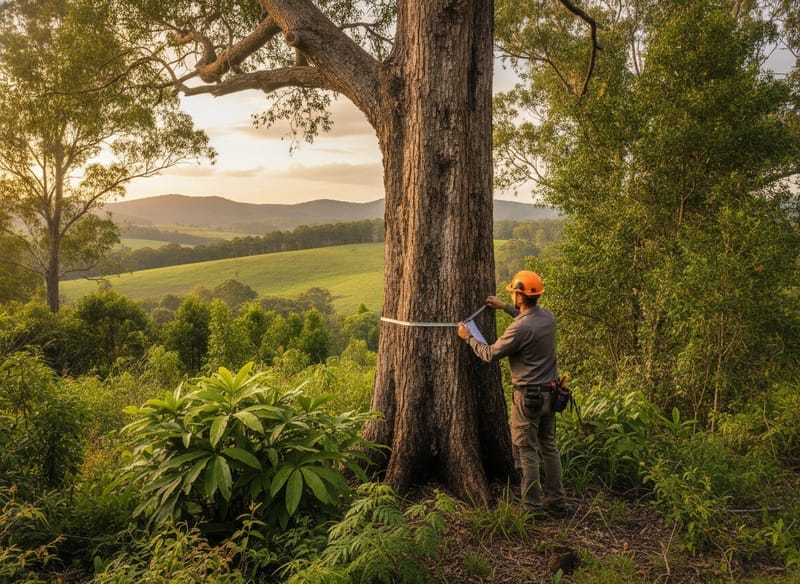
First, we conduct an on-site consultation. We listen to your concerns—whether it is a stringybark blocking your view or an oak threatening your roofline—and assess the tree's health, structural integrity, and site access. We then provide a detailed, itemised quote that outlines the specific pruning techniques required to achieve your goals safely.
On the day of the job, our crew arrives with the necessary gear, which may include top-handle climbing saws, rope access equipment for steep gully blocks, or elevated work platforms for easily accessible driveways. We set up drop zones and implement strict traffic management if we are working near the roadway.
Our arborists then perform the agreed canopy reductions or lifting. All cut limbs are carefully rigged and lowered to the ground to prevent damage to your terraced gardens or hardscapes. Finally, our ground crew processes all green waste through our commercial chippers, leaving your property tidy and the remaining tree looking balanced and structurally sound.
Tree work in residential areas carries inherent risks, which is why our operations are strictly governed by the Australian Standard for Pruning of Amenity Trees (AS4373). We do not perform destructive topping; our AQF Level 3 climbing arborists use certified rope access techniques and EWPs to execute safe, precise cuts.
Safety is our core focus on every site. Our team is fully insured with comprehensive public liability and WorkCover, giving you complete peace of mind when we are operating heavy chainsaws, wood chippers, and rigging equipment over your home. If a site requires formal council submissions, our AQF Level 5 consulting arborists can provide the necessary documentation.
Executing Tree Lopping Lenah Valley requires a deep understanding of the local environment. Properties here sit on the eastern flank of kunanyi / Mount Wellington, meaning we frequently navigate steep gradients, shallow soils over dolerite, and highly restricted backyard access. This terrain often rules out heavy machinery, relying heavily on our advanced rope-access climbing skills to dismantle or reduce canopies safely.
We also operate under the Tasmanian Planning Scheme - Hobart. The City of Hobart relies on the Local Historic Heritage Code and the Significant Tree Register rather than blanket size triggers. If your tree is listed or sits within a heritage precinct, any significant canopy reduction requires a permit, unless it meets strict safety exemptions. Furthermore, managing the canopy of dry sclerophyll species like Tasmanian blue gums and peppermints is critical for bushfire hazard reduction in our interface zones, ensuring your Asset Protection Zones are maintained before the summer fire season.
Once we have completed the canopy reduction, your tree will need minimal immediate intervention. Because we use proper AS4373 target pruning cuts, the tree will naturally compartmentalise the wounds without the need for outdated pruning paints or sealants.
We recommend keeping an eye on the tree over the next growing season. Ensure the root zone receives adequate water during dry summer spells to help it recover from the loss of foliage. If you notice any sudden dieback, or if new branches begin interfering with your roofline after a few years of growth, contact our team for a follow-up assessment.
Pricing for canopy reduction depends on how much of the tree needs to be managed.
Call us for a free quote on managing your overgrown trees properly.
Available for residential canopy management across the western shore.
Don't ruin them with bad lopping. Call our arborists for professional reduction.
Get a Free Quote