Eliminate Risk
Remove failing trees before winter westerly winds bring them down on your home.
Safe, efficient tree removal for steep blocks and heritage gardens.
Available across Lenah Valley and neighbouring foothills.
When a tree becomes dangerous, diseased, or outgrows its space, professional Tree Removal in Lenah Valley is essential to protect your property.
Lenah Valley properties often feature shallow soils over dolerite and severe access constraints. Our team excels at confined-space removals, carefully lowering timber section by section rather than felling from the base, which is crucial for protecting the terraced gardens common in the area.
Remove failing trees before winter westerly winds bring them down on your home.
Open up your yard and let more light into your garden and living areas.
Knowing the job is done by fully insured professionals with top-tier safety standards.
We inspect the tree and plan the safest removal method for your specific block.
You receive a detailed breakdown of costs with no hidden surprises.
Our climbers dismantle the tree systematically using ropes and rigging gear.
We chip the branches and cut the trunk into manageable logs for removal.
Your garden is raked and blown clean, leaving no trace of debris.
When dealing with the steep blocks, shallow dolerite soils, and mature eucalypt canopies of Hobart's western shore, safe and professional Tree Removal Lenah Valley is critical to protecting your property. At Hobart Arborist, our team provides specialist dismantling and felling services designed explicitly for the unique challenges of the kunanyi / Mount Wellington foothills.
Whether you are managing bushfire hazards on a wet sclerophyll bushland interface, dealing with storm damage from Hobart's notorious westerly winds, or clearing space for a residential extension, getting a large tree safely on the ground requires serious expertise. We handle everything from declining Tasmanian blue gums to over-mature European garden plantings like historic oaks and elms that have outgrown their safe service life.
Our local climbing arborists and rigging specialists ensure your home, retaining walls, and terraced gardens remain completely untouched while we systematically remove the hazard from your property.
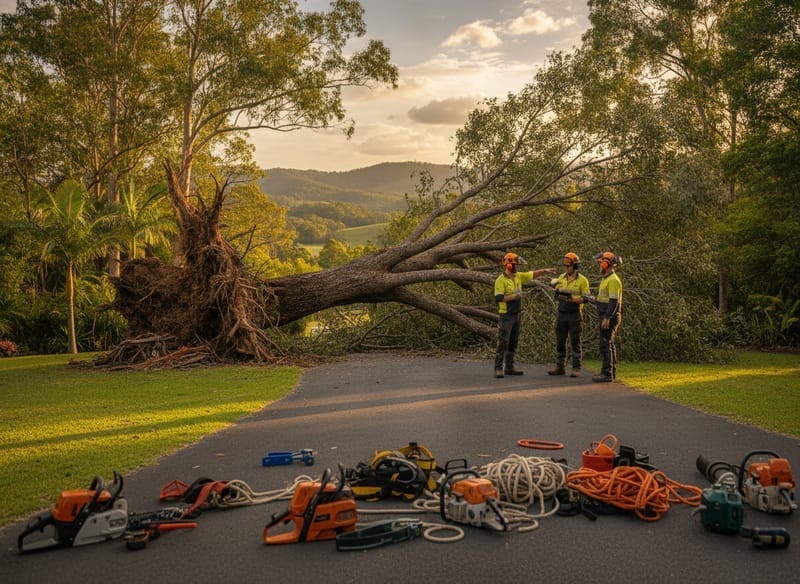
Dropping a heavy, leaning white peppermint or dismantling a massive, failing macrocarpa in a confined backyard is never a DIY job. In our local terrain, underestimating the sheer weight of green timber, misjudging a drop zone on a sloping block, or failing to account for sudden westerly frontal winds can result in catastrophic damage to roofs, fences, and neighbouring homes.
Hiring under-qualified operators or uninsured 'loppers' often leads to dangerous corner-cutting, unsafe rigging practices, and immense financial liability. Furthermore, reckless removal techniques can easily crush the Structural Root Zones (SRZ) of adjacent trees you wish to keep, violating AS4970 tree protection standards and leaving you with a yard full of collateral damage.
Our team provides a genuinely professional solution. We rely on AQF Level 3 qualified climbing arborists and advanced rope-access rigging to meticulously dismantle dangerous trees section by section. Every single cut is calculated, and heavy limbs are safely lowered using friction devices and load-bearing ropes. By trusting a fully equipped, locally based crew, you guarantee a safe outcome that protects your assets and complies with all industry safety benchmarks.
Because properties in the kunanyi foothills frequently feature narrow access roads, steep terraced gardens, and zero rear-vehicle access, our team deploys specific, highly controlled techniques to remove trees safely and efficiently.
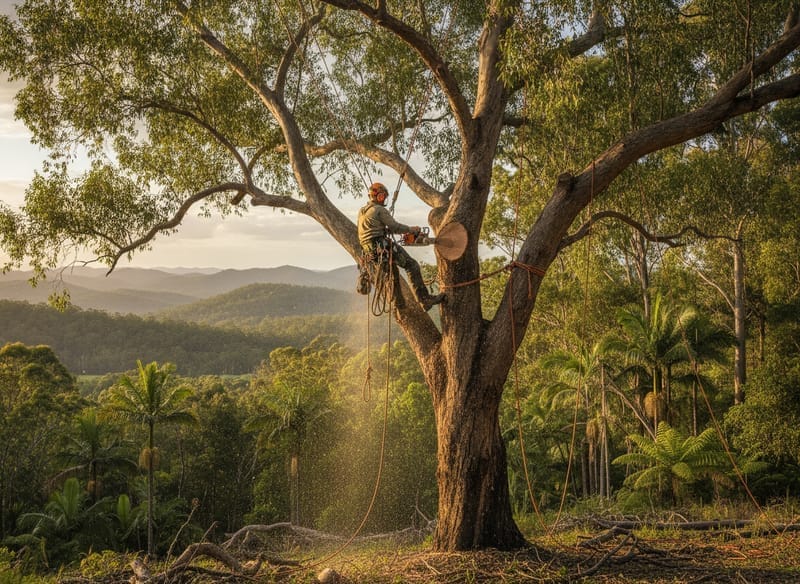
Our primary method for tight residential blocks across the foothills. AQF Level 3 climbers ascend the tree and systematically cut it down piece by piece. Branches and heavy trunk sections are safely lowered to the ground using advanced rigging ropes and friction devices, entirely avoiding your roof, powerlines, and terraced gardens.
For extremely hazardous, dead, or massive trees located over expensive houses or severely limited-access sites, we coordinate crane-assisted removals. This highly technical process allows our arborists to securely strap massive sections of timber and lift them safely up and over structures for processing out on the street.
Where driveway, slope, and street access permits, we utilise cherry pickers or tracked spider lifts. EWPs provide a highly stable, safe platform for our arborists to carefully dismantle structurally compromised, dead, or storm-damaged trees that are too dangerous to climb via rope access.
Only viable on larger acreage or open blocks with a guaranteed clear drop zone. We use precision directional felling techniques, including specialised felling wedges, bore cuts, and heavy pull-lines, to safely drop the entire tree in one fluid motion before processing the timber on the ground.
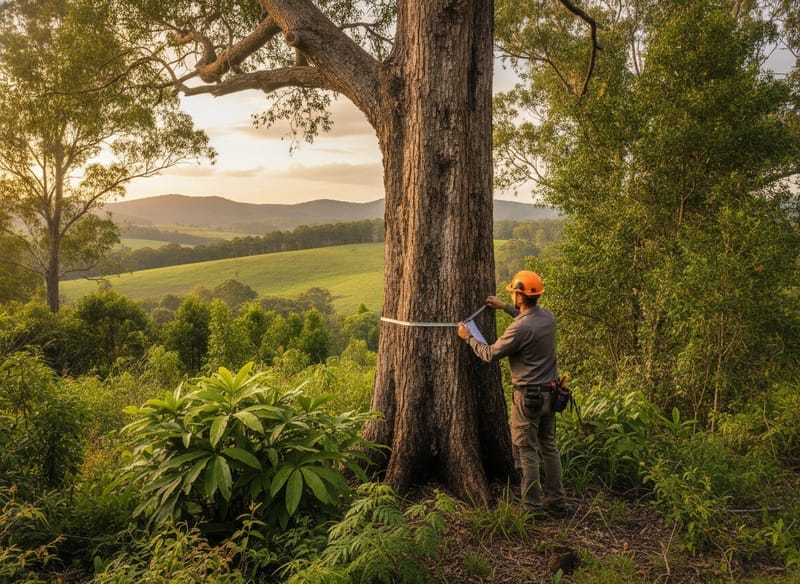
Our process begins with a comprehensive on-site inspection. We assess the tree's structural condition, species profile, natural lean, and proximity to your home, retaining walls, or overhead powerlines. We also verify if your property falls under the City of Hobart Landslip Hazard Code or if the tree is on the Significant Tree Register, advising if an AQF Level 5 consulting arborist report is required to satisfy council planners.
Once approved and scheduled, our crew arrives fully equipped for the terrain. For a standard Tree Removal Lenah Valley project, we establish a secure drop zone and cordon off the work area. Our lead climbers ascend and begin the sectional dismantle, rigging down limbs with absolute precision to avoid ground impact.
Down on the ground, the processing crew feeds all branches and foliage directly into our high-capacity wood chippers. Heavy trunk sections are blocked down to manageable lengths and loaded onto our tipper trucks using loader cranes. Finally, we execute a meticulous site cleanup, raking and blowing down your yard and driveway so the only evidence we were there is the missing tree.
Tree felling and aerial dismantling is high-risk work, and Hobart Arborist operates under uncompromising safety protocols. Every climber on our crew holds an AQF Level 3 in Arboriculture, ensuring deep technical knowledge of tree physics and chainsaw safety. We carry comprehensive Public Liability and WorkCover insurance for your total peace of mind.
While removals are our primary goal here, our operations strictly adhere to AS4970 (Protection of Trees on Development Sites) to ensure removing one tree doesn't inadvertently crush or damage the protected canopies you wish to retain. We also maintain all mandatory high-risk work licenses, including EWP tickets, working at heights, and advanced chainsaw cross-cutting units.
Working on Hobart's western shore requires deep local knowledge. The steep eastern foothills present unique challenges: shallow soils over dolerite, active landslip hazard overlays, and winding streets that demand highly technical access solutions. We routinely handle native dry sclerophyll eucalypts like white peppermint, silver peppermint, and manna gum, alongside massive historic garden plantings from the early 1900s.
Under the Tasmanian Planning Scheme - Hobart, there is no generic trunk-size trigger for tree removal. Instead, protection is largely dictated by the Local Historic Heritage Code and the City of Hobart Significant Tree Register. Removing a listed tree, or clearing vegetation within a designated local heritage place, requires formal council approval. While standing exemptions exist for dead wood or an unacceptable safety risk, the council typically requires a written statement from a qualified arborist to validate this. We guide you through these local nuances to ensure your removal is fully compliant.
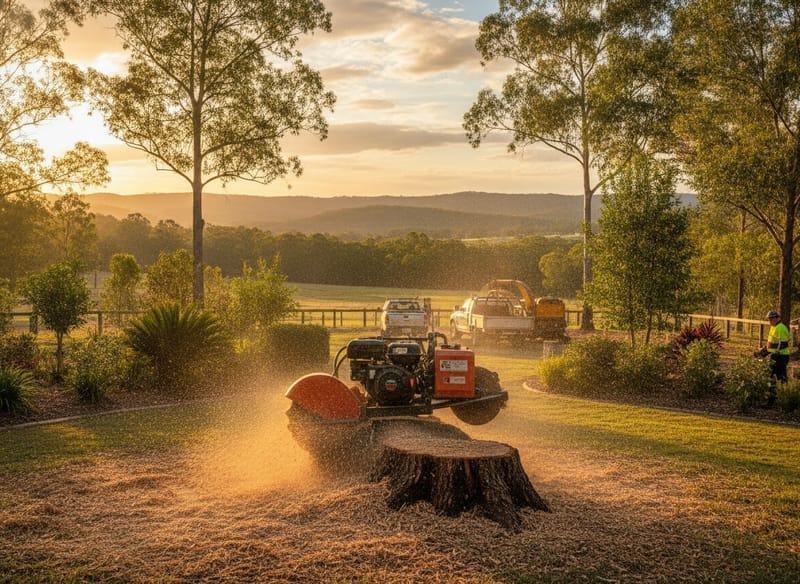
Once the canopy and trunk are gone, you will need to decide how to handle the remaining stump. We highly recommend our professional stump grinding service, which grinds the stump and major surface roots 150–300mm below soil grade, removing trip hazards and preventing unwanted epicormic regrowth from resilient eucalypt species.
We can leave the high-quality chipped mulch on-site for your garden, which is excellent for retaining moisture in Hobart's shallow dolerite soils during the drier summer months. If you plan to replant the area, ensure you wait for the ground to settle, and select appropriate native, fire-retardant species suitable for the local climate and any applicable bushfire hazard overlays.
The cost of tree removal depends heavily on the complexity of the job.
We offer free, no-obligation quotes tailored to your specific site conditions.
Providing specialized tree removal to Hobart's most challenging terrain.
Trust the local steep-block experts. Call us today.
Book a Free Quote