Smoother DA Approvals
Submit your development application with robust, compliant documentation that prevents council delays.
Comprehensive, independent tree assessments by AQF Level 5 consulting arborists for council permits, developments, and safety.
Providing consulting services across Mount Nelson, Sandy Bay, and Central Hobart.
Our consulting Arborist Report Mount Nelson service bridges the gap between your goals and local planning laws.
Because Mount Nelson falls under the Local Historic Heritage Code for many properties, discretionary applications to remove mature trees almost always require a formal AQF5 report.
Submit your development application with robust, compliant documentation that prevents council delays.
Have formal proof of a tree's hazardous condition before invoking emergency exemptions.
Learn exactly how to manage and protect high-value mature trees on your block.
We discuss why you need the report (DA, safety, dispute) for your Mount Nelson property.
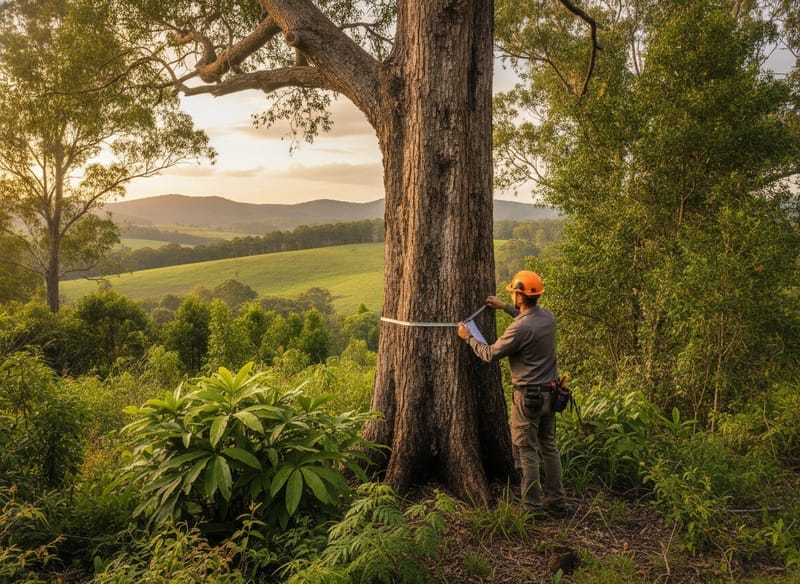
Our AQF5 arborist conducts a detailed physical inspection, measuring DBH, canopy spread, and structural condition.
We cross-reference our findings with the Hobart Local Provisions Schedule and Australian Standards.
You receive a comprehensive, council-ready PDF report detailing all findings and recommendations.
Welcome to Hobart Arborist. If you are planning a development, navigating a council permit, or managing mature gum trees on a steep interface block, you need a highly qualified consulting arborist. Getting an Arborist Report Mount Nelson residents and developers can rely on is the critical first step to ensuring your project moves forward smoothly. Our AQF Level 5 consulting arborists provide the expert, objective documentation required by the City of Hobart, saving you time, stress, and costly delays.
Mount Nelson is a beautiful but challenging environment. Properties here often sit right against wet and dry sclerophyll bushland, featuring large Tasmanian blue gums, white peppermints, and stringybarks. When you plan to build, subdivide, or remove a potentially dangerous tree on these slopes, the Tasmanian Planning Scheme comes into play. You cannot simply guess a tree's health or structural integrity when strict heritage and landslip codes apply.
We deliver comprehensive, independent, and scientifically backed reports. Whether you are dealing with a listed tree on the City of Hobart Significant Tree Register, establishing a Tree Protection Zone (TPZ) for a new build, or assessing windthrow risk after a severe westerly front, our local team is here to help.
When it comes to tree assessments, cutting corners can completely derail your project. Many homeowners and builders mistakenly rely on advice from unqualified loppers or attempt to submit DIY assessments to the council. The City of Hobart is strict on who can assess significant trees and development sites. If your report is not written by an AQF Level 5 consulting arborist, it will almost certainly be rejected, leaving you with stalled works, holding costs, and frustrating council back-and-forth.
An inadequate report also carries significant safety and financial risks. Failing to properly map a Structural Root Zone (SRZ) under AS4970 before excavating a steep Mount Nelson block can fatally destabilise a mature manna gum, creating an unacceptable hazard for your home. Similarly, an unscientific tree risk assessment might recommend retaining a heavily decayed tree that subsequently fails during our fierce winter westerly winds. When commissioning an Arborist Report Mount Nelson locals should always verify their consultant's qualifications.
Our team provides the solution. We use recognised Visual Tree Assessment (VTA) methodologies to deliver objective, fact-based reports. We bridge the gap between your goals and council requirements, ensuring that every recommendation aligns with AS4373 pruning standards and local planning codes. When we sign off on a document, you get a clear, actionable pathway forward.
We provide specialised arboricultural documentation tailored to the specific requirements of your property and the local planning scheme. Every report is drafted by an AQF Level 5 consultant.
Essential for building and subdivision. We provide a full tree inventory, species ID, Trunk Diameter at Breast Height (DBH), Safe Useful Life Expectancy (SULE) ratings, and retention recommendations tailored to the Hobart Local Provisions Schedule.
Required for construction near retained trees. We map out exact Tree Protection Zones (TPZ) and Structural Root Zones (SRZ), detailing the necessary protective fencing, root mapping, and supervised work zones for your builders to follow.
Using industry-standard Visual Tree Assessment (VTA) methodologies, we document structural defects, target zones, and the likelihood of failure. This is critical for large canopy trees exposed to Mount Nelson's high wind loads.
Where council approval is required to remove a tree listed on the City of Hobart Significant Tree Register, we provide the formal structural and health analysis required to justify the removal to local authorities.
Detailed evaluations of mature trees on prospective properties, outlining future maintenance liabilities. We also provide damage assessment and causation analysis for insurance claims following major storm events.
Securing an accurate and compliant arborist report doesn't have to be complicated. We have refined our process to be as efficient and transparent as possible for Mount Nelson property owners.
Step one is an initial consultation. We discuss your specific needs, whether it is a pre-purchase inspection, a development application, or a risk assessment for a suspect white peppermint leaning toward your roof. We will then provide a clear, fixed-price quote based on the number of trees and the complexity of the required documentation.
Step two involves the on-site assessment. Our AQF Level 5 consulting arborist will visit your Mount Nelson property to conduct a thorough Visual Tree Assessment (VTA). We measure Trunk Diameter at Breast Height (DBH), evaluate the canopy health, test for decay, and map out root zones. We also factor in site-specific elements like shallow soil depth over dolerite and exposure to prevailing winds.
Step three is the drafting phase. We compile our field data into a formal, highly detailed PDF document. This includes high-resolution photography, site maps, Tree Protection Zone calculations, and clear recommendations.
Step four is delivery and ongoing support. We provide the finalised report ready for council submission. If the City of Hobart requests any clarifications regarding our findings, our team remains available to support your application through to approval.
Every report we produce is underpinned by strict adherence to Australian Standards. When mapping trees for development, we apply AS4970 (Protection of Trees on Development Sites) to calculate precise protection zones. If our report recommends canopy management, all pruning specifications are dictated by AS4373 (Pruning of Amenity Trees), ensuring no detrimental topping or lopping occurs.
Our consulting arborists hold an AQF Level 5 Diploma of Arboriculture, which is the mandatory qualification recognised by the City of Hobart for formal tree assessments. Furthermore, our business is fully public liability and professional indemnity insured. This guarantees that our structural assessments, retention recommendations, and hazard identifications are backed by comprehensive professional coverage.
Mount Nelson presents a unique environment for tree management. Sitting on the steep eastern foothills of kunanyi / Mount Wellington, properties here often feature shallow soils over dolerite and are exposed to intense westerly frontal systems. Managing large Tasmanian blue gums, silver peppermints, and European garden species in this cool temperate maritime climate requires deep local knowledge.
Our team understands the intricacies of the Tasmanian Planning Scheme - Hobart. While there is no general size trigger for tree removal in Hobart, the Local Historic Heritage Code strictly protects anything on the City of Hobart Significant Tree Register. Additionally, properties on the slopes may trigger the Landslip Hazard Code if significant clearing is proposed.
Because many Mount Nelson homes sit directly on the bushfire interface, we regularly draft reports balancing the retention of native canopy with the realities of bushfire hazard management. Whether you need an assessment for a heritage-listed oak or a structural report on a wind-battered stringybark, we know exactly what the local authorities require.
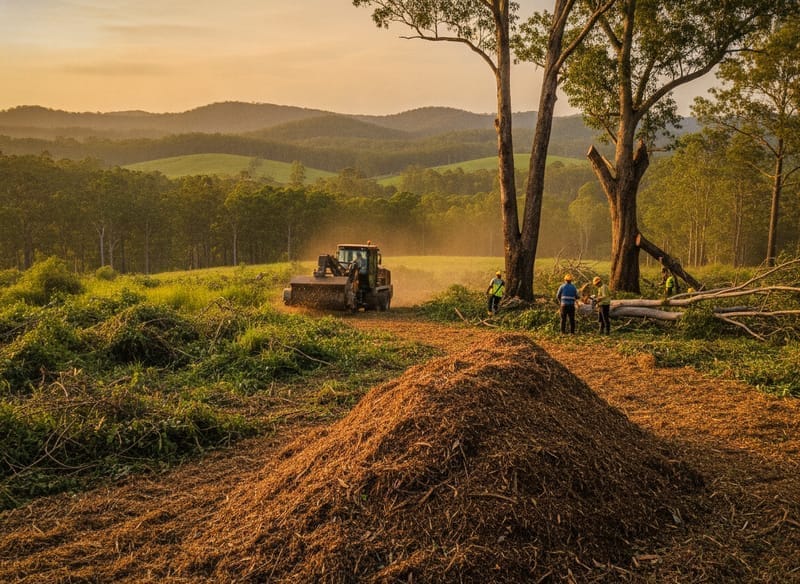
Once you receive your finalised report, the immediate next step is submitting it to the council alongside your broader application, or actioning the safety recommendations provided. If your report outlines a Tree Protection Plan, ensure your builders install the specified AS4970 fencing before any heavy machinery enters the site.
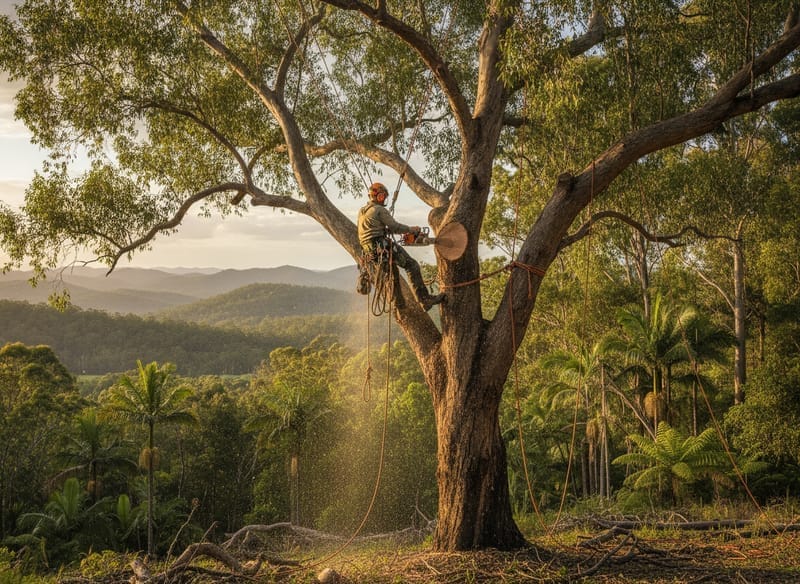
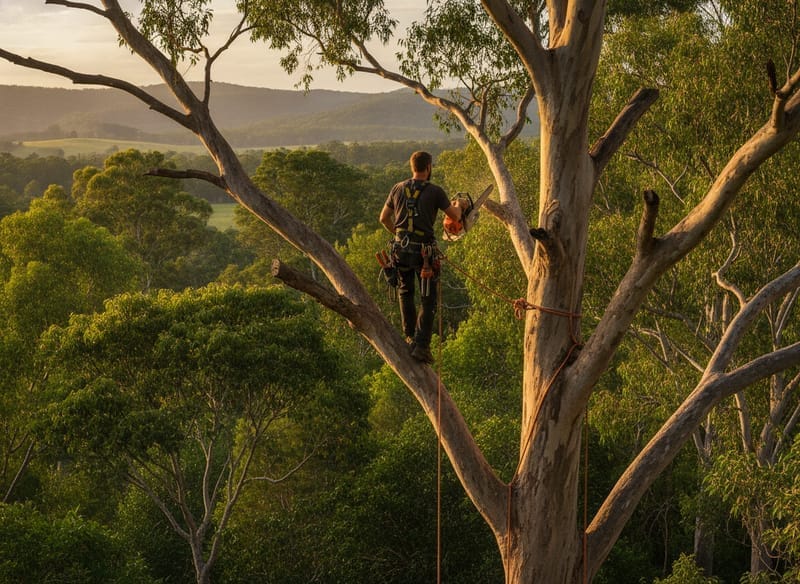
When council approval is granted for pruning or removal, our AQF Level 3 climbing arborists can execute the physical work exactly as specified. We recommend keeping your report on file for future reference, and contacting us every two to three years for an updated Visual Tree Assessment on any retained mature trees to monitor their long-term health.
Report pricing depends on the purpose and the number of trees assessed.
We provide a fixed-fee proposal for consulting services before any site visit.
We consult on residential and commercial trees Hobart-wide.
Contact our AQF Level 5 consultant for reliable, council-ready arboricultural advice in Mount Nelson.
Request a Quote