Healthier Trees
Removing diseased or dead wood stops pathogens from spreading into the main trunk.
Expert, standard-compliant tree pruning to enhance tree health, safety, and natural light on your property.
Servicing the leafy suburbs of Mount Nelson, South Hobart, and Sandy Bay.
Our Tree Pruning Mount Nelson services are designed to manage tree size and safety while promoting vigorous health.
In Mount Nelson, heavy winter snow loads and strong winds demand well-structured trees. Our pruning targets structural weaknesses before they fail.
Removing diseased or dead wood stops pathogens from spreading into the main trunk.
Careful canopy thinning lets more winter light into your home and garden.
Targeting weakly attached branches significantly lowers the risk of storm-related limb failure.
We inspect the tree in Mount Nelson to determine the exact pruning requirements based on its species and age.
We decide on the percentage of foliage to remove to avoid stressing the tree.
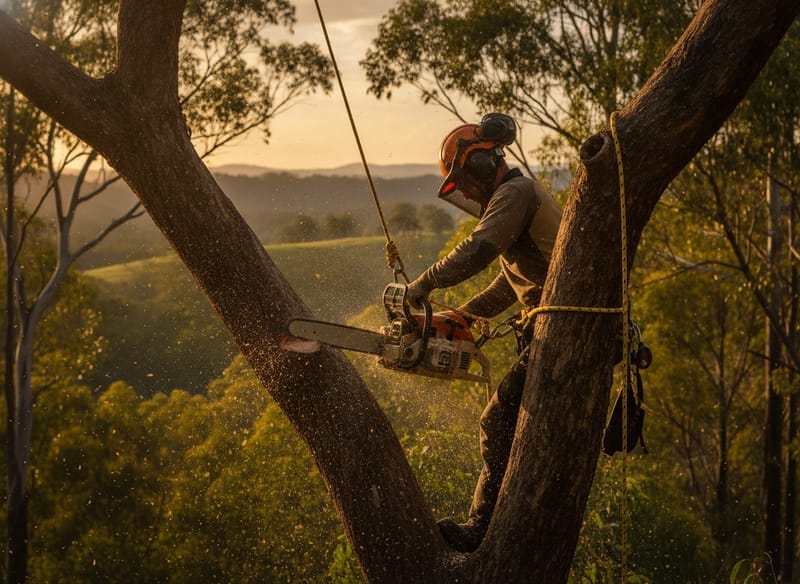
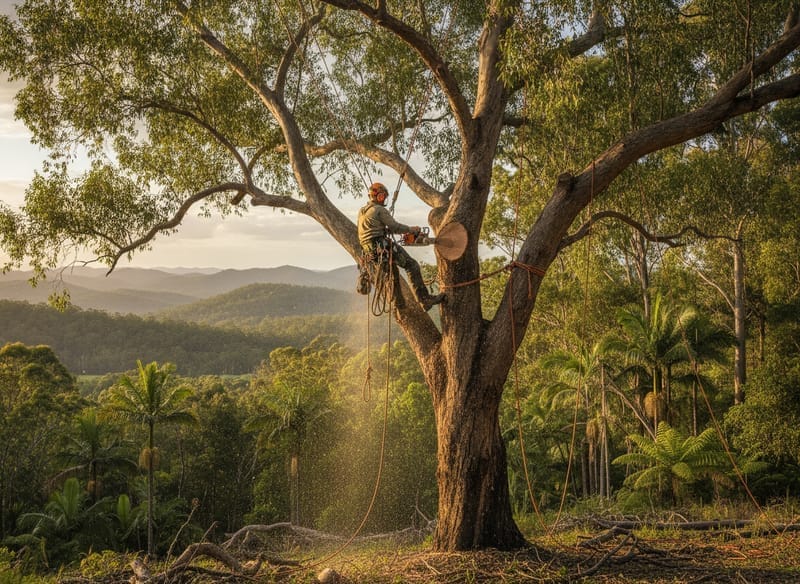
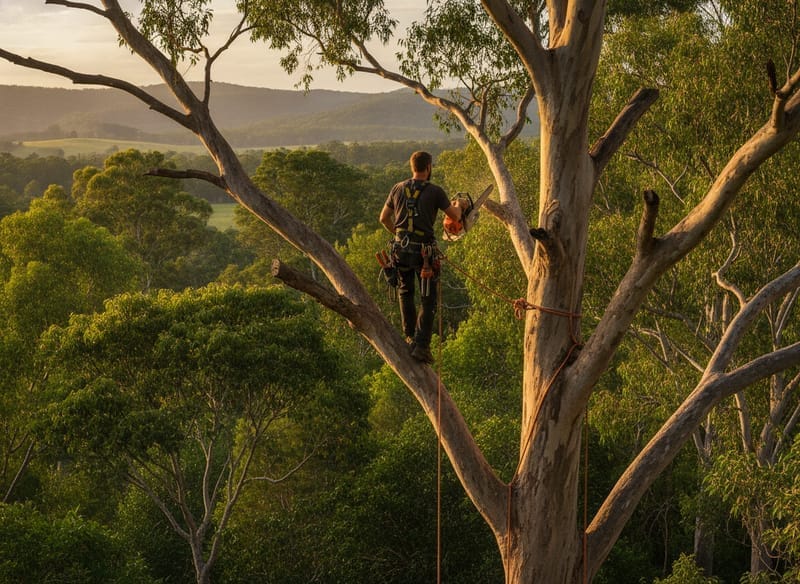
Our climbers access the canopy using ropes, making precise cuts just outside the branch collar.
All pruned branches are chipped and removed, leaving your garden pristine.
Maintaining mature trees in our unique hillside environment requires genuine expertise. For homeowners, acreage owners, and property managers, professional Tree Pruning Mount Nelson is an essential investment in the safety, aesthetics, and longevity of your property's canopy. Mount Nelson sits beautifully on the eastern foothills of kunanyi / Mount Wellington, creating a micro-environment where established heritage exotics and towering native eucalypts thrive side-by-side. However, this dense canopy also faces extreme westerly wind events and sits directly on the wet sclerophyll bushfire interface, making proactive tree care critical.
Our team focuses on keeping your trees structurally sound, healthy, and perfectly integrated into your landscape. We do not remove trees unnecessarily; instead, our climbers use precision pruning techniques to reduce wind load, clear building envelopes, and mitigate overhead risks. Whether you manage a steep gully property requiring complex rope access or an established suburban block shaded by heritage oaks, we deliver an approach that respects both the tree's biology and the local environment. We are your local arborists, committed to preserving Hobart's canopy while keeping your home and family completely safe.
One of the most common and damaging issues we see across Hobart's hillside suburbs is the aftermath of poor pruning or outright 'lopping'. Hiring under-qualified operators or attempting DIY tree work can cause irreversible structural damage to mature trees. Indiscriminate topping or lopping leaves massive wounds that rarely heal, exposing the timber to fungal decay and long-term disease. Worse, it triggers a desperate stress response where the tree rapidly shoots weak, poorly attached epicormic growth to replace lost foliage.
In Mount Nelson, where powerful north-westerly fronts regularly sweep down the mountain, these weakly attached branches become significant failure risks over roofs, driveways, and powerlines. A hacked Tasmanian blue gum or heavily lopped elm is far more likely to drop limbs in a winter storm than a correctly maintained tree. Proper Tree Pruning Mount Nelson requires a deep understanding of tree biology, species-specific growth habits, and structural mechanics.
We strictly follow Australian Standards, making precise cuts at the branch collar rather than leaving stubs. This allows the tree to compartmentalise the wound naturally and maintain its structural integrity. By choosing qualified, professional arborists, you preserve the natural form of your canopy, ensure long-term vitality, and prevent the costly hazards associated with reactive, uneducated tree hacking.
As highly qualified local arborists, we exclusively apply techniques outlined in the Australian Standard for Pruning of Amenity Trees (AS4373). Every cut is calculated to support long-term stability, health, and visual appeal, tailored specifically to the species and site conditions.
We selectively remove secondary live branches evenly throughout the canopy. This critical technique reduces wind resistance and improves light penetration while keeping the natural shape completely intact. We adhere strictly to AS4373 guidelines, ensuring we never remove more than 25-30% of the live foliage in a single visit, protecting the tree from shock.
Lower branches are carefully pruned back to the trunk or suitable lateral branches to increase the ground clearance underneath the canopy. This is highly effective for clearing pedestrian paths, driveways, and street sightlines without compromising the upper canopy structure or violating significant tree overlays.
Our climbers thoroughly inspect the canopy and safely remove dead, dying, diseased, or broken limbs. This is an essential safety measure for any mature eucalypt or expansive exotic tree overhanging a home, outdoor deck, or high-traffic play area.
Used sparingly and correctly, this involves selectively shortening branches back to a lateral branch of suitable size. This is entirely distinct from destructive 'topping'. All cuts are made at proper branch unions to reduce the overall spread or height while maintaining a natural, robust framework.
When branches interfere with building envelopes, rooflines, or service wires, we perform highly targeted pruning. We reduce specific limbs back to appropriate growth points to resolve the conflict without unnecessarily wounding or unbalancing the rest of the tree.
Early intervention for young street or garden plantings. We selectively remove co-dominant stems and correct structural defects early in a tree's life, ensuring it develops a strong, single leader and a highly stable framework as it matures into a significant landscape feature.
Every premium pruning project begins with a thorough site assessment. We visit your property to evaluate tree health, structural form, and the specific functional goals of the prune. During this initial stage, we automatically cross-reference your property's address with the City of Hobart Significant Tree Register and the Local Historic Heritage Code. This ensures all planned works are fully compliant with local overlays, and we can provide AQF Level 5 arborist reports if discretionary council approvals are required for significant trees.
Once the exact scope is agreed upon, our dedicated team arrives with state-of-the-art equipment. Because many Mount Nelson properties sit on steep, terraced blocks with limited or zero rear vehicle access, we frequently utilise advanced single and double-rope climbing techniques to safely access the canopy. Where the terrain and driveways allow, we deploy spider lifts and elevating work platforms (EWPs) for highly efficient access.
Our climbers execute precise, AS4373-compliant cuts, carefully rigging and lowering heavy limbs to protect the garden beds, boundary fences, and structures below. We never free-fall large timber in confined spaces. Finally, all pruned material is fed through our wood chippers on-site, larger logs are removed or retained for your firewood use as requested, and the entire site is meticulously raked and cleared, leaving your property looking pristine.
All our canopy work is carried out directly by AQF Level 3 climbing arborists, supported by our AQF Level 5 consulting arborists for technical advice, site planning, and formal City of Hobart reporting. We hold comprehensive public liability insurance and full WorkCover for our entire team, protecting you and your property at all times.
Our operations adhere strictly to AS4373 for pruning and AS4970 for the protection of trees on development sites, properly managing Structural Root Zones (SRZ) and Tree Protection Zones (TPZ). Because Mount Nelson features narrow, winding access roads and steep gradients, our crews are also fully ticketed in traffic management, elevating work platforms (EWP), and working safely at heights, ensuring total regulatory compliance on every job.
Providing exceptional Tree Pruning Mount Nelson means deeply understanding the specific environmental challenges of the Hobart foothills. The eastern slopes of kunanyi feature shallow, rocky soils over dolerite, meaning large local species like white peppermint, stringybark, and manna gum rely heavily on balanced canopies to prevent uprooting during extreme westerly winds. Over-thinning these trees concentrates wind load at the branch tips, drastically increasing failure risk.
Additionally, the suburb sits tightly against wet sclerophyll bushland, making proactive, strategic pruning vital for bushfire hazard reduction and maintaining Asset Protection Zones (APZ) without destroying the natural aesthetic. We are highly experienced in navigating the steep gradients and landslip hazard overlays common in this area. We also frequently maintain older 1920s heritage garden plantings—such as mature oaks, planes, and elms—which require delicate crown thinning and selective weight reduction to extend their safe, useful life over established homes without triggering restrictive heritage code breaches.
After a professional prune, your tree requires minimal immediate intervention, as our precise branch collar cuts will allow the tree to compartmentalise the wound naturally. Avoid applying wound paints, tars, or sealants, as these trap moisture and actively encourage fungal decay.
During particularly dry Hobart summers, we recommend deep watering of the structural root zone to help the tree recover its energy reserves and thrive. For large mature eucalypts and heritage exotics on Mount Nelson blocks, we strongly recommend a routine visual inspection cycle every two to three years. If you notice sudden dieback, fungal fruiting bodies on the main trunk, or canopy damage following a severe north-westerly storm, contact our team immediately for a follow-up assessment.
Fair pricing for high-quality arboricultural pruning.
We provide a clear, itemized quote detailing exactly what pruning techniques will be used.
We prune amenity trees and natives across the foothills.
Book a professional, AS4373-compliant pruning consultation in Mount Nelson.
Request a Pruning Quote