Restore Order
Get your property back to normal quickly after a severe weather event.
Safe and efficient cleanup of fallen branches and storm-wrecked trees.
Assisting properties across Mount Stuart and surrounding suburbs.
Looking for Storm Damage Tree Removal Mount Stuart? We specialise in post-event recovery, ensuring your garden is safe to use again.
Mount Stuart catches the brunt of strong north-westerly fronts funneling down the Derwent. We are highly experienced in cleaning up the resulting damage to large eucalypts and European garden species.
Get your property back to normal quickly after a severe weather event.
Identify and remove weakened branches before they fall later.
Professional paperwork makes claiming easier.
We review the damage and check for any remaining overhead hazards.
We outline the cleanup process and provide a firm price.
Debris is cut down, rigged if necessary, and chipped.
We leave your garden clear of storm debris.
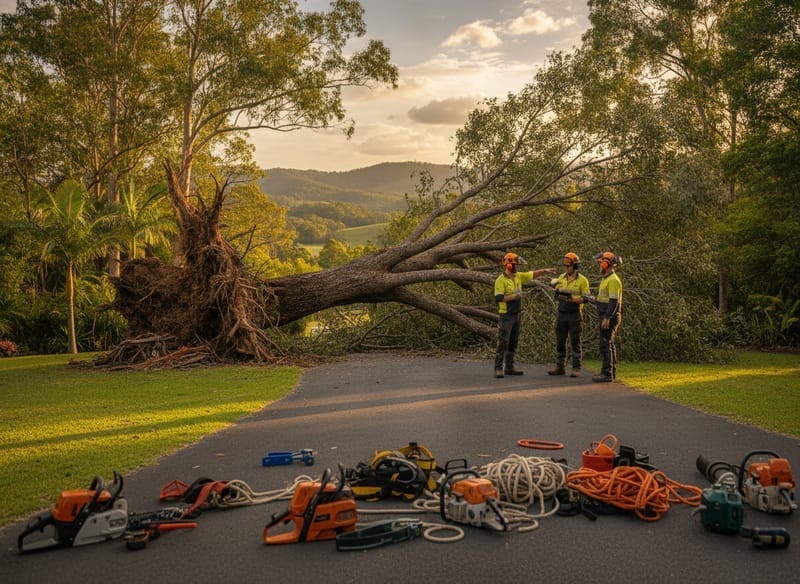
When intense westerly frontal systems or heavy winter snow and ice loads sweep down off the slopes of kunanyi/Mount Wellington, mature canopies can fail without warning. If a massive heritage oak or a towering white peppermint comes crashing down onto your roof, driveway, or fencing, you need fast, professional Storm Damage Tree Removal Mount Stuart locals can rely on. At Hobart Arborist, our local climbers and rapid-response truck fleets are deployed to secure properties, clear vital access points, and mitigate immediate structural hazards.
Mount Stuart’s beautiful but challenging terrain—featuring terraced gardens, steep dolerite slopes, and tightly packed 1880s-1920s historical homes—means that dealing with a fallen, split, or hung-up tree requires precision rigging and heavy-duty equipment. We handle the entire make-safe and removal process, ensuring your family and property are protected from secondary branch failures. Whether a heavy limb has pierced your roofing iron or an uprooted Tasmanian blue gum is blocking your only access road, our team is equipped and ready to respond across the western shore.
In the chaotic aftermath of a major storm event, property owners are often tempted to tackle fallen or hanging branches with a domestic hardware-store chainsaw. This approach is incredibly dangerous. Storm-damaged timber is highly unpredictable; hung-up limbs, twisted branches, and uprooted root plates store massive amounts of kinetic energy. One wrong cut on a piece of tensioned wood can result in a heavy log snapping back with lethal force, or a suspended branch dropping unpredictably onto the operator.
Furthermore, unqualified "loppers" who canvas neighbourhoods after extreme weather often lack the insurance, technical arboricultural knowledge, or proper height-safety equipment to manage high-risk emergency removals safely. They might resort to reckless un-roped felling or aggressive topping, which causes further structural damage to your property or leaves behind dangerous stubs on remaining trees that invite rapid decay.
Our team brings a highly technical, AS4373-compliant approach to every storm-damaged site. We do not guess or take shortcuts. Our AQF Level 3 climbing arborists use advanced rope rigging, load-calculation, and tension-release cutting techniques to dismantle compromised timber safely. By engaging our qualified professionals, you completely avoid the extreme physical hazards of DIY clearing and ensure that the structural integrity of your surviving garden canopy is preserved.
Dealing with storm-wrecked canopies in the steep, restricted environments of Hobart's inner western suburbs requires specialised access equipment and advanced dismantling strategies. Our arborists utilise the following technical methods to safely clear storm damage:
Safely releasing spring poles and compression wood. We meticulously calculate the stored energy in bent or trapped branches, using precise step-cuts and relief cuts to remove the tension without the log aggressively kicking back toward the arborist.
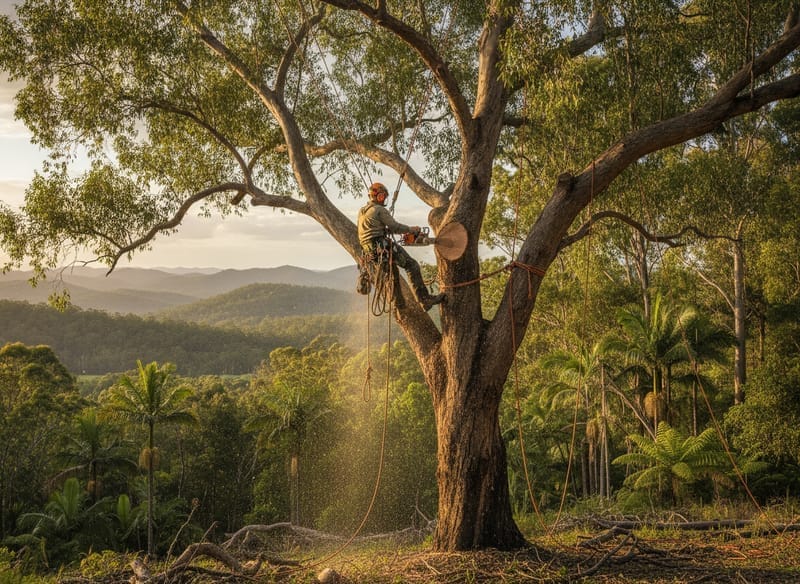
Using double-rope techniques, friction devices, and block-and-tackle systems to carefully lower broken, hanging limbs over delicate heritage roofs, glasshouses, and terraced retaining walls without causing secondary impact damage to the property below.
Deploying mobile cranes or loader cranes (HIABs) for massive failed trees, such as mature elms or cedars, trapped on steep hillside blocks with no rear vehicle access. This allows us to lift tonnes of timber safely over rooflines directly to the street.
Managing lifted or windthrown root balls. A heavy root plate can suddenly snap back into its hole once the weight of the trunk is severed during processing. We securely winch and prop root plates to prevent sudden movement while our ground crews work.
When severe weather strikes Hobart’s western shore, our response is structured, swift, and highly systematic. Here is exactly how our team manages your property’s recovery from the initial call to final cleanup.
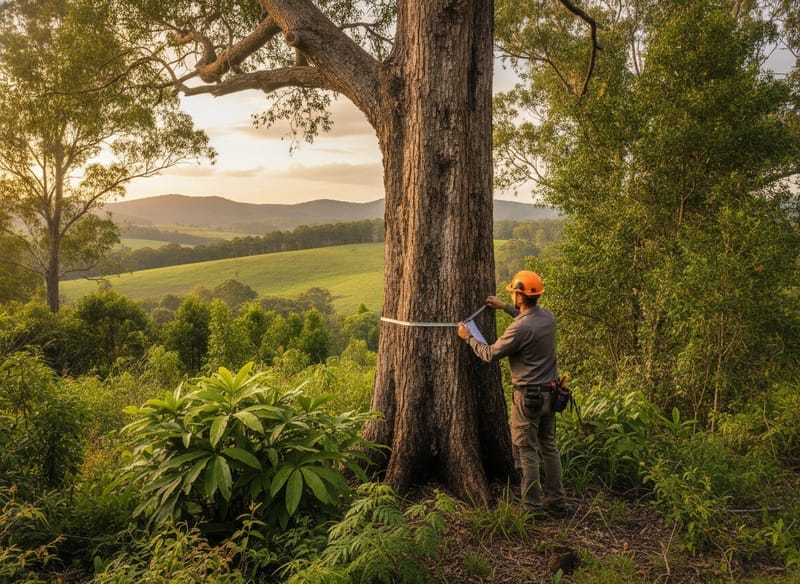
1. Immediate Triage and Site Assessment Upon arrival, our consulting arborists conduct a rapid site walk to tag hazards by priority. We immediately identify primary threats over your house, powerlines, or critical access points, followed by secondary risks like partially failed, hung-up limbs suspended in the canopy.
2. Make-Safe Operations The vital first phase is securing the site. We use rope access, lowering devices, and occasionally crane assistance to neutralise the immediate danger. We lift fallen limbs off rooflines and clear blocked driveways so you can safely move around your property and builders can begin tarping roofs.
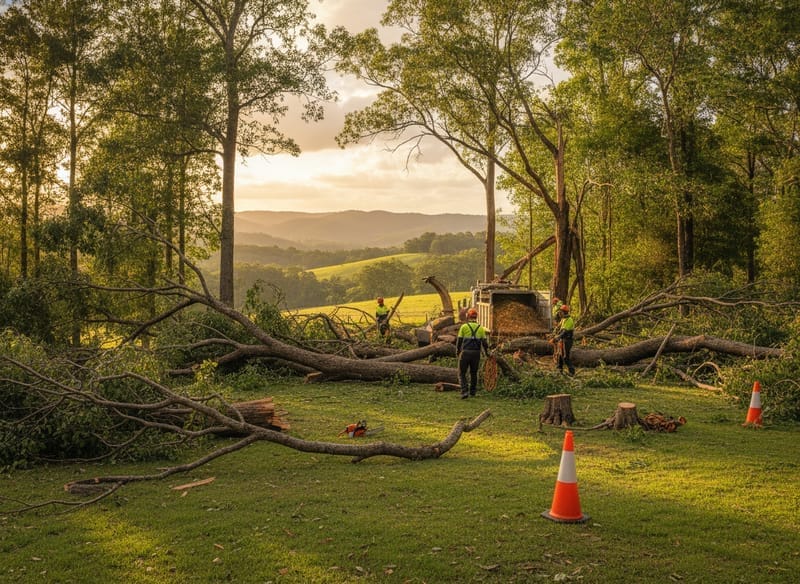
3. Full Storm Damage Tree Removal Mount Stuart Once the critical, life-safety hazards are mitigated, we systematically dismantle the remaining compromised timber. Our ground crews use heavy-duty wood chippers to process branches and leafy debris on-site, while our tipper trucks and grapple-loaders haul away the massive trunk sections.
4. Insurer Documentation and Final Cleanup We document the entire site with time-stamped before-and-after photographs and provide an itemised arboricultural report if required for your home insurance claim. Finally, we rake, blow, and sweep the site, ensuring your steep block or terraced garden is left tidy, safe, and ready for any necessary repairs.
High-risk emergency tree work demands rigorous, uncompromising safety protocols. Our team operates exclusively with fully qualified AQF Level 3 climbing arborists for all aerial operations, and AQF Level 5 consulting arborists for technical risk assessments and reporting. We are fully insured with comprehensive Public Liability and WorkCover policies, giving you absolute financial peace of mind when we deploy heavy machinery and personnel onto your storm-damaged property.
Every storm clean-up and remedial pruning job is conducted strictly in accordance with AS4373 (Pruning of Amenity Trees) and relevant Safe Work Australia height safety standards. Furthermore, we provide detailed, itemised quotes and comprehensive photographic evidence before commencing any cutting, greatly streamlining the claims process directly with your home insurer.
Executing Storm Damage Tree Removal Mount Stuart effectively requires deep, highly specific knowledge of the area’s distinct environmental drivers and regulatory landscape. Nestled in the steep eastern foothills of kunanyi, this suburb features very shallow topsoils over hard dolerite rock. Combined with intense exposure to roaring westerly gales, large native white peppermints, stringybarks, and massive European garden plantings (like century-old oaks, planes, and elms) are highly susceptible to root-plate windthrow and catastrophic limb failure.
When working in Mount Stuart, Sandy Bay, or West Hobart, we frequently navigate narrow, winding historical streets and sloping properties with zero rear vehicle access. This reality necessitates advanced rope-access climbing and strategic crane lifts. Additionally, we strictly adhere to the Tasmanian Planning Scheme - Hobart. While true emergency works to make a dangerous tree safe often meet council safety exemptions, processing damaged specimens listed on the City of Hobart Significant Tree Register, or working within the Landslip Hazard Code on steep slopes, requires careful documentation. We provide the necessary AQF Level 5 arborist reports to satisfy Hobart City Council requirements and keep your site fully compliant.
Once the immediate storm debris is cleared and the heavy timber is hauled away, your remaining trees require close monitoring. The sudden loss of a dominant canopy tree often exposes surrounding, previously sheltered trees to entirely new wind loads, dramatically increasing their risk of future failure.
Over the next six to twelve months, watch your retained eucalypts and exotic hardwoods for signs of severe stress. Look out for a flush of sudden epicormic shoots along the trunk, or slight lifting and cracking of the soil at the base, which indicates a destabilised root plate. If you notice structural splitting in major branch unions, hanging deadwood, or fungal fruiting bodies appearing on storm-battered trunks, call our arborists immediately for a follow-up structural assessment and preventative pruning.
Storm cleanup is priced based on the volume of debris and complexity.
We provide a transparent quote before any cleanup begins.
Post-storm recovery for the local area.
Contact our team for fast, safe storm damage cleanup.
Call 0400 000 000