Managed Size
Stop the tree dominating your yard or blocking views.
Expert height reduction, canopy management, and safe alternatives to traditional lopping.
Expert tree management in New Town and surrounding Hobart suburbs.
When residents ask for Tree Lopping New Town, they usually want to solve a problem: a tree that is too big, blocking light, or dropping debris. We solve these problems professionally.
Many large exotic trees in New Town were planted decades ago in spaces too small for them. We provide solutions that manage their size without violating local heritage codes.
Stop the tree dominating your yard or blocking views.
Correct pruning stops the rapid, unstable regrowth that follows bad lopping.
Avoid council fines by ensuring tree work meets the exemption criteria for improving health and appearance.
We assess the overgrown tree and discuss your concerns (light, size, safety).
We quote for proper reduction pruning or removal if the tree cannot be saved.
Our team executes the height or width reduction to Australian Standards.
All foliage and branches are chipped and removed.
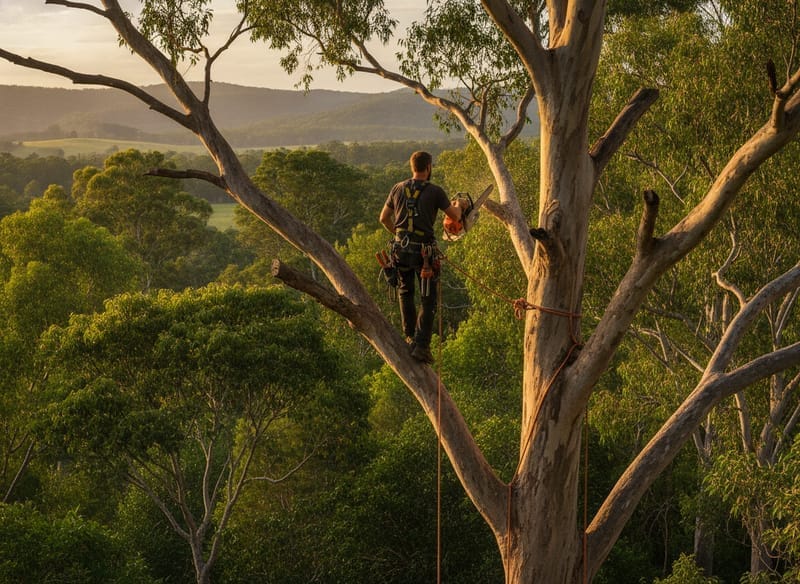
When overgrown branches threaten your roofline, block your winter sun, or stretch too far across a boundary, securing professional Tree Lopping New Town residents can rely on is essential. In the established gardens and historic streets of New Town, managing mature canopy requires more than just a chainsaw; it demands an understanding of proper arboriculture. Our team at Hobart Arborist specialises in safely reducing, reshaping, and managing trees to suit your property without compromising their long-term health or structural integrity.
New Town is home to a unique mix of towering native eucalypts and sprawling 1880s European plantings. Whether you need a massive English oak safely pulled back from your gutters or a fast-growing Tasmanian blue gum brought down in height, our local climbers have the expertise to handle it. We provide targeted canopy management that achieves your space and light goals while strictly adhering to Australian Standards, ensuring your valuable trees remain safe and structurally sound for decades to come.
The term "lopping" is widely used by homeowners wanting to make a tree smaller, but in the arboriculture industry, literal lopping or "topping" is a highly destructive practice. DIY lopping involves making indiscriminate heading cuts across heavy branches, leaving large, ugly stubs. This practice is explicitly discouraged under AS4373 because it severely damages the tree and accelerates decay.
When a tree is topped, it responds by frantically pushing out "epicormic" shoots. These fast-growing, spindly branches are only weakly attached to the outer bark rather than the solid heartwood. In Hobart, where we experience intense westerly and north-westerly frontal systems roaring off kunanyi / Mount Wellington, these weak epicormic branches are the first to snap and crash onto roofs or cars.
Instead of destructive DIY topping, our team provides proper canopy reduction. By making precise branch collar cuts and target pruning to suitable growth nodes, we effectively reduce the size and spread of your tree while preserving its natural shape. This professional approach prevents the dangerous structural flaws caused by crude lopping, keeping your property safe during high-wind events while still achieving the clearance and light you need.
When you ask us for tree lopping, we assess your specific goals—whether that is clearing a roofline or reducing overall height—and apply the appropriate AS4373-compliant pruning technique. This ensures you get the clearance you need while keeping the tree safe and healthy.
We carefully reduce the overall height and spread of the canopy by cutting branches back to a suitable lateral branch. This achieves the "smaller tree" outcome you want without leaving the dangerous stubs associated with crude lopping. We typically remove no more than 25-30% of the live crown to ensure the tree maintains enough foliage for photosynthesis.
If your primary concern is low-hanging branches blocking driveways, footpaths, or under-canopy views, we selectively remove the lowest branches. This lifts the canopy's base height, improving clearance and pedestrian access without altering the upper tree structure.
For properties dealing with excessive shade or wind resistance, we selectively remove secondary and tertiary branches from within the canopy. This allows more winter sunlight to penetrate historic New Town gardens and reduces the "sail effect" during severe westerly wind events, all without altering the tree's outer dimensions.
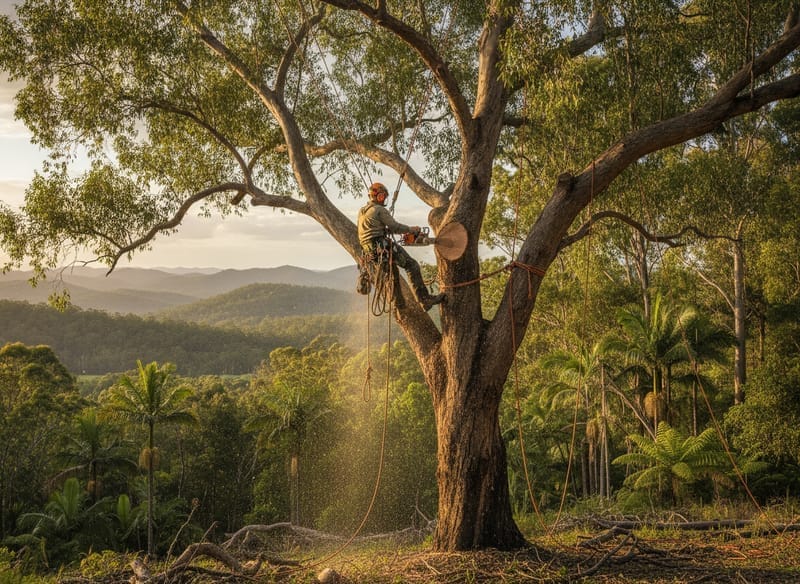
When specific limbs are rubbing against your house, encroaching on powerlines, or stretching dangerously over a neighbour's fence, we target those exact branches. We dismantle problematic limbs using advanced rope access or elevating work platforms, ensuring zero damage to the structures below.
Delivering seamless Tree Lopping New Town projects requires a disciplined, step-by-step approach tailored to the tight access and heritage constraints of the area.
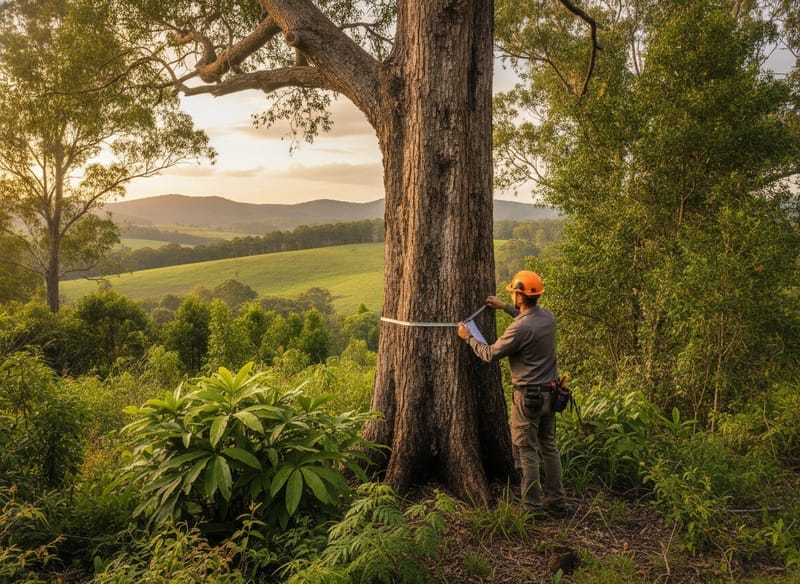
First, we conduct a thorough on-site assessment. We evaluate the tree's species, health, structural stability, and your specific goals for the canopy. We also check the site access, noting narrow historic driveways, overhead service drops, and terraced retaining walls that are common throughout the suburb.
Next, we cross-reference the proposed work with the City of Hobart's planning scheme. If the tree is on the Significant Tree Register or falls under the Local Historic Heritage Code, we advise you on the necessary exemptions or council permits required before a single cut is made.
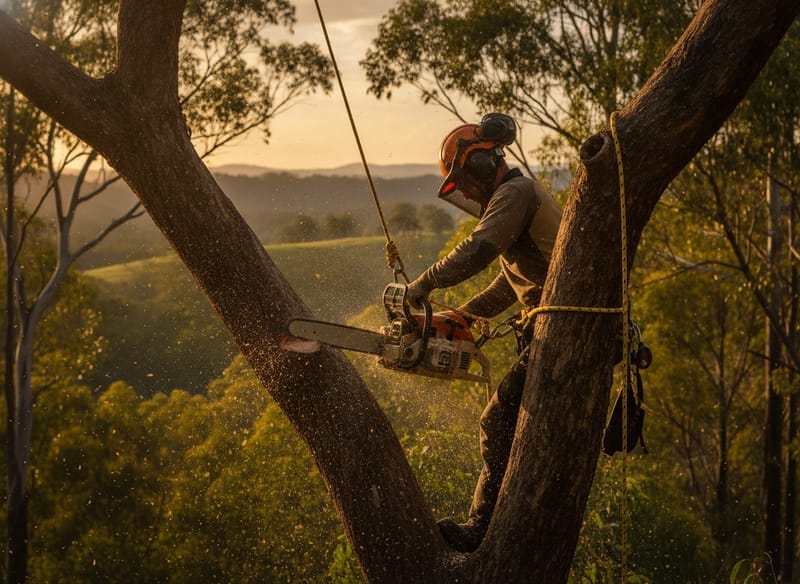
Once approved, our climbers access the tree using either single-rope techniques or our specialised spider lifts. We execute the required reduction or thinning cuts piece by piece, safely lowering heavy timber using friction devices to protect your garden beds and pathways.
Finally, we process all green waste through our high-capacity wood chippers. We rake and blow down the site, leaving your New Town property completely clear of debris and your tree perfectly shaped and structurally sound.
Tree work in established suburbs carries inherent risks, which is why compliance and safety are at the core of our business. Our operations strictly follow AS4373 (Pruning of Amenity Trees), ensuring every cut supports the long-term structural integrity of your canopy.
Our team consists of AQF Level 3 climbing arborists trained in advanced rigging, aerial rescue, and chainsaw operation. We are fully insured with comprehensive public liability and WorkCover, giving you total peace of mind when we operate heavy machinery or perform technical rope access above your home. From initial site hazard assessment to the final chipper run, safety dictates every move we make.
Working in New Town means operating within a unique residential environment. The area boasts a rich mix of 1880s to 1920s garden plantings—including massive English oaks, elms, and cedars—alongside towering native white peppermint and Tasmanian blue gums. Managing these aging giants requires deep local arboricultural knowledge.
Under the Tasmanian Planning Scheme - Hobart, blanket size rules do not apply, but the Local Historic Heritage Code is strictly enforced. If your property is in a heritage precinct or your tree is on the City of Hobart Significant Tree Register, lopping or heavily reducing it will require a permit. However, pruning for health or safety exemptions for dangerous limbs often applies.
Access is another major factor. New Town features narrow streets and subdivided blocks with no rear vehicle access. Our team routinely utilises advanced rope-access techniques to safely dismantle and reduce canopies where traditional cherry pickers simply cannot fit.
Once we have reduced or shaped your tree, proper aftercare is vital. We recommend deep watering during Hobart's drier summer months to help the tree recover from the stress of live-crown removal. Do not apply high-nitrogen fertilisers immediately, as this can encourage the weak, rapid epicormic growth we specifically prune to avoid.
Keep an eye on the canopy over the following seasons. If you notice deadwood developing or heavy leaning after an intense winter westerly, contact us for a follow-up inspection. For fast-growing species like blue gums, a regular maintenance cycle every 3 to 5 years ensures the canopy remains manageable and safe.
Pricing depends on the size of the tree and the degree of reduction required.
Call us to discover the safe, professional alternative to tree lopping with a free quote.
Providing smart tree management solutions locally.
Contact our experts for a professional pruning quote.
Get a Free Quote