Reduced Risk
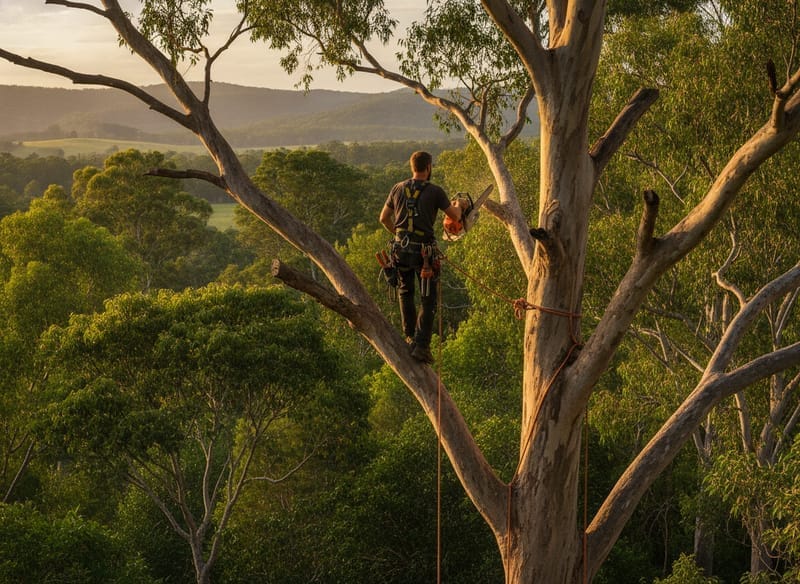
Lower the height and weight of the canopy safely, minimising the chance of storm damage.
We provide safer, smarter alternatives to traditional lopping to manage overgrown trees while protecting their long-term health.
Canopy management across North Hobart and surrounding areas.
When you search for Tree Lopping North Hobart, you likely want an overgrown tree reduced in size. We deliver this result using proper reduction pruning.
Many older trees in North Hobart have been poorly lopped in the past. We specialise in remedial pruning and safe canopy reduction to manage these trees before strong westerly winds cause failure.
Lower the height and weight of the canopy safely, minimising the chance of storm damage.
Proper pruning reduces the need for constant maintenance and prevents costly tree failure.
Achieve the clearance and sunlight you want without butchering the tree.
We inspect your overgrown tree in North Hobart to determine the safest reduction method.
We explain why a proper crown reduction or full removal is a better solution than indiscriminate lopping.
Our team executes the plan, cutting cleanly to node points to promote healthy recovery.
All branches are processed and removed from your site.
When established trees threaten to dominate your property, professional Tree Lopping North Hobart is the safest way to reclaim your space, sunlight, and views.
At Hobart Arborist, we know that living on the steep, terraced blocks of the inner-city slopes means living closely with significant canopies. From sprawling historic oaks, elms, and cedars planted a century ago to towering white peppermints native to the dry sclerophyll foothills, urban trees often outgrow their residential boundaries. When westerly frontal systems sweep across the Derwent, top-heavy and overgrown branches become a serious hazard to roofs, fences, and powerlines.
Our team of qualified local arborists specialises in reducing and managing oversized canopies without destroying the structural integrity of the tree. We provide tailored canopy reduction and targeted pruning that gives you back your yard while preserving the health of Hobart's iconic urban forest. Whether you need clearance over a heritage roofline or want to open up a shaded garden, we have the skills and equipment to safely manage your largest trees.
In the arboriculture industry, strict "lopping" or "topping"—indiscriminately hacking branches back to bare stubs—is a highly discouraged practice. Unfortunately, we see the results of unqualified lopping all over the eastern foothills of kunanyi.
When a tree is aggressively topped, it responds by pushing out rapid, weakly attached epicormic growth. This means within a few seasons, your tree will be just as large, but the new branches will be far more susceptible to snapping during our heavy winter winds and snow loads. Furthermore, flush cuts and topping leave large, open wounds that invite decay, rapidly shortening the tree’s safe service life and turning a once-healthy Tasmanian blue gum or historic plane tree into a structural liability over your home.
The solution is an AS4373-compliant approach to canopy management. When you ask us to make your tree smaller, our qualified arborists assess the tree's health, species, and structural form. Instead of crude lopping, we use targeted techniques like crown reduction and selective pruning. We reduce the weight and height of the canopy by cutting back to appropriate growth points, preserving the tree's natural shape, preventing internal decay, and ensuring the regrowth is structurally sound and safe.
When property owners ask us for tree lopping, they usually want to reduce the size, height, or spread of an overgrown tree. We achieve this using industry-approved pruning techniques that keep your property safe and the tree healthy.
We selectively reduce the height and spread of the canopy by pruning back leaders to suitable lateral branches. This is the correct, AS4373-compliant alternative to topping, ideal for managing large street-facing planes, elms, or oaks without ruining their architectural form.
We remove the lower branches of the tree to increase the clearance between the ground and the canopy. This is highly effective for steep driveways, pedestrian access, or clearing lines of sight across the terraced gardens common in the area.
By selectively removing secondary branches throughout the canopy, we increase wind permeability and allow more winter sunlight into your home. This reduces windthrow risk during westerly gales without altering the tree's overall size.
Targeting specific, problematic limbs that are overhanging roofs, encroaching on powerlines, or blocking views. We make precise collar cuts to remove the nuisance branches while maintaining the tree's balance.
Strategic reduction of heavy, over-extended lateral limbs. This is particularly important for mature eucalypts like manna gums and stringybarks that are prone to sudden summer limb drop or failure under winter ice loads.
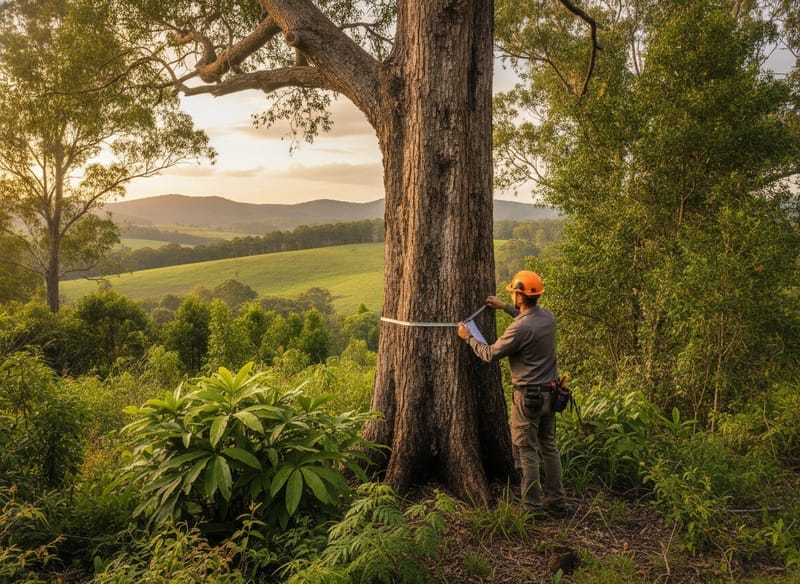
Our process begins with a comprehensive site assessment. When you contact our team, a qualified arborist will visit your property to evaluate the overgrown tree. We look at the species, the health of the canopy, and the specific site constraints—whether you are on a steep dolerite slope or accessed via a narrow, winding street. We then provide a detailed, itemised quote recommending the most effective pruning or reduction strategy.
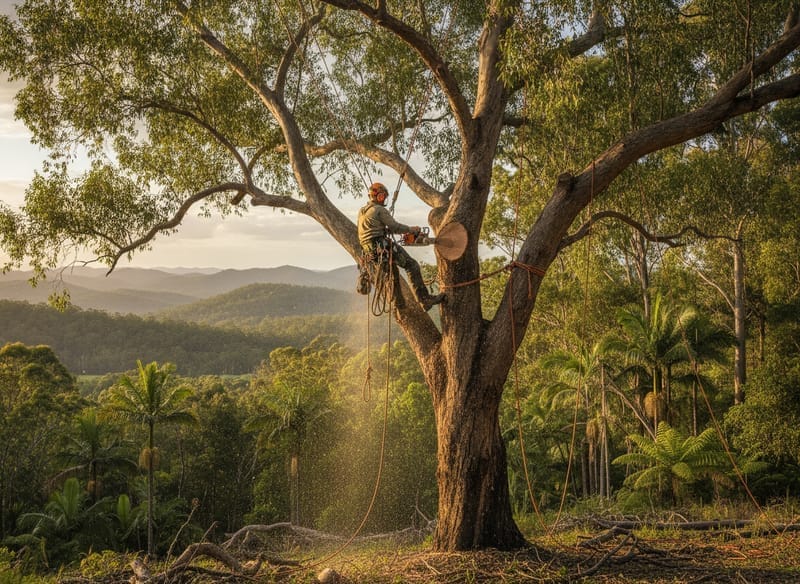
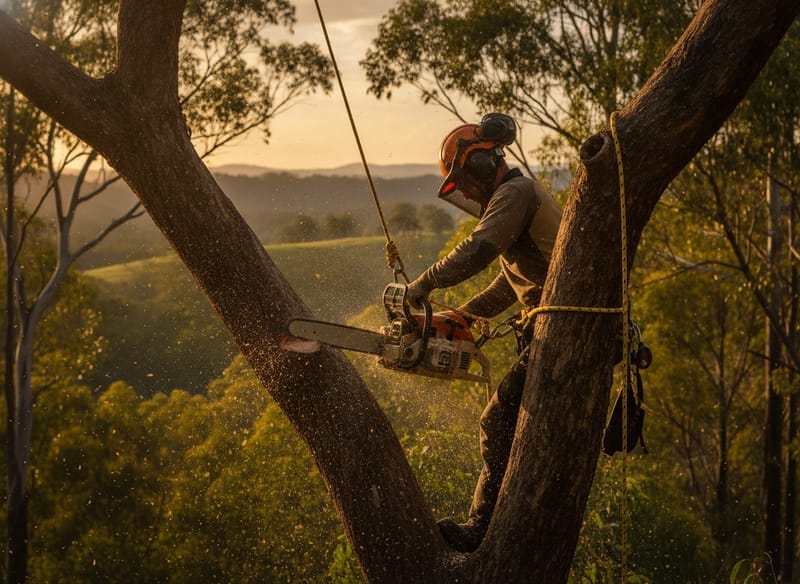
Once approved, our experienced climbing crew arrives fully equipped. Because many local blocks lack rear vehicle access, our climbers frequently use advanced single and double-rope access techniques to safely navigate the canopy. Where access allows, we may deploy spider lifts or cherry pickers. We dismantle the necessary sections of the tree using top-handle climbing saws, meticulously rigging and lowering heavy limbs to protect your garden, fences, and heritage structures below.
After the canopy has been properly reduced, we process all the green waste on-site. Our ground crew feeds the branches through a high-capacity wood chipper, reducing the bulky foliage to premium mulch. Finally, we perform a thorough cleanup of the site, raking and blowing your paths and lawns, leaving your property immaculate.
Canopy work at heights carries significant inherent risks, which is why safety and compliance are non-negotiable for our team. All our pruning, lopping, and canopy reduction work is strictly performed in accordance with AS4373 - Pruning of Amenity Trees.
Our climbing arborists hold AQF Level 3 qualifications and are fully equipped with mandatory Working at Heights, EWP, and Tree Felling tickets. For properties requiring significant works on protected historic trees, our AQF Level 5 consulting arborists can provide the necessary formal reports. Hobart Arborist is fully insured with comprehensive Public Liability and WorkCover, giving you absolute peace of mind when our crews are rigging heavy timber over your valuable assets.
Working on mature trees in this area requires a deep understanding of the Tasmanian Planning Scheme – Hobart. Unlike some mainland councils, the City of Hobart does not use a blanket size trigger to protect trees. Instead, protection is based on specific listings and overlays, primarily the Local Historic Heritage Code and the City of Hobart Significant Tree Register.
If you have a historic elm, oak, or cedar that sits on the Significant Tree Register or within a heritage precinct, any major lopping, reduction, or removal work will require a permit. While minor pruning to improve health is generally exempt, aggressive reduction is not. Furthermore, for properties situated on the steeper slopes, the Landslip Hazard Code may influence significant vegetation removal.
Our team knows exactly how to navigate these local planning rules. We can identify whether your tree is listed, advise on the likelihood of council approval for canopy reduction, and provide the necessary arborist reports to support your application.
After we have successfully reduced your tree’s canopy, a little aftercare goes a long way. Proper pruning redirects the tree's energy, so we recommend providing deep, infrequent watering during the drier summer months to help the root system adjust to the new canopy load.
We also recommend retaining the chipped mulch from the job and spreading it over the structural root zone, which helps retain moisture in Hobart's shallow dolerite soils. Keep an eye out for how the tree responds over the following spring. Because we use AS4373-compliant collar cuts, regrowth will be natural and structurally sound. For large, fast-growing species, we recommend booking a routine inspection every 3 to 5 years to monitor canopy density and maintain appropriate clearances.
Pricing for canopy management depends on the size of the tree and the complexity of the reduction required.
Call us for a free quote on managing your overgrown trees properly.
We provide proper canopy management alternatives to lopping across the Hobart area.
Contact us for expert canopy reduction that protects your property and the tree.
Get a Free Assessment