Enhanced Tree Health
Removing diseased or crossing branches prevents decay and improves airflow.
AS4373-compliant pruning to protect the health, structure, and beauty of your historic trees.
Serving North Hobart and surrounding heritage suburbs.
Our Tree Pruning North Hobart service covers everything from shaping young trees to reducing the sail area of massive mature canopies.
North Hobart's mixture of large European species and native eucalypts means pruning requires a tailored approach. Reducing wind-sail in mature trees is critical to prevent limb failure during our strong westerly wind events.
Removing diseased or crossing branches prevents decay and improves airflow.
Deadwooding removes heavy limbs that are at risk of falling on your property.
Crown thinning allows more natural light into your terraced gardens and home windows.
We evaluate the tree's structure and identify target branches for pruning in North Hobart.
We discuss whether the goal is clearance, light penetration, or hazard reduction.
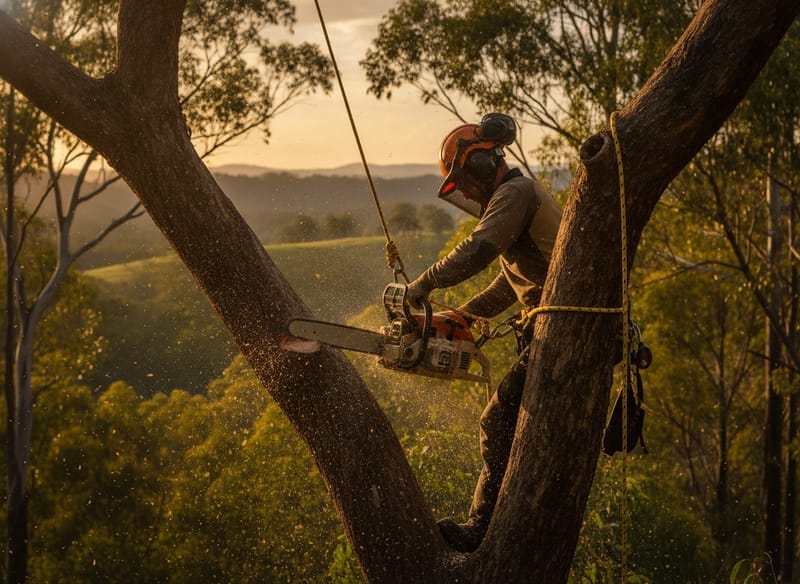
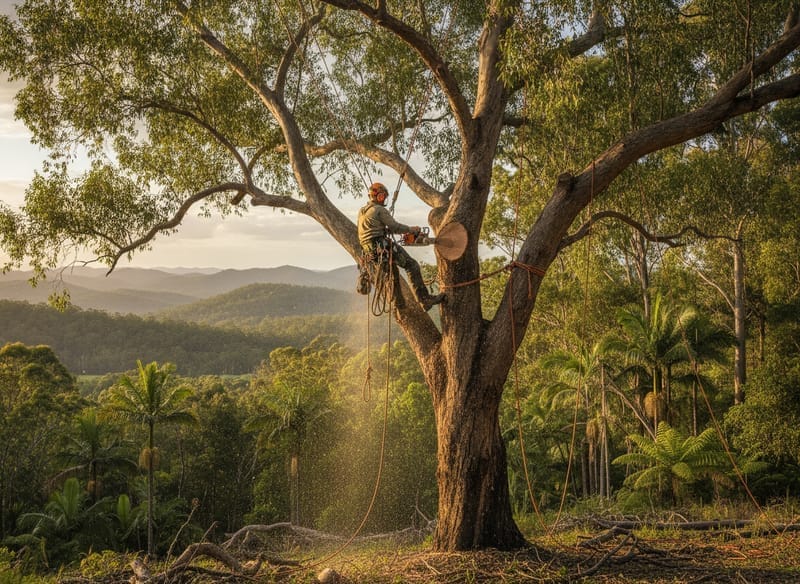
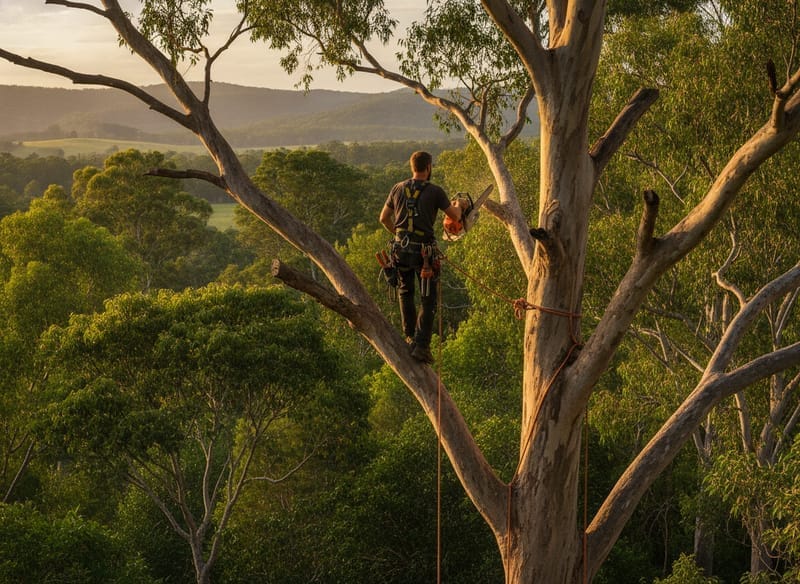
Our climbers access the canopy and perform precision cuts that allow the tree to heal correctly.
All debris is chipped and removed, leaving your garden pristine.
When it comes to managing the health, safety, and aesthetics of your canopy, professional Tree Pruning North Hobart is essential. Our established arborist team services residential blocks, heritage properties, and commercial sites across North Hobart and the surrounding suburbs. We understand that pruning is fundamentally different to tree removal; our goal is to retain your trees and improve their structural integrity, ensuring they thrive in our cool temperate maritime climate.
Properties in this area often feature a mix of towering Tasmanian blue gums and white peppermints, alongside historic European plantings like mature oaks and elms. The steep terrain leading up towards kunanyi / Mount Wellington, combined with our notorious westerly wind events, means that unmanaged trees pose a significant risk to roofs, powerlines, and pedestrians. Our qualified climbers use targeted, AS4373-compliant pruning techniques to reduce wind load, clear structures, and extend the safe, useful life of your trees.
One of the most common issues we see across the City of Hobart is the damage caused by unqualified lopping or DIY tree cutting. Lopping involves indiscriminate cuts that leave large, ugly stubs. This practice is entirely counterproductive. It triggers a panic response in the tree, resulting in rapid, weakly attached epicormic regrowth that is highly susceptible to failure during our harsh winter winds. Furthermore, large flush cuts expose the trunk to decay, shortening the tree's lifespan and turning an asset into a serious hazard.
Our approach to Tree Pruning North Hobart focuses entirely on long-term structural health. We operate strictly under the Australian Standard for the Pruning of Amenity Trees (AS4373). This means every cut we make is a targeted branch collar cut, ensuring the tree can naturally compartmentalise the wound.
Whether we are managing an overgrown manna gum overhanging your roof or carefully deadwooding a heritage-listed elm, we never remove more than 25 to 30 percent of the live crown in a single prune. This disciplined method prevents over-thinning at the tips, evenly distributes wind load, and protects your property during wild weather without destroying the natural habit of the tree.
We employ a range of specialised pruning techniques to suit the specific species, age, and location of your trees. All methods are strictly aligned with AS4373 standards to promote healthy growth and structural safety.
We selectively remove small live branches throughout the canopy. This reduces wind resistance and weight without altering the natural shape of the tree, which is critical for tall eucalypts exposed to westerly fronts.
Involves the careful removal of lower branches to increase vertical clearance underneath the canopy. Ideal for clearing sight lines, driveways, footpaths, and providing space above residential structures.
We systematically climb and remove dead, dying, or diseased branches. This prevents unpredictable limb drop over living areas or structures, heavily reducing risk without taking away live foliage.
A highly selective shortening of branches back to a suitable lateral branch. Distinct from harmful topping, we use this technique sparingly to clear utility lines or boundaries while preserving the branch collar.
Addressing specific structural defects, such as co-dominant stems, rubbing branches, or over-extended limbs that threaten nearby buildings or the long-term stability of the tree.
We begin with a comprehensive on-site assessment. When you contact us for Tree Pruning North Hobart, one of our qualified arborists will visit your property to evaluate the health of your trees, identify any immediate hazards, and discuss your objectives. We outline the exact AS4373 pruning techniques required and provide a clear, itemised quote.
On the day of the job, our crew arrives fully equipped for your specific site. Many properties on the mountain flank lack rear vehicle access, so our climbers frequently use advanced single and double-rope access techniques to navigate the canopy safely. If access permits, we deploy tracked spider lifts or elevating work platforms to reach over-extended limbs.
During the climbing phase, all cuts are made meticulously at the branch collar using precision hand saws and top-handle climbing chainsaws. We carefully rig and lower large limbs using friction devices to ensure no damage occurs to your garden, retaining walls, or roof below.
Finally, we process all offcuts through our commercial wood chippers parked safely on the street. Your site is thoroughly raked and cleared, leaving your property immaculate and your canopy structurally sound.
Tree work is inherently dangerous, particularly on the steep, dolerite soils and tight access blocks common in North Hobart. As your local professionals, we operate with complete commitment to safety and compliance. Our operational crew consists of AQF Level 3 qualified climbing arborists, and our consulting team includes AQF Level 5 arborists for formal reporting.
We are fully public liability insured and carry comprehensive WorkCover for all our staff. From the moment our trucks arrive, we implement strict traffic management and pedestrian control protocols. Every climbing system, elevating work platform, and chainsaw operation is managed to the highest Tasmanian safety standards, ensuring your property is protected at every step.
Working in this region requires specific local knowledge. The cool maritime climate and prevailing westerly winds dictate how we manage canopy load, particularly for native species like Tasmanian blue gums and stringybarks.
Regulatory knowledge is equally vital. Under the Tasmanian Planning Scheme - Hobart, there is no blanket size trigger for tree removal or heavy pruning. Instead, the City of Hobart manages its canopy via the Local Historic Heritage Code and the Significant Tree Register. Many older properties in North Hobart and surrounding suburbs sit within heritage precincts or feature listed trees, such as century-old oaks, planes, or cedars.
While minor pruning for health and appearance is generally exempt, altering a listed tree's natural habit requires formal approval. Our AQF Level 5 arborists can provide the required written statements and reports to ensure your pruning works are completely compliant with council regulations.
Once the pruning is complete, your trees will need time to adjust. We recommend applying a thick layer of organic mulch around the root zone, taking care to keep it away from the trunk, to help retain soil moisture during the drier summer months.
Proper pruning encourages healthy, sustainable growth rather than the aggressive spikes seen after lopping. Depending on the species and the tree's location, you should schedule a routine inspection every 3 to 5 years. However, if a severe westerly storm system passes through Hobart, we recommend calling us immediately to assess the canopy for any newly hung-up deadwood or fractured limbs.
Tree Pruning North Hobart is priced based on the size of the canopy and the complexity of the required pruning.
Contact us for a free, no-obligation quote tailored to your specific pruning needs.
We provide professional pruning services throughout the inner suburbs.
Enhance the health and safety of your trees with our qualified arborists.
Get a Free Pruning Quote