Restored Access
Clear your driveways, paths, and gates so you can get back to normal life.
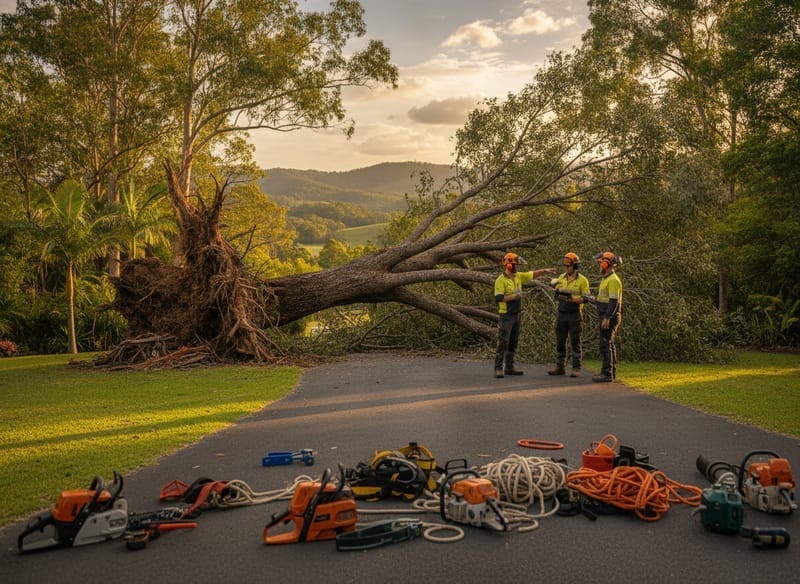
Comprehensive clean-up of fallen trees and broken branches after severe Hobart weather.
Clearing storm damage across Ridgeway, Mount Nelson, and South Hobart.
Our Storm Damage Tree Removal Ridgeway service restores order to your property after high winds or heavy snow.
Winter westerlies funnel up the Derwent and batter the ridges of Ridgeway. We specialise in cleaning up the resulting mess, from snapped peppermint gums to shattered heritage oaks.
Clear your driveways, paths, and gates so you can get back to normal life.
We remove "widow-makers"—broken branches hanging dangerously in the canopy.
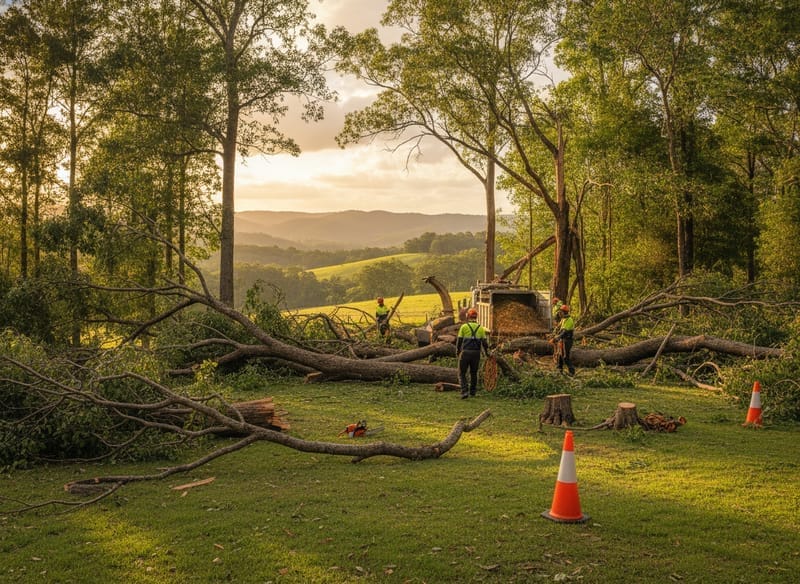
All storm debris is chipped, raked, and removed off-site completely.
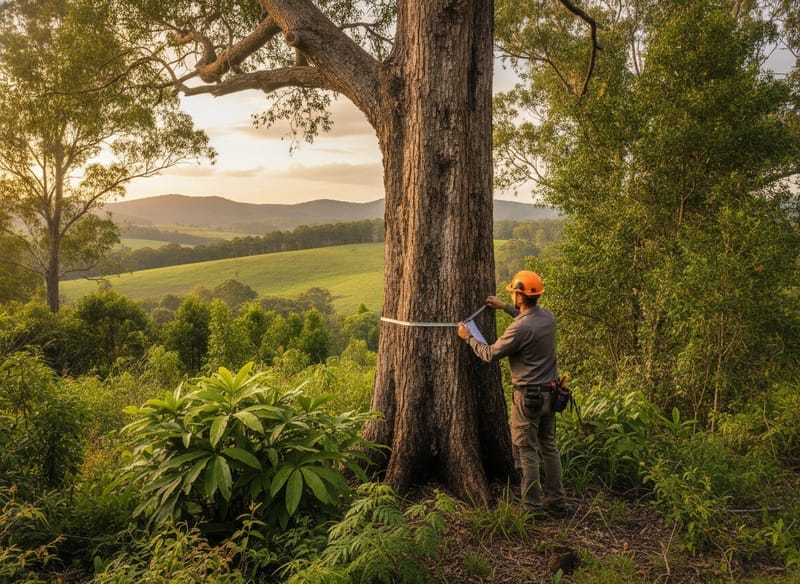
We survey the storm damage and identify the most hazardous trees or branches first.
We remove debris blocking your driveway, house access, or footpaths.
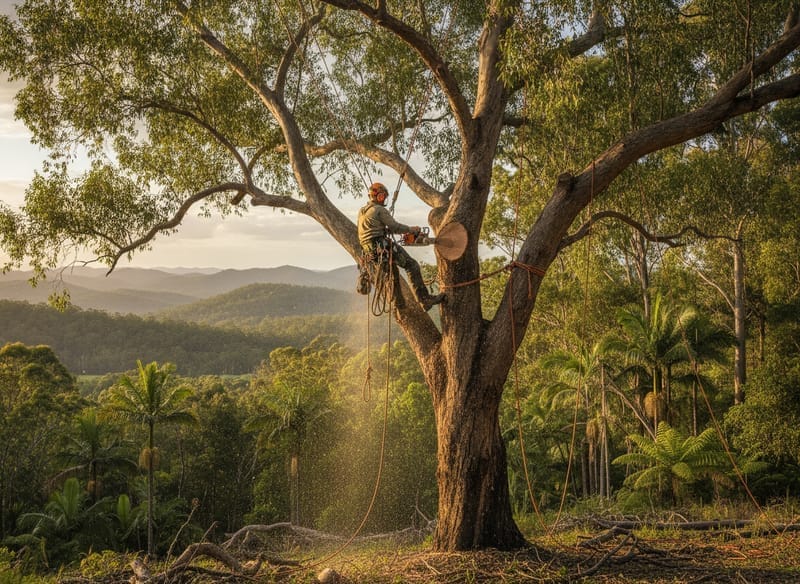
Climbers safely extract broken, hanging branches from the remaining canopy.
All fallen timber is chipped. We can leave mulch for your garden or remove it entirely.
We provide advice on any remaining trees that may have been compromised by the storm.
Living on the steep, eastern flanks of kunanyi / Mount Wellington means Ridgeway properties are completely exposed to fierce westerly and north-westerly frontal systems. When these severe weather events roll through our cool temperate maritime climate, established canopies are put under immense stress. Saturated soils and high winds frequently lead to snapped limbs, violently uprooted root plates, and incredibly dangerous hung-up branches suspended over homes. When disaster strikes, fast and professional Storm Damage Tree Removal Ridgeway is essential to secure your property, clear blocked access roads, and prevent secondary failures.
At Hobart Arborist, our dedicated local team is uniquely equipped to handle complex emergency make-safe operations. Whether a towering Tasmanian blue gum has crashed across your acreage driveway or a massive European elm has split directly over your roofline, our qualified climbers and heavy-machinery operators are on standby. We understand the sheer urgency of storm recovery in tight, steep-access bushland interfaces, delivering safe, fully insured, and highly technical tree removal precisely when you need it most.
Storm-damaged trees are incredibly unpredictable and structurally compromised. When a large white peppermint or stringybark is uprooted, or when a massive limb snaps and hangs in the canopy, the timber is subjected to severe, unseen tension and compression forces.
Attempting to clear fallen trees yourself with a standard farm chainsaw is a recipe for disaster. DIY cutting routinely leads to catastrophic "barber-chair" splits or sudden spring-backs that can cause fatal injuries. Furthermore, operating heavy chainsaws on Ridgeway's steep dolerite slopes often results in slips, property damage, or further soil destabilisation.
We regularly see distressed property owners hire under-qualified, "cash-in-hand" operators to quickly "lop" their damaged trees. Not only does this outright breach AS4373 (Pruning of Amenity Trees), but it also leaves large, jagged stubs that invite rapid fungal decay. Lopping triggers weak epicormic regrowth, effectively turning a salvageable tree into a future, high-risk hazard.
Our professional approach ensures absolute safety and guarantees long-term tree health where a storm-damaged specimen can genuinely be saved. We use complex rope-rigging and crane-assisted methods to safely dismantle heavy, twisted timber piece by piece. If a tree is beyond saving, our complete removal process eliminates the hazard entirely. We also provide highly detailed, formal arborist reports and photographic evidence to seamlessly support your home insurance claims.
We utilise advanced arboricultural techniques and heavy equipment to manage complex storm recovery operations on difficult, steep-access terrain across the Hobart foothills.
For steep gully properties or blocks with zero rear vehicle access, our AQF Level 3 climbers use advanced double-rope techniques and friction devices to safely lower heavy storm-damaged timber without crushing your gardens or terraced retaining walls.
When a mature manna gum or significant exotic tree fails over a roofline, we utilise crane lifts. This prevents secondary damage to the structure by lifting the enormous weight of the compromised canopy vertically, bypassing narrow street access entirely.
Fallen and windthrown trees hold massive stored energy. Our crew uses specialised chainsaw cuts to safely release this tension, preventing the trunk from violently springing back or rolling during the clean-up process.
Before cutting, our AQF Level 5 consulting arborists can assess standing-but-compromised trees. We document the structural failure and provide the written statements required by insurers or the local council to authorise removal.
When severe weather strikes the foothills of Hobart, our response is meticulously structured to prioritise human safety, stabilise your property, and seamlessly facilitate your insurance claims.
1. Site Triage and Hazard Assessment Upon arriving in Ridgeway, our senior arborists conduct an immediate site walk to identify life-safety hazards. Trees resting on structures, powerlines, or blocking critical vehicle access take absolute priority. We critically inspect standing trees for root plate lifting caused by saturated soil, as well as hung-up limbs high in the canopy.
2. Photographic Documentation and Make-Safe Works Before a single cut is made, we document the site with time-stamped photographs for your insurer. Our first operational step is making the site safe. Using rope access or Elevated Work Platforms (EWPs) where the terrain allows, our climbers remove immediate overhead threats.
3. Technical Dismantling Once the immediate danger is neutralised, we systematically dismantle the remaining compromised timber. Working with top-handle chainsaws and heavy-duty rigging, we carefully lower large sections of trunk and canopy to the ground in controlled drops, avoiding any further impact to your landscape.
4. Processing and Thorough Clean-Up Finally, we process the shattered branches through our high-capacity 12-inch wood chippers, converting the debris into usable mulch. Heavy log sections are removed via tipper trucks or lifted out via loader cranes. We leave your property clean, safe, and entirely ready for your builders to commence any necessary roof or structural repairs.
Executing high-risk tree removals during post-storm chaos requires strict adherence to national safety frameworks. All our remedial pruning and hazard reduction works strictly comply with AS4373 (Pruning of Amenity Trees), ensuring any damaged trees we attempt to salvage are not irreparably harmed by poor cutting techniques.
Our on-site crew members hold AQF Level 3 qualifications for advanced climbing, rigging, and aerial felling, while our consulting arborists hold AQF Level 5 diplomas for formal reporting. We operate fully public liability insured and carry comprehensive WorkCover for our staff. Furthermore, prompt removal of fallen timber in Ridgeway aligns with AS3959 Asset Protection Zone (APZ) requirements, ensuring dry storm debris does not become a severe fuel hazard during the December to March bushfire season.
Executing professional Storm Damage Tree Removal Ridgeway requires a deep understanding of local terrain and the precise rules of the Tasmanian Planning Scheme - Hobart. Ridgeway's steep dolerite slopes often trigger the Landslip Hazard Code, meaning large-scale clearing of fallen timber must be executed carefully to avoid massive soil destabilisation and erosion.
Many established Hobart properties also feature significant canopy listed under the Local Historic Heritage Code. Unlike mainland states, Tasmania has no blanket "10/50" bushfire clearing rule. While everyday minor garden maintenance is exempt, removing a significant tree—even one heavily damaged in a storm—requires careful handling.
The City of Hobart scheme includes an exemption for trees that pose an "unacceptable safety risk". However, in practice, proving this for a heritage-listed or significant tree generally requires a written statement from a suitably qualified person. Our AQF Level 5 arborists provide the exact documentation required to prove the tree was structurally compromised, ensuring your emergency make-safe works are entirely lawful.
Once the immediate storm debris has been safely cleared, the remaining standing trees on your property require close and ongoing monitoring. Severe wind loads can easily tear or compromise root systems without completely toppling the tree on the day of the storm.
Over the following weeks and months, look for fresh soil cracking or lifting around the base of large eucalypts, or any newly developing leans in the trunk. If we have performed remedial pruning to save a heavily damaged tree, monitor its canopy for sudden dieback or aggressive epicormic shoots (fuzzy, dense regrowth along the trunk), which strongly indicates severe internal stress. We highly recommend booking a follow-up arborist inspection six months after a major wind event to assess the long-term stability of your remaining canopy.
Storm clean-up is quoted based on the volume of debris and access conditions.
We provide a free, no-obligation written quote for the complete clean-up.
Post-storm clean-up for the greater Hobart foothills.
Call our team for fast, safe, and complete storm damage tree removal.
Get a Free Quote