Restored Access
We quickly clear blocked driveways and buried pathways.
Thorough, safe cleanup of fallen trees and broken canopies after extreme weather.
Post-storm recovery across Sandy Bay, Ridgeway and Tolmans Hill.
Our Storm Damage Tree Removal Sandy Bay service restores safety to your property once the weather clears.
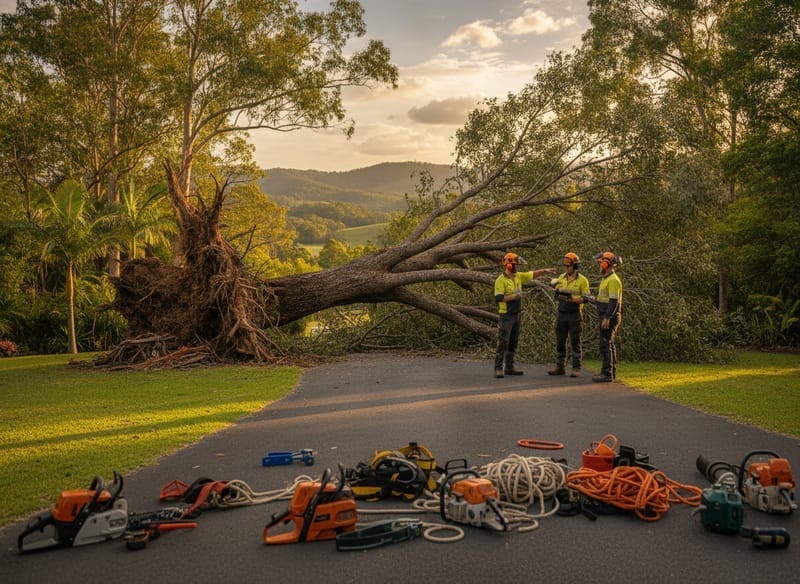
Winter and spring bring severe westerly fronts off Mount Wellington. This frequently causes windthrow in mature dry sclerophyll species and limb failure in heritage oaks across Sandy Bay.
We quickly clear blocked driveways and buried pathways.
By assessing the remaining canopy, we prevent further failures in the next storm.
Our clear, professional invoices and reports make dealing with your insurer straightforward.
We prioritize hazards, dealing with trees leaning on structures or blocking access first.
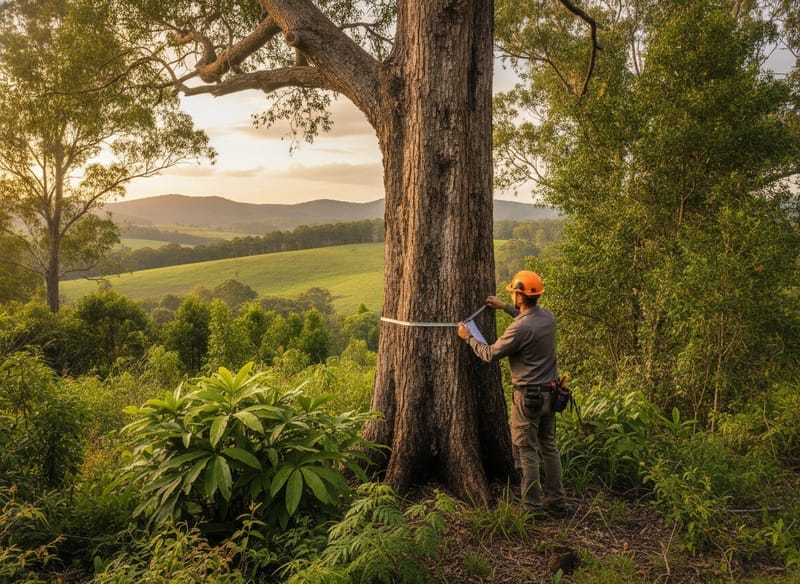
We inspect remaining trees for hidden fractures and hung-up debris.
We carefully process fallen timber using chainsaws and rigging.
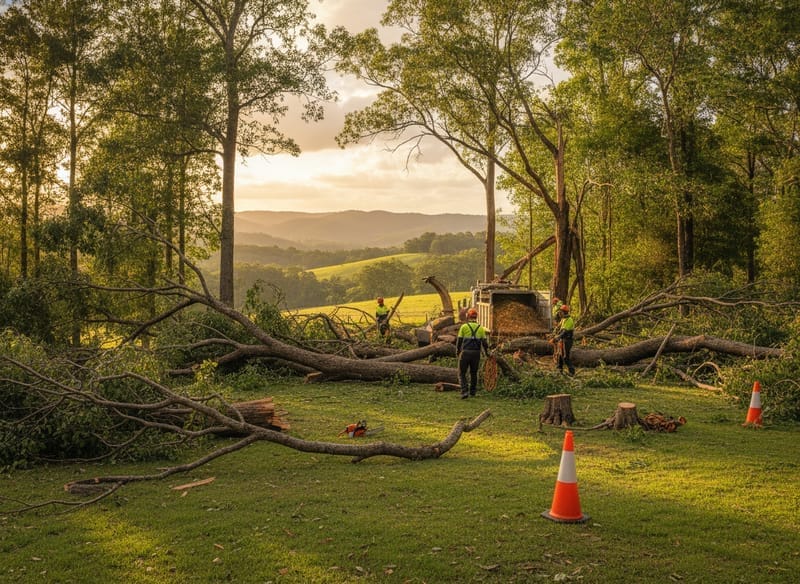
All foliage and timber is chipped and removed.
We ensure your property is entirely safe for your family.
Living in Sandy Bay means enjoying a beautiful, established canopy, from historic European street plantings to towering Tasmanian blue gums. But when fierce westerly winds funnel down the slopes of kunanyi / Mount Wellington, that same canopy becomes a serious hazard. We are Hobart Arborist, your local team dedicated to rapid, safe, and professional storm damage tree removal Sandy Bay property owners can rely on.
Whether it is a massive macrocarpa branch crashing onto your roof or a heritage oak showing signs of catastrophic root-plate failure after heavy rain, our highly trained climbers and crane operators are ready to respond. We understand the unique challenges of our local terrain, from narrow, winding access roads to terraced, heritage-listed gardens. We don't just chop and run; we assess the safety of your property, secure the site, and carefully dismantle dangerous timber before it causes further destruction to your home or landscape.
When a severe westerly wind event tears through Hobart, leaving twisted limbs and uprooted trees across your property, the temptation to grab a chainsaw and tackle the mess yourself is high. However, DIY cleanup is incredibly dangerous. Storm-damaged timber is highly unpredictable. Fallen and partially failed trees are often under immense structural tension and compression. One wrong cut can cause a massive log to spring back, roll, or drop, causing severe injury or secondary damage to your property.
Furthermore, unqualified operators often rush emergency jobs, ignoring proper safety protocols and leaving your remaining trees structurally compromised. Indiscriminate hacking or "topping" not only breaches AS4373 (Pruning of Amenity Trees) standards but also sets the stage for weak epicormic regrowth that is even more likely to fail in the next storm.
Our qualified arborists provide a completely different level of service. We use advanced rigging, rope-access techniques, and specialized machinery to safely control and dismantle hung-up branches and windthrown trees. We secure the immediate hazard, protect your underlying property, and ensure any pruning cuts made to salvage damaged but viable trees strictly adhere to Australian Standards, giving your remaining canopy the best chance to recover safely.
Handling storm-damaged timber on the steep, access-limited blocks of Hobart's western shore requires specialized equipment and advanced arboricultural techniques. Our team approaches every emergency with precision and planning.
We start by tagging trees by priority. Immediate hazards threatening houses, powerlines, or driveways are secured first. We stabilize hung-up limbs and partially failed root-plates before any cutting begins, ensuring the site is safe for our climbers and your family.
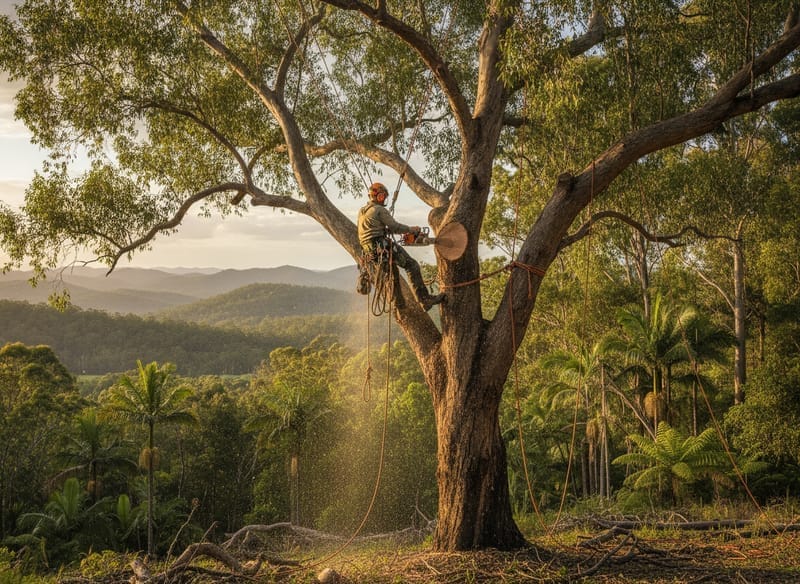
Sandy Bay's terraced gardens and limited rear vehicle access often mean heavy machinery cannot reach the tree. Our AQF Level 3 climbers utilize advanced single and double-rope access techniques, combined with specialized friction devices, to carefully lower heavy, damaged timber sections to the ground without impacting your home below.
For catastrophic failures over roofs or highly sensitive historic gardens, we deploy crane-assisted removals. This allows us to lift massive sections of Tasmanian blue gum, elm, or oak vertically out of the site, entirely bypassing the fragile structures beneath and minimizing ground disturbance on landslip-prone slopes.
Storm-thrown trees are rarely straightforward. Our operators are highly trained in identifying tension and compression forces within trapped timber. We use specific release cuts to safely sever fallen limbs without the chainsaw binding or the log violently shifting.
We process the debris on-site using high-capacity wood chippers, reducing the fallen canopy into usable mulch. Heavy logs are removed via loader cranes (HIABs) or tipper trucks, leaving your driveway and garden entirely clear of the storm's aftermath.
When high winds and heavy rains wreak havoc on your landscape, a fast and methodical response is essential to prevent secondary damage. Here is exactly how we handle the chaos.
First, you contact our team for an urgent assessment. We dispatch an experienced arborist to walk your property and conduct a rapid site triage. We identify immediate hazards, such as limbs hung up over your roof or root plates lifting near foundations, and separate them from lower-priority cleanup tasks.
Next, we provide a detailed, itemised quote. Because insurance companies often cover storm damage, we ensure our quotes are clearly broken out line-by-line, accompanied by pre-work photographic evidence to streamline your claims process.
Once approved, our team arrives with the necessary gear—be it top-handle chainsaws, rigging ropes, or a crane. We begin with make-safe work, stabilizing and carefully dismantling the most dangerous sections of timber first. We control every descent to protect your gardens and structures.
Finally, we process all the debris. Limbs are chipped, heavy logs are craned onto our tipper trucks, and the site is thoroughly raked and cleared. We leave your property safe, clean, and ready for you to get back to normal life.
Emergency tree work inherently carries high risk, which is why strict adherence to safety standards is non-negotiable. Our operations are fully public liability insured and covered by comprehensive WorkCover for our entire team. Every removal is executed by AQF Level 3 certified climbers, with AQF Level 5 consulting arborists available for complex assessments and council reports. We stringently follow AS4373 (Pruning of Amenity Trees) to ensure any retained trees are not compromised, and we operate strictly within safe work method statements. From working at heights and specialized EWP operation to comprehensive first aid training, our crew brings absolute professionalism and safety to your property.
Responding to storm damage in Sandy Bay requires deep local knowledge. The steep eastern foothills of kunanyi present significant logistical challenges, from narrow, winding streets to terraced blocks with zero rear access. We frequently utilize advanced rope access and crane operations to safely navigate these landslip-prone slopes.
Local regulations under the Tasmanian Planning Scheme - Hobart also play a crucial role. While everyday garden work on private land is largely exempt, Sandy Bay boasts a dense canopy of heritage oaks, elms, and towering peppermints, many of which are listed on the Significant Tree Register or sit within a Local Historic Heritage Code precinct. Even if a listed tree is heavily damaged, emergency removal or heavy pruning requires proper documentation to prove it poses an unacceptable safety risk. Our AQF Level 5 arborists provide the exact written statements and photographic evidence required by the City of Hobart, ensuring your emergency works are completely compliant.
Once the immediate hazard of a storm damage tree removal Sandy Bay is resolved, proactive care is vital for the rest of your canopy. Severe wind events can cause micro-fractures in branches that didn't completely fall, or weaken the root plates of standing trees in saturated soil.
We highly recommend scheduling a follow-up structural assessment for any large eucalypts or heritage trees remaining on your property a few weeks after a major storm. In the meantime, keep an eye out for sudden leaning, soil cracking around the trunk base, or hanging deadwood in the canopy. If you spot any of these warning signs, call our team immediately to mitigate the risk before the next weather system hits.
Cleanup costs depend on the volume of debris and extraction difficulty.
We provide detailed quotes tailored for insurance submission.
Clearing storm debris across the western slopes.
Contact our local arborist team for safe, thorough storm cleanup.
Get a Free Quote