Controlled Size
Bring oversized trees back into scale with your garden safely.
Professional height reduction and canopy management without destroying your tree's health.
Providing structural tree management in Sandy Bay, Battery Point and beyond.
When trees outgrow their space in Sandy Bay's tight residential blocks, they need careful management, not butchery. Our Tree Lopping Sandy Bay service focuses on structural reduction.
Many older macrocarpa and planes in Sandy Bay have been poorly lopped in the past. We specialize in restorative pruning to manage these legacy issues and reduce wind failure risks on the mountain slopes.
Bring oversized trees back into scale with your garden safely.
We ensure your canopy work doesn't breach the Hobart scheme's rules against retarding normal growth habit.
Proper cuts mean new growth is securely attached, reducing future limb drop hazards.
We evaluate the tree species, age and previous pruning history.
We propose a reduction strategy that achieves your goals without resorting to harmful lopping.
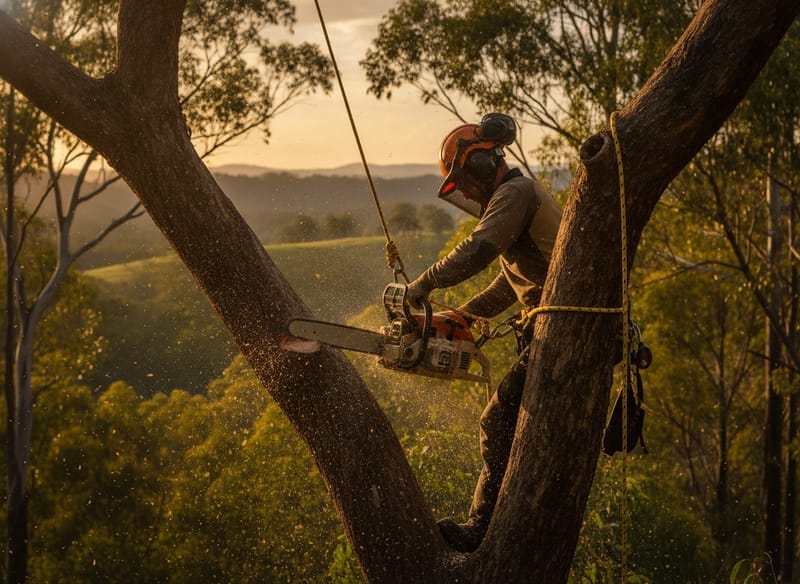
Our arborists use precise reduction cuts back to suitable growth points.
We remove all foliage and timber from your property.
We provide advice on managing the tree's size long-term.
When large garden trees start to dominate your block or encroach on your roofline, professional Tree Lopping Sandy Bay property owners can rely on is essential. Whether you are managing an established oak in the historic garden terraces or an imposing Tasmanian blue gum on the steep slopes facing the Derwent, getting the right advice makes a difference.
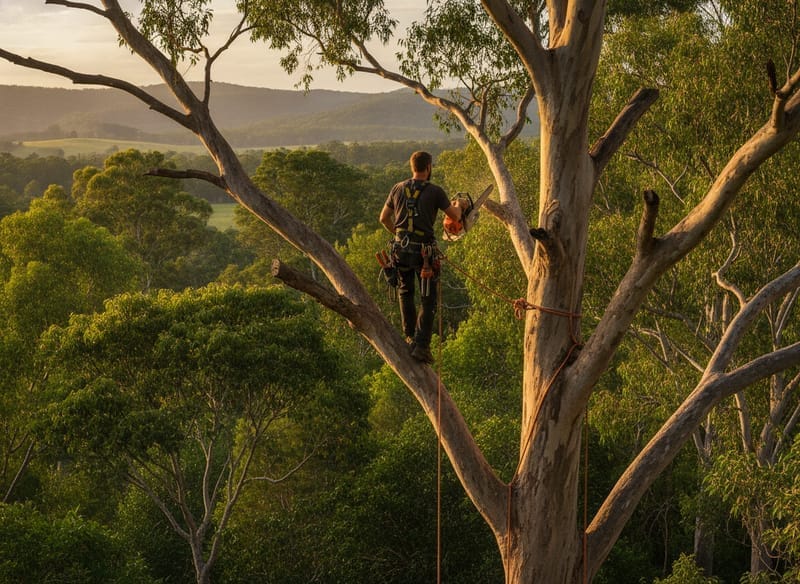
While "lopping" is the common term used for making a tree smaller, our team approaches every canopy reduction with long-term tree health in mind. Sandy Bay boasts some of the wealthiest, oldest garden canopies in Tasmania, and managing these large mature trees requires precision. We don't just hack away at branches; our climbing arborists use advanced rigging and proven pruning methods to reduce size, improve light, and clear powerlines without ruining the tree's structure.
If you need your trees safely reduced or managed before the next westerly wind event hits the foothills of kunanyi, our local team is here to help.
The most common mistake we see in canopy management is indiscriminate topping, often done by under-qualified operators or homeowners trying to tackle large jobs themselves. True "lopping"—which involves heading back branches to random points and leaving large stubs—is highly damaging. It triggers a stress response in the tree, forcing rapid, weak epicormic growth that is prone to snapping in high winds. Furthermore, large open wounds accelerate decay, dramatically shortening the tree's safe service life over your expensive property.
Our solution shifts away from damaging lopping practices and focuses on compliant, structural pruning. When you ask us for tree lopping, we assess what you are actually trying to achieve—be it more sunlight, clearing overhanging branches from your gutters, or reducing wind load. We then apply proven techniques like crown reduction, crown thinning, or selective pruning.
By making precise cuts at the branch collar, we allow the tree to heal naturally while achieving the size reduction you need. Our qualified arborists ensure your trees maintain a natural shape, remain structurally sound, and continue to safely complement your landscape without becoming a liability during winter storms.
When you request a tree lopping service, our qualified arborists evaluate the tree and apply the appropriate horticultural technique to achieve your goals safely and effectively.
Used to reduce the overall height and spread of a tree. We prune back to suitable lateral branches, maintaining the natural shape and health of the tree without leaving ugly, decaying stubs.
Removing lower branches to provide clearance for pedestrians, vehicles, or buildings. This is essential for managing mature elms and oaks overhanging narrow driveways.
Selectively removing internal branches to reduce wind resistance and let more light into your garden, all without altering the external size or shape of the canopy.
Guiding growth away from your roof, powerlines, or neighbour's boundary. This selective approach removes problematic limbs right at the branch collar for optimal healing.
Removing heavy end-weight from over-extended lateral limbs, heavily reducing the risk of failure during the severe north-westerly wind events common to the Hobart region.
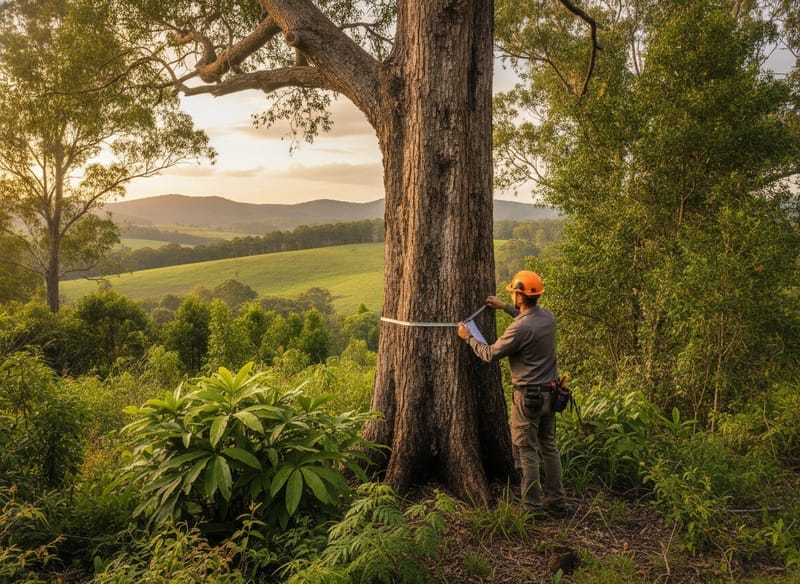
When undertaking a project for Tree Lopping Sandy Bay, our process begins with a detailed site visit. Because access in the local area often involves steep gradients and narrow winding streets, we carefully assess both the tree's health and the logistics of the site. We listen to what you want to achieve, whether that is clearing a roofline, improving a water view, or making a large eucalypt safer.
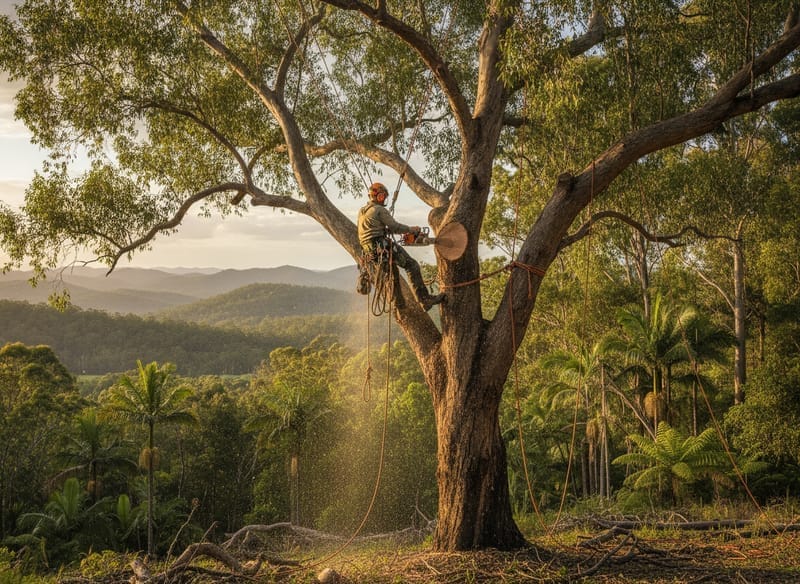
Next, we provide a fixed-price quote outlining the exact pruning methods we will use, deliberately avoiding the harmful practices of traditional topping. Once approved, our crew arrives with the necessary commercial gear. For difficult terraced gardens without rear vehicle access, our climbers utilize modern rope-access techniques to safely dismantle and lower limbs to the ground, protecting your landscaping below.
As we cut, our ground crew processes the branches through our high-capacity wood chippers. We take tremendous pride in our site cleanup, raking and blowing down all paths and driveways. Before we leave, our senior arborist will do a final walk-around with you to ensure the shape, clearance, and finish meet your expectations perfectly.
All our canopy reduction and pruning work is strictly carried out in accordance with AS4373—Pruning of Amenity Trees. This standard is crucial because it ensures every cut supports long-term structural integrity rather than promoting decay.
Our team consists of AQF Level 3 qualified climbing arborists and AQF Level 5 consulting arborists, meaning we bring certified expertise to every job. We are fully public liability insured and covered by WorkCover, giving you complete peace of mind when we deploy our climbers and elevated work platforms over your home. We never compromise on safety, gear, or regulatory standards.
Operating in this region requires an intimate understanding of the Tasmanian Planning Scheme - Hobart. While everyday garden pruning is generally exempt, Sandy Bay and Battery Point are heavily layered with the Local Historic Heritage Code. Many established oaks, planes, and cedars sit on the Significant Tree Register. Pruning a listed tree to improve its health is permitted, but aggressive lopping or significant canopy reduction requires council approval and usually a formal report from an AQF Level 5 arborist.
We also deal constantly with the native canopy—white peppermint (*Eucalyptus pulchella*) and Tasmanian blue gum (*E. Globulus*) growing on shallow dolerite soils. The steep terrain often makes elevated work platforms impossible, making our rope-access climbing skills vital. We understand exactly how the local climate, the Landslip Hazard Code, and strict council rules dictate how your trees should be managed.
Once we have completed the reduction work, the tree will naturally focus its energy on healing its pruning wounds. During the drier Hobart summers, we recommend deep watering of the root zone to reduce environmental stress. Ensure the soil around the structural root zone remains covered in a good layer of coarse mulch, which we can happily leave on site for you.
Keep an eye on the canopy over the following seasons. If you notice deadwood developing or suspect storm damage after a heavy winter westerly wind, give our team a call. We highly recommend a professional visual inspection every two to three years for large established trees to ensure ongoing safety and health.
Canopy reduction is priced based on complexity and tree size.
We provide honest advice and clear pricing upfront.
Upgrading tree care standards across the Hobart region.
Contact us for professional, council-compliant canopy reduction.
Get a Free Quote