Enhanced Safety
Removing dead or crossing branches prevents unexpected limb drop over your pathways and roof.
AS4373-compliant pruning to enhance the health, safety and appearance of your trees.
Expert pruning across Sandy Bay, West Hobart and Battery Point.
Our professional Tree Pruning Sandy Bay service keeps your valuable trees safe, beautiful and structurally sound.
With Sandy Bay's exposure to westerly wind events, proper crown thinning of mature eucalypts and exotic species reduces wind sail and prevents catastrophic limb failure during winter storms.
Removing dead or crossing branches prevents unexpected limb drop over your pathways and roof.
Careful canopy thinning allows more winter sunlight into your terraced gardens and home.
AS4373 pruning prevents the onset of decay that follows poor lopping practices.
We assess the tree's structure and identify target limbs for removal.
We align our pruning plan with your aesthetic goals and safety concerns.
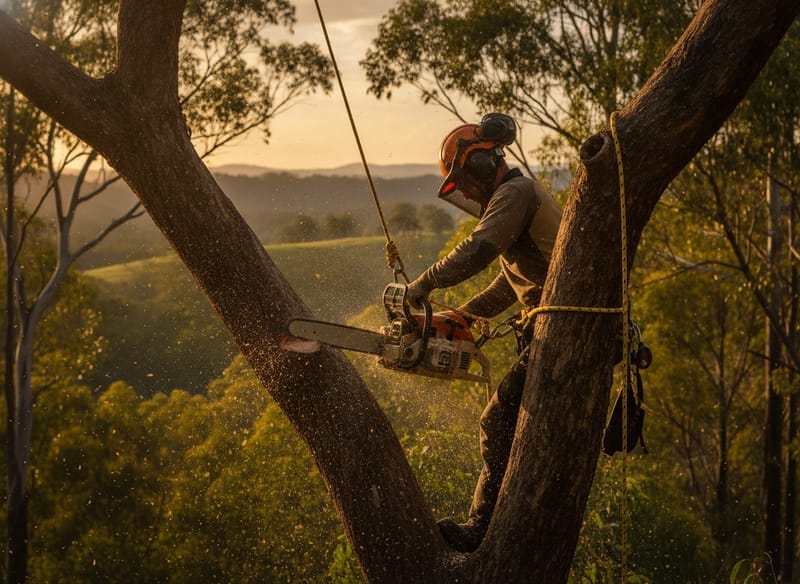
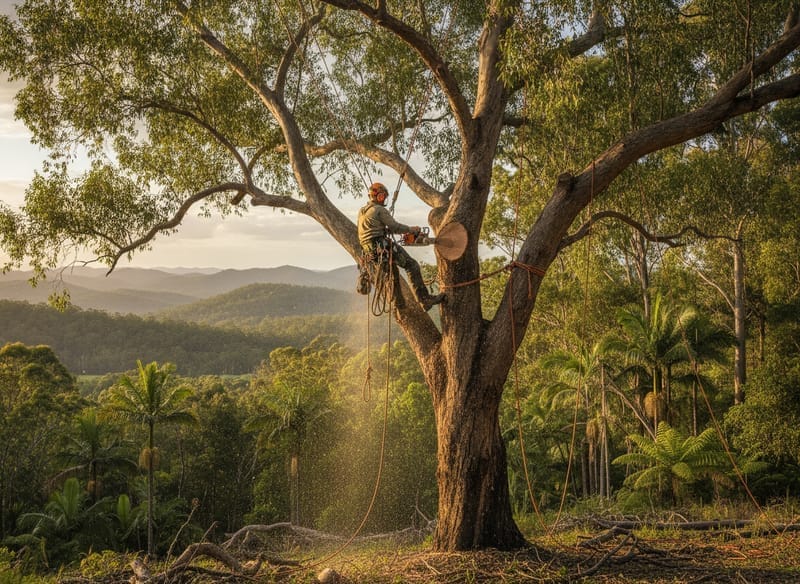
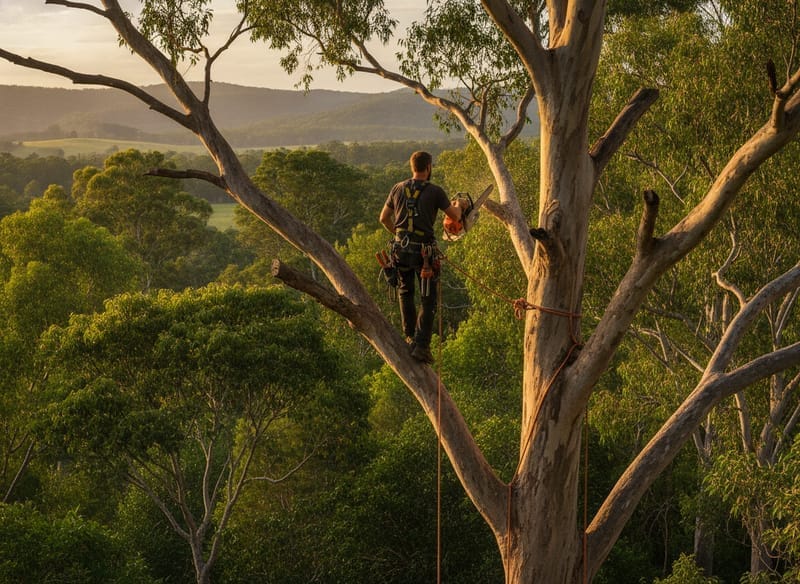
Our climbers navigate the canopy, making precise collar cuts.
All removed branches are chipped on site.
We ensure the tree's natural form is maintained and the site is clean.
For homeowners, property managers, and acreage owners navigating steep terrain and historic gardens, professional Tree Pruning Sandy Bay is an essential investment in property safety and aesthetics. Our established arboriculture business services the entire Hobart area, bringing deep local knowledge to every canopy we climb.
Pruning is not about removing a tree; it is about keeping it, improving its structure, and extending its safe, useful life. In Hobart, where heavy winter weather and fierce westerly winds routinely test the limits of our urban forest, a well-maintained canopy is your first line of defence against limb failure.
Whether you are managing towering native eucalypts on the slopes of kunanyi or tending to century-old European heritage trees in a terraced garden, our qualified arborists deliver precision care. We respect the tree's natural form while actively protecting your high-value property below.
One of the most common issues we encounter on Hobart properties is the dangerous aftermath of poor tree lopping or DIY pruning attempts. When unqualified operators "top" or "head back" a tree to reduce its size, they leave behind large, ragged stubs. These crude cuts completely bypass the tree’s natural defence mechanisms, introducing accelerated wood decay directly into the main stems.
Furthermore, lopping triggers a panic response in the tree, forcing it to rapidly push out weak, poorly attached epicormic regrowth. In species like Tasmanian blue gum or massive heritage oaks, this heavy, unstable regrowth becomes a severe hazard during our notorious westerly and north-westerly frontal systems. Poorly pruned trees do not just look ugly—they are actively dangerous and cost significantly more to correct down the line.
Our solution relies on scientific, AS4373-compliant target pruning. We do not hack branches; we make precise cuts at the branch collar, which allows the tree to compartmentalise the wound naturally. By carefully selecting which branches to remove—and strictly limiting live crown removal to no more than 25–30%—our climbers preserve the structural integrity of the tree. We thin the canopy to let wind pass through harmlessly, leaving you with a safer, healthier landscape asset.
As qualified climbing arborists, our team employs advanced access methods and precise cutting techniques to care for your canopy. Every cut we make strictly aligns with the Australian Standard (AS4373) for the Pruning of Amenity Trees.
Selective removal of small live branches throughout the canopy to reduce wind sail effect and improve light penetration, whilst preserving the tree's natural structural form. We remove no more than 25–30% of the live foliage.
Precise removal of lower lateral branches to raise clearance heights for driveways, pedestrian paths, and outbuildings, which is particularly vital on steep or terraced blocks.
Strategic shortening of branches back to a lateral branch of suitable size to clear rooflines or service wires, actively avoiding harmful and damaging lopping practices.
Systematic removal of dead, dying, diseased, or damaged branches that pose an unacceptable hazard to living areas, glasshouses, or play spaces during high wind events.
Early-life structural shaping of young or newly planted stock to establish a single dominant leader and well-spaced scaffold branches for long-term canopy resilience.
Addressing specific site constraints, such as clearing a facade, mitigating a structurally weak co-dominant stem, or rectifying damage caused by recent severe weather.
Delivering high-quality tree pruning requires a meticulous, safety-first approach, from the initial consultation through to the final site cleanup.
First, we conduct a comprehensive site assessment. Our arborists inspect the tree’s health, structural integrity, and species profile. We evaluate the terrain, which in Hobart often means navigating steep dolerite slopes, narrow winding streets, and limited rear-vehicle access.
Second, we perform a council compliance check. We determine if your tree falls under the Local Historic Heritage Code or sits on the City of Hobart Significant Tree Register. If your pruning needs exceed standard maintenance exemptions, we guide you through the required permissions or provide the necessary AQF Level 5 arborist reports.
Third, our climbers establish a safe work zone. Given the difficult access common to Hobart's western shore, we frequently utilise advanced rope access techniques (single or double-rope systems) to navigate the canopy, alongside tracked spider lifts where ground conditions permit.
Next, our AQF Level 3 qualified arborists execute the work using top-handle climbing saws and silky hand saws, ensuring every cut is made cleanly at the branch collar.
Finally, all removed vegetation is efficiently processed through our wood chippers. The resulting mulch is either left for your garden or hauled away in our tipper trucks, leaving your site immaculate.
We hold our arboricultural operations to the highest national benchmarks. All canopy work we undertake strictly adheres to AS4373 - Pruning of Amenity Trees, ensuring we never compromise the health or structure of your trees. Where pruning interacts with development zones, we operate in full compliance with AS4970 - Protection of Trees on Development Sites.
Safety is non-negotiable. Our climbing team holds AQF Level 3 qualifications in Arboriculture, alongside current Working at Heights, EWP, and chainsaw felling tickets. Our business is fully backed by comprehensive public liability and WorkCover insurances, guaranteeing absolute peace of mind while we operate on your property.
Delivering specialized Tree Pruning Sandy Bay requires a deep understanding of local microclimates, challenging terrain, and a unique urban forest. Our service area features steep eastern foothills with shallow dolerite soils, terraced gardens, and houses built dangerously close to massive, established trees.
We routinely work with a diverse mix of species. It is common to maintain 1880s-era heritage plantings like giant oaks, elms, planes, and cedars in Battery Point and Sandy Bay, right alongside towering native white peppermints, stringybarks, and Tasmanian blue gums. Because Hobart experiences fierce westerly wind events, proactive crown thinning and deadwooding are critical to reducing windthrow risk over expensive housing.
Furthermore, canopy management here is governed by the Tasmanian Planning Scheme - Hobart. While routine deadwooding and formative pruning are often exempt, significant works on trees listed on the City of Hobart Significant Tree Register or within heritage precincts require careful compliance and often an AQF Level 5 arborist report.
Following a professional AS4373-compliant prune, your tree will benefit from improved airflow, a better structural balance, and a significantly reduced wind profile.
To support recovery, water the tree deeply during dry summer spells to alleviate stress—especially important for mature exotic species growing in Hobart's shallow hillside soils. Keep the base of the trunk clear of heavy mulch buildup to prevent collar rot, and avoid applying heavy nitrogen fertilisers immediately after major canopy work.
We recommend scheduling a follow-up assessment every two to three years. Regular monitoring allows our arborists to evaluate structural development, address newly formed deadwood, and ensure your canopy remains resilient against winter storms.
Pruning costs depend on the size of the canopy and the complexity of access.
We provide a clear, itemised quote for all pruning work.
Providing expert pruning to Hobart's finest gardens.
Protect your trees and property with our qualified arborist team.
Get a Free Quote