Managed Size
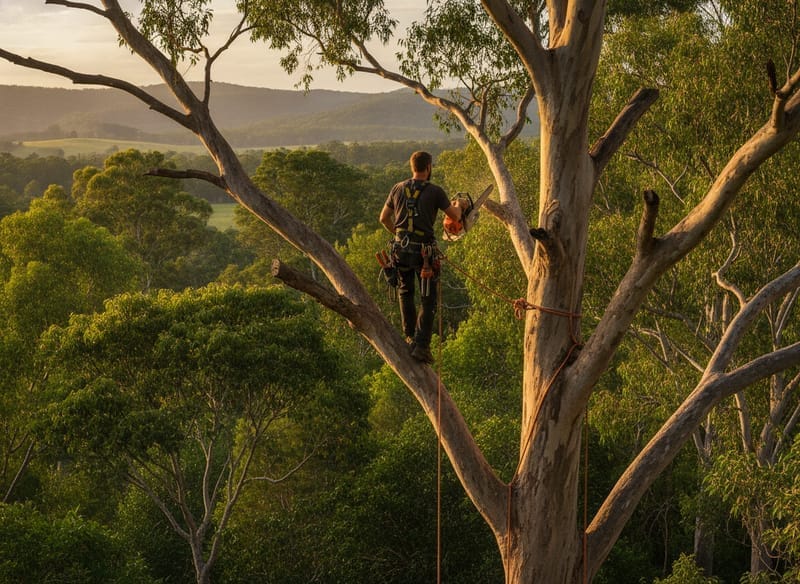
Keep large trees in check so they fit your garden perfectly.
Smart, sustainable height reductions and canopy management.
Serving South Hobart and the wider Hobart region.
If you are looking for Tree Lopping South Hobart, it's important to understand the best approach. When trees outgrow their space blocking light or threatening roofs, we offer structural reductions that solve the problem without destroying the tree.
In South Hobart, huge trees often overshadow steep, terraced blocks. While many ask for lopping to gain sunlight, we deliver AS4373-compliant crown thinning and reductions. This gives you the light you want without triggering illegal lopping penalties under the Local Historic Heritage Code.
Keep large trees in check so they fit your garden perfectly.
Avoid the weak, hazardous branch attachments caused by bad lopping.
We discuss your goals—whether it's more light or clearance.
We determine the exact branches to reduce for maximum effect.
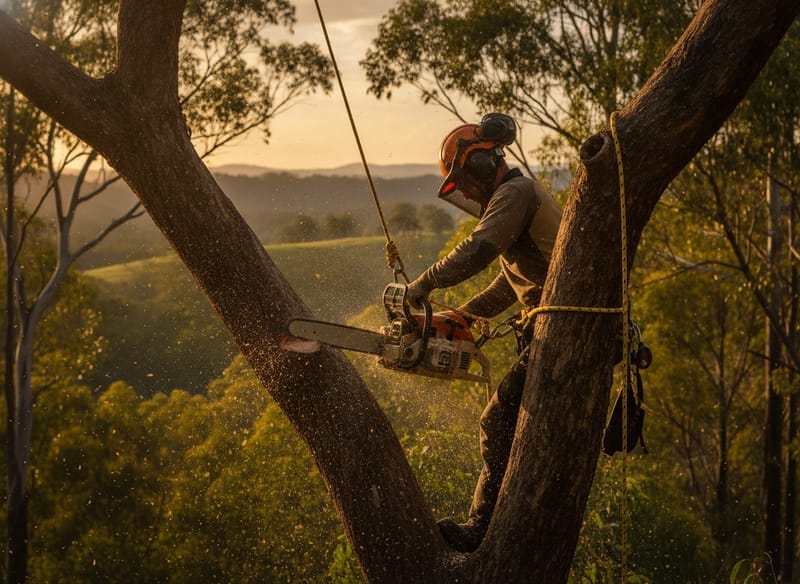
We make precision cuts that look natural and heal properly.
Welcome to Hobart Arborist. If you are searching for professional Tree Lopping South Hobart, you have likely noticed a mature eucalypt or large exotic tree encroaching on your roofline, blocking your views, or becoming a hazard in high winds.
Sitting right on the interface of the wet sclerophyll bush and the steep eastern foothills of kunanyi / Mount Wellington, properties in South Hobart and nearby suburbs like West Hobart, Sandy Bay, and Mount Nelson often inherit massive canopy cover. When homeowners ask us for "lopping", they usually mean they want their tree made smaller, safer, or less intrusive. Our local team of qualified arborists understands exactly how to achieve this.
Whether you need emergency height reduction after winter storm damage or strategic branch removal to clear your gutters, our climbers and trucks are equipped for the tight access and challenging terrain unique to our local streets. We manage the heavy growth of Tasmanian blue gums, manna gums, stringybark, and historic European garden plantings safely, efficiently, and with total respect for your property.
The term "tree lopping" is commonly used by acreage owners and homeowners to describe making a tree shorter or removing overhanging branches. However, in the professional arboriculture world, traditional lopping or "topping" involves indiscriminate heading cuts that leave large stubs. This outdated practice causes severe, long-term problems for mature trees.
When a tree is aggressively topped, it reacts by rapidly pushing out weak, fast-growing epicormic shoots. These new branches are poorly attached to the trunk and are highly prone to snapping during Hobart's notorious westerly and north-westerly frontal systems. Furthermore, large stub cuts cannot heal properly, inviting fungal decay into the heartwood and significantly shortening the safe service life of the tree.
Instead of destructive topping, our team provides canopy management solutions that comply strictly with AS4373 - Pruning of Amenity Trees. When you call us to reduce the size of a white peppermint or historic elm, we perform proper branch collar cuts and target pruning.
By selectively thinning the canopy, lifting the crown, or executing a careful crown reduction, we deliver the clearance and safety you need while preserving the natural structural integrity of the tree. This professional approach lasts much longer, looks vastly superior, and keeps your property safe from sudden, unpredictable limb failure.
When you request tree lopping in South Hobart, our arborists assess your specific goals and apply the correct horticultural technique to achieve the desired outcome safely.
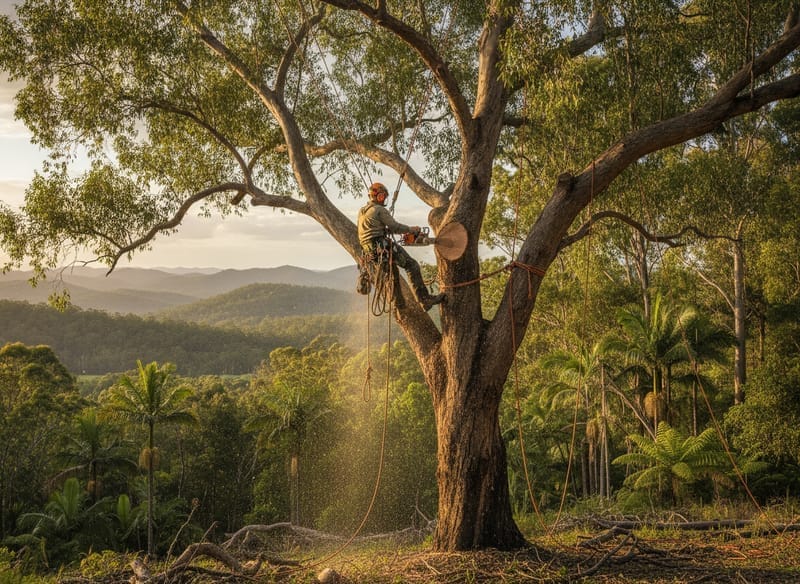
Safely reducing the overall height and spread of the canopy without resorting to aggressive topping. We use drop-crotch pruning back to suitable lateral branches, typically removing no more than 25-30% of the live foliage to maintain tree vigour.
Removing the lower branches of the canopy to provide clear line-of-sight, vehicle access, or clearance for buildings. Essential for mature oaks or manna gums overhanging steep driveways and footpaths.
Selectively removing secondary branches throughout the canopy to allow wind and light to pass through. This reduces the sail area during heavy wind events without altering the natural shape of the tree.
Targeting specific limbs that are encroaching on structures, powerlines, or neighbour boundaries. We perform precise branch collar cuts to ensure the tree compartmentalises the wound effectively.
Rapid canopy reduction following severe storm damage or snow load events on the mountain flank. In these scenarios, structural safety takes priority, involving the safe dismantling of split or hung-up limbs.
Delivering high-quality Tree Lopping South Hobart requires a methodical, highly technical approach, especially on our challenging local terrain. Here is exactly how our team manages your canopy reduction project from the initial quote to the final cleanup.
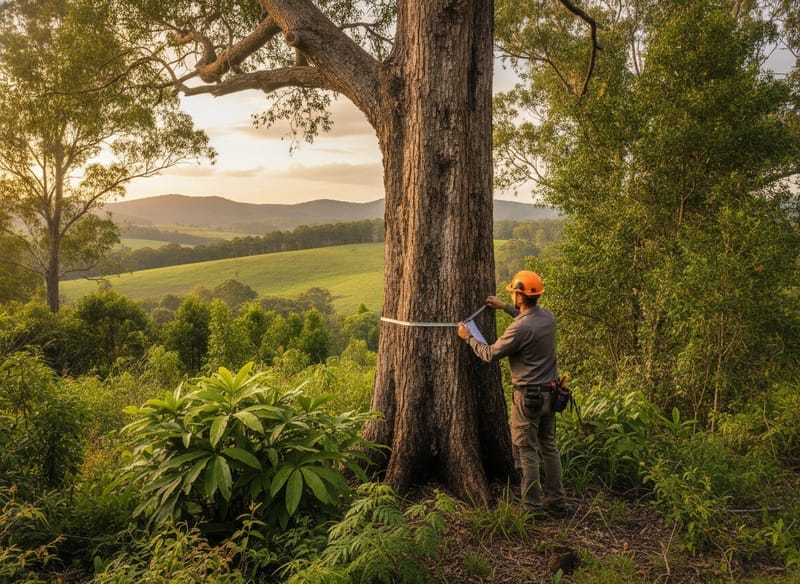
First, we conduct a comprehensive, on-site assessment. One of our qualified arborists will visit your property to evaluate the tree's health, structural condition, and the access constraints of your specific block. We listen carefully to what you want to achieve, whether that is clearing a roofline, improving solar access, or managing a bushfire interface, and recommend the most effective, AS4373-compliant pruning strategy.
Next, we provide a detailed, transparent written quote outlining the exact horticultural methods we will use. Once approved, our crews arrive fully equipped. Because many local blocks in South Hobart have no rear vehicle access or feature terraced gardens, our climbers frequently use advanced double-rope techniques to navigate the canopy. We safely lower heavy limbs via specialized rigging systems to avoid damaging your home, garden beds, or retaining walls below.
All cut branches are then efficiently processed on-site using our commercial-grade wood chippers, turning bulky limbs into useful mulch. Finally, we rake and sweep the site completely clean. Our tipper trucks remove all debris, leaving your yard tidier than we found it and your trees structurally sound, aesthetically pleasing, and perfectly tailored to your space.
Safety and compliance are non-negotiable on every job site. All of our canopy reduction and pruning work is executed strictly in accordance with AS4373 (Pruning of Amenity Trees). Our on-the-ground team holds AQF Level 3 in Arboriculture, ensuring every climber is fully qualified in advanced rigging, chainsaw operation, and rope-access techniques.
For properties requiring formal council approvals or tree risk assessments, our consulting arborists hold AQF Level 5 (Diploma of Arboriculture). Hobart Arborist is fully insured with comprehensive Public Liability and WorkCover policies, giving you complete peace of mind when our crews are working directly over your roofline.
Working in our region means navigating steep, shallow dolerite soils, narrow winding streets, and a unique mix of dry sclerophyll eucalypts and heritage European species. Under the Tasmanian Planning Scheme - Hobart, the City of Hobart protects significant vegetation primarily through the Local Historic Heritage Code.
If your property contains a tree listed on the City of Hobart Significant Tree Register, or sits within a heritage or historic landscape precinct, any lopping, reduction, or removal work requires a permit unless it is purely for minor health and appearance pruning. The Natural Assets Code and Landslip Hazard Code also matter on the slopes, particularly if clearing covers more than 1,000 square metres.
Our AQF Level 5 arborists can determine exactly which local planning provisions affect your address. We frequently write the necessary arborist reports to satisfy council requirements, ensuring your tree management is compliant, fully approved, and completely above board.
Once our team has expertly reduced or pruned your tree, proper aftercare will help it recover and thrive. A professionally pruned tree will not produce the aggressive, weak epicormic shoots associated with poor lopping, but it still requires some attention.
We recommend deep watering the root zone during the drier summer months, particularly for species growing in shallow, rocky dolerite soils. Keep an eye on the canopy over the next few seasons; a healthy tree will compartmentalise its pruning wounds cleanly. We advise scheduling a routine inspection every three to five years to monitor its health and manage any new growth before it becomes a hazard.
Tree reduction pricing depends on the scale of the job.
We'll provide a free, no-obligation quote outlining the best approach for your tree.
Offering smart tree reductions in:
Contact our experts for a professional canopy management quote.
Get a Free Quote