Peace of Mind
Know that hazardous trees are safely removed before the next westerly gale hits.
Safe, efficient tree removal for steep blocks and heritage gardens.
Servicing South Hobart and all surrounding foothills.
When it comes to Tree Removal South Hobart residents trust our experienced team. We handle everything from dead eucalypts on the bushfire interface to overgrown exotics in historic gardens.
Because many South Hobart blocks lack rear access and sit on dolerite slopes, we regularly employ rope access and rigging to remove trees piece by piece, avoiding the need to drag heavy timber through your property.
Know that hazardous trees are safely removed before the next westerly gale hits.
Open up your terraced garden and let the winter sun in.
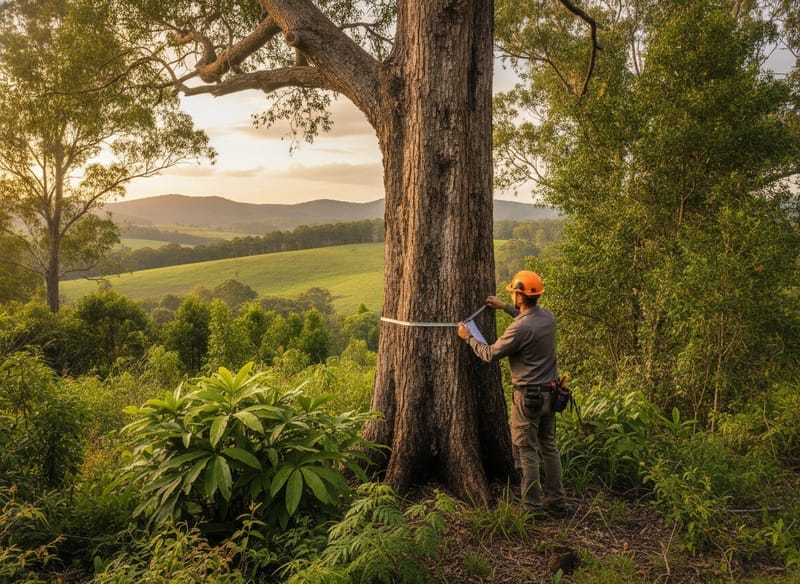
We inspect the tree and plan the safest removal method.
We verify if the tree is on the Significant Tree Register.
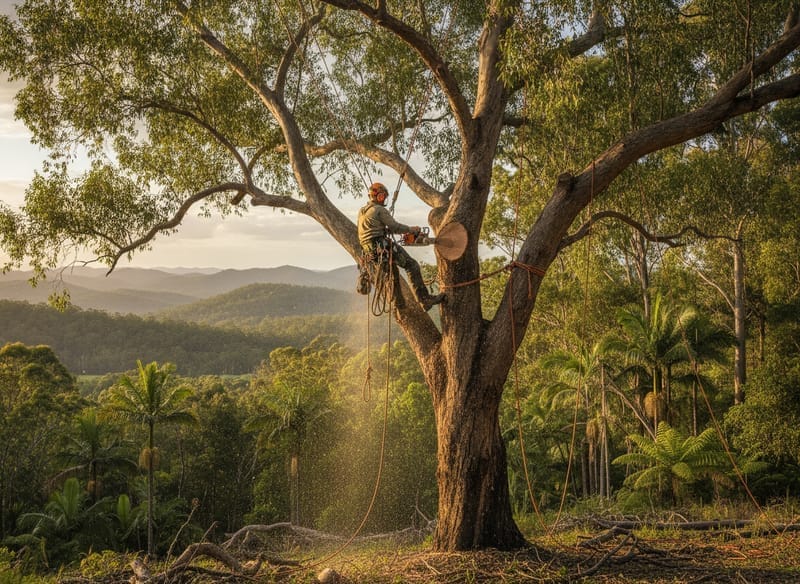
Our climbers safely dismantle the tree using rigging equipment.
All timber and brush is removed, leaving your yard clean.
When managing properties on the steep, heavily vegetated foothills of kunanyi / Mount Wellington, professional Tree Removal South Hobart is a critical service for safety and property protection.
Whether you are dealing with a dead white peppermint leaning dangerously over your roofline in the next westerly gale, or an aging European elm that has outgrown a tight residential block, our team provides safe, complete extraction. South Hobart properties frequently face challenging terrain, narrow winding streets, and significant bushfire interface risks. Leaving dead, diseased, or hazardous trees standing on these slopes is not an option when our winter storm season rolls through.
We are your local, fully equipped arborists dedicated to removing problem trees entirely, ensuring your property is safe, clear, and ready for its next chapter. From complex crane-assisted dismantles over historic homes to straightforward felling on larger acreage, our climbers and ground crew handle every aspect of the job with precision.
Taking down a mature tree in a dense, sloping suburb like ours is never a simple cut-and-drop operation. Homeowners who attempt DIY removals or hire under-qualified operators often severely underestimate the physics involved. A mature Tasmanian blue gum or heavily leaning oak carries immense weight and tension. Without the correct rigging, climbing gear, and structural understanding, these trees can easily snap back, barber-chair, or crush roofs, fences, and underlying infrastructure.
Furthermore, unqualified operators often lack the necessary public liability insurance, leaving you fully exposed if a multi-tonne trunk section goes through your neighbour's living room. Poorly executed jobs also frequently leave messy, jagged stumps and massive debris piles that you are forced to clean up yourself.
Our team brings a rigorous, professional approach to every removal. We do not hack or blindly lop trees; when a tree must go, we employ advanced rope-access techniques and highly controlled sectional dismantling. Guided by modern safety protocols and an understanding of timber mechanics, our qualified arborists carefully piece the tree down, section by section. This completely mitigates the risk of catastrophic property damage and ensures a highly controlled, tidy, and safe extraction from your site.
Depending on the size of the tree, its structural integrity, and the layout of your property, our climbers utilise several specialised extraction techniques to ensure the tree is removed safely.
The standard approach for steep terrain or tight residential sites where dropping the whole tree is impossible. Our AQF Level 3 climbing arborists use advanced double-rope access techniques to scale the tree, systematically cutting and rigging branches and trunk sections to be lowered to the ground crew with absolute control.
Reserved for extremely dangerous, dead, or massive trees located directly over historic homes or delicate assets. We coordinate heavy-lifting loader cranes to lift multi-tonne sections of the tree up and over your house, completely bypassing complex drop zones and minimising impact to the remaining garden.
Used primarily on open acreage blocks or large developments where a clear, unobstructed drop zone is available. Our crew applies directional felling techniques, utilising precise face cuts and back cuts to safely drop the tree in a designated area for rapid ground processing.
Once the tree is down, our ground crew uses heavy-duty commercial wood chippers to process all canopy branches into mulch. Large trunk sections are loaded onto our tipper trucks and HIABs for complete extraction, followed by a meticulous rake and blow down of the site.
From the moment you contact us, our focus is on safety, transparency, and a seamless operational flow. We start with a comprehensive on-site assessment at your property. One of our experienced arborists will evaluate the tree’s structural condition, species, lean, and surrounding targets like powerlines, terraced gardens, or your home. We also assess vehicle access constraints for our trucks and chippers.
Following the assessment, we provide a detailed, itemised written quote. If your tree sits within a local heritage precinct or is otherwise protected, we can advise on the necessary reports required to secure council approval before work begins.
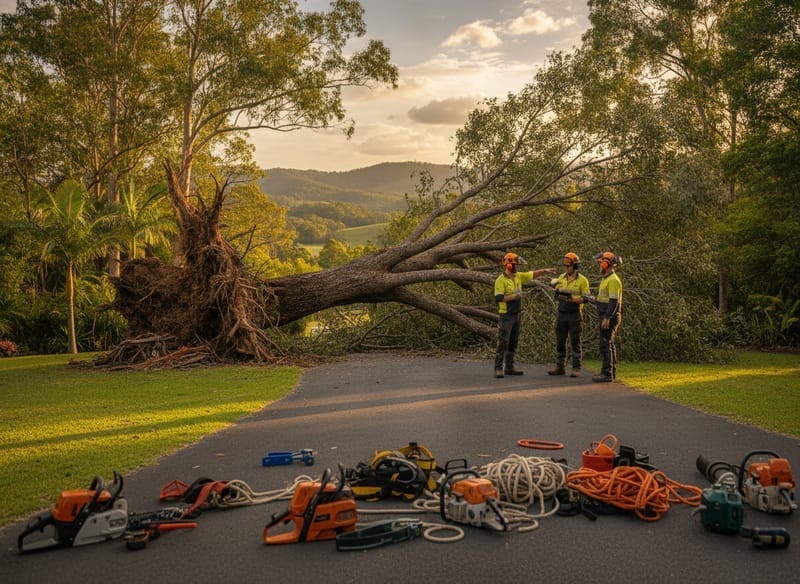
On the day of the job, our team arrives fully equipped with climbing gear, heavy-duty chainsaws, and rigging equipment. We conduct a pre-start toolbox talk and secure the site to protect pedestrians and property. The tree is then safely extracted using the pre-determined method—whether that involves intricate rope rigging or a crane lift.
Finally, we process all material. Branches are chipped, heavy logs are hauled away, and we perform a meticulous site clean-up. We ensure the only sign we were ever there is the newly opened space in your garden.
Safety and compliance are non-negotiable when removing large timber. Our operations are fully public liability insured and covered by WorkCover, protecting you, your property, and our crew against any unforeseen incidents.
Our climbing arborists hold AQF Level 3 Certifications in Arboriculture, alongside all required tickets for Working at Heights, EWP operation, and advanced chainsaw felling. When consulting on protected trees, our AQF Level 5 arborists provide the rigorous reporting required by the council. While AS4373 dictates pruning standards, our complete tree removal operations strictly adhere to broader workplace health and safety legislation, as well as AS4970 standards when operating near retained trees on development sites.
Operating a service for Tree Removal South Hobart requires specific local knowledge. The steep eastern foothills of kunanyi feature shallow soils over dolerite, creating distinct challenges for tree stability during our notorious westerly and north-westerly winter gales. Large native species like Tasmanian blue gums, white peppermints, and stringybarks often pose significant risks to homes on these slopes, especially leading into the summer bushfire season. Beyond the native canopy, the area boasts many established European plantings, including massive oaks and elms that have simply outgrown their residential footprints.
Navigating council regulations here is critical. The Tasmanian Planning Scheme - Hobart relies heavily on the Local Historic Heritage Code and the City of Hobart Significant Tree Register. Removing a listed tree requires a formal permit and a written statement from a suitably qualified person. Furthermore, the Landslip Hazard Code must be considered when clearing vegetation on steep blocks. We manage these local nuances daily, ensuring your removal is entirely above board.
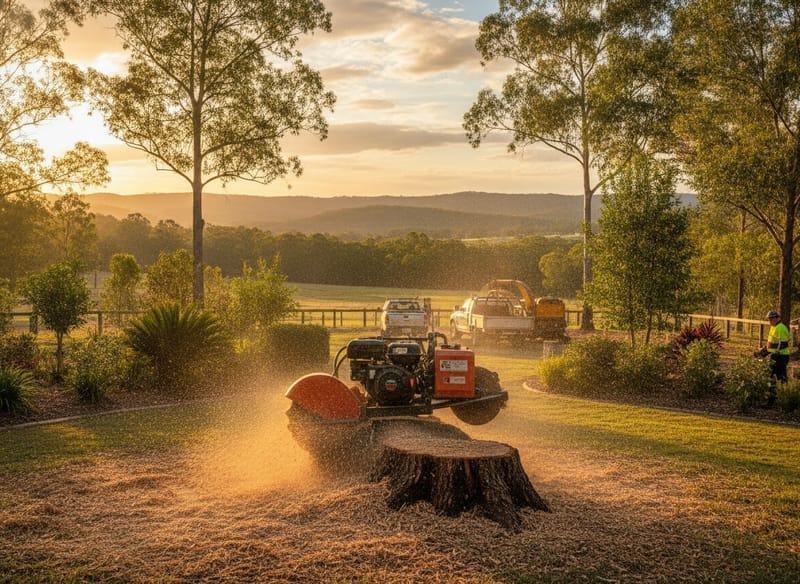
Once the tree is completely removed, you will be left with a stump unless you have also booked our professional stump grinding service. If left in the ground, the remaining root system can become a tripping hazard or, in some species, sprout vigorous epicormic growth. We recommend grinding to sever the system entirely and reclaim the garden space.
The soil where a large tree once stood may be depleted of nutrients and highly compacted. If you are planning to replant or turf the area, we advise deep watering, incorporating organic compost, and letting the ground settle. If you notice remaining trees on your property looking unstable after losing the windbreak protection of the removed tree, call our team back for a follow-up risk assessment.
Every tree removal is different, especially on the slopes of South Hobart.
We assess the site in person to provide a firm, accurate quote with no surprises.
Providing professional tree removal across: