Stop the Mess
End the constant cycle of dragging heavy, spiky fronds to the green bin.
Safe removal, pruning, and cleaning of problematic palm trees.
Expert palm services for Tolmans Hill and surrounding areas
While not as common as eucalypts, introduced palms in Tolmans Hill gardens often outgrow their space and become a messy nuisance.
Many 1980s and 90s garden designs in Tolmans Hill included palms that now drop huge, heavy fronds onto modern glass balustrades and roofs.
End the constant cycle of dragging heavy, spiky fronds to the green bin.
Prevent massive seed pods from falling onto pathways or family areas.
A cleaned palm looks elegant; a removed palm frees up space for native plantings.
We evaluate the palm's height, access, and proximity to fragile structures.
We provide a fixed price for cleaning or full removal.
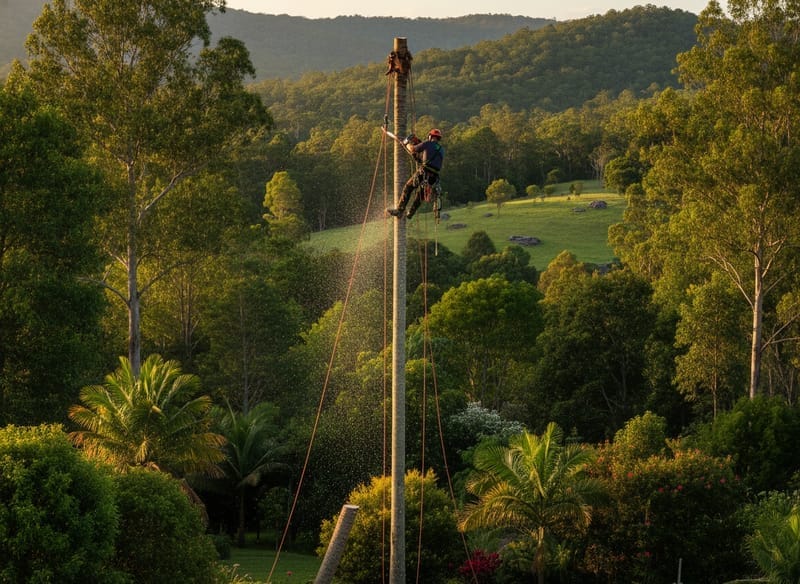
If removing, we spike up the trunk, dropping or rigging sections of the fibrous trunk safely to the ground.
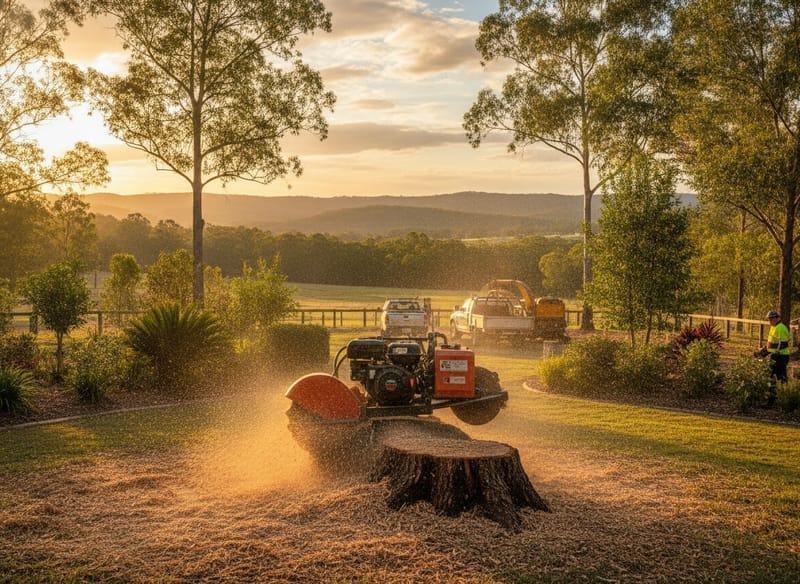
We can grind the fibrous root ball if required.
Palm waste is heavy and difficult to process. We load it up and take it all away.
Welcome to Hobart Arborist. If you manage a property on the steep, vegetated slopes of the kunanyi / Mount Wellington foothills, you know that keeping your landscape safe and manageable is a constant priority. When it comes to Palm Tree Removal Tolmans Hill, property owners, developers, and property managers trust our highly specialised local expertise.
While the greater Hobart region is renowned for its majestic heritage oaks, elms, and native Tasmanian blue gums, many older gardens and terraced properties also feature large, established palms—such as Canary Island date palms or imposing Washingtonia palms. Over decades, these hardy species can outgrow their welcome, especially when planted on tight, narrow access roads or when their massive frond skirts begin encroaching on local infrastructure.
Our dedicated team of qualified arborists provides the safe, efficient, and complete removal of problematic palms. We ensure your property remains secure against the high westerly winds that sweep across the Derwent and the looming summer bushfire season. We bring the right heavy-duty gear, the correct climbing skills, and an uncompromising commitment to protecting your home and surrounding landscape.
Palms are fundamentally structurally different from our local dry sclerophyll eucalypts like the white peppermint or manna gum. Their trunks lack a traditional hardwood structure; instead, they are highly fibrous, dense, and hold immense volumes of water. This makes them incredibly heavy and entirely unpredictable to fell without professional rigging training. Attempting DIY palm removal—especially on the steep, terraced blocks typical of Tolmans Hill and neighbouring Mount Nelson—is a severe risk that frequently leads to property damage and serious personal injury. Spiky, hardened palm fronds can cause severe puncture wounds, and the sheer dead weight of a dropped trunk section will easily destroy retaining walls, fencing, or delicate garden beds.
Furthermore, engaging under-qualified 'loppers' often leaves you with a highly dangerous site or an unfinished job. Many uncertified operators lack the heavy-duty rigging gear required to safely dismantle a multi-tonne date palm piece-by-piece over a house. At Hobart Arborist, we adhere strictly to industry safety standards. While the AS4373 standard dictates how we might carefully prune a tree for retention, when a large palm has outlived its safe service life or poses an unacceptable risk, full removal is the only responsible solution. We utilise specialised rope-access techniques and heavy-duty friction devices to ensure every heavy frond skirt and waterlogged trunk section is safely lowered to the ground, fully protecting your property.
Removing a mature, heavy palm on the steep, dolerite-soiled slopes of the kunanyi foothills requires technical precision and highly specialised equipment. Standard tree felling methods simply do not apply to massive, fibrous palm trunks. Here is exactly how our climbers and rigging specialists approach complex palm extractions in the Hobart hinterland.
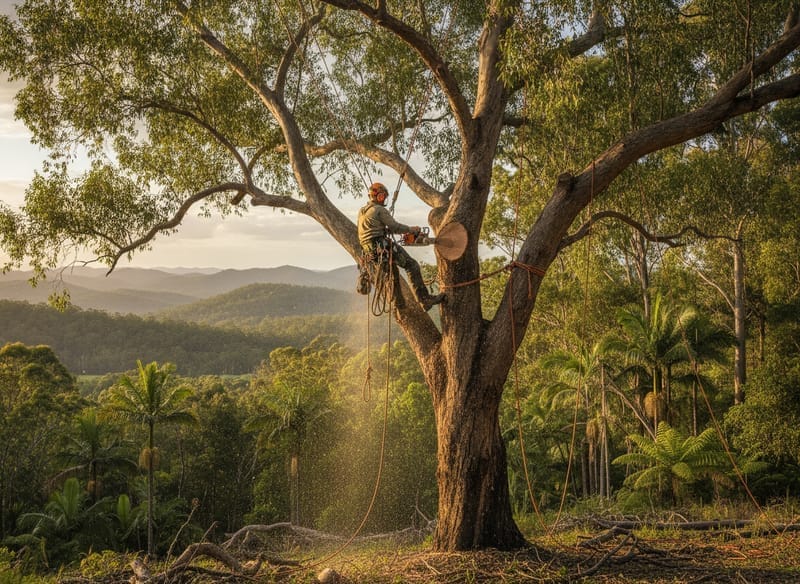
Because palms lack the live cambium layer found in broadleaf trees, our AQF Level 3 climbing arborists can safely utilise climbing spikes for rapid, secure access. Using top-handle climbing saws like the MS201T, we systematically remove the heavy seed pods and dead frond skirts first, eliminating the risk of falling debris before addressing the main trunk.
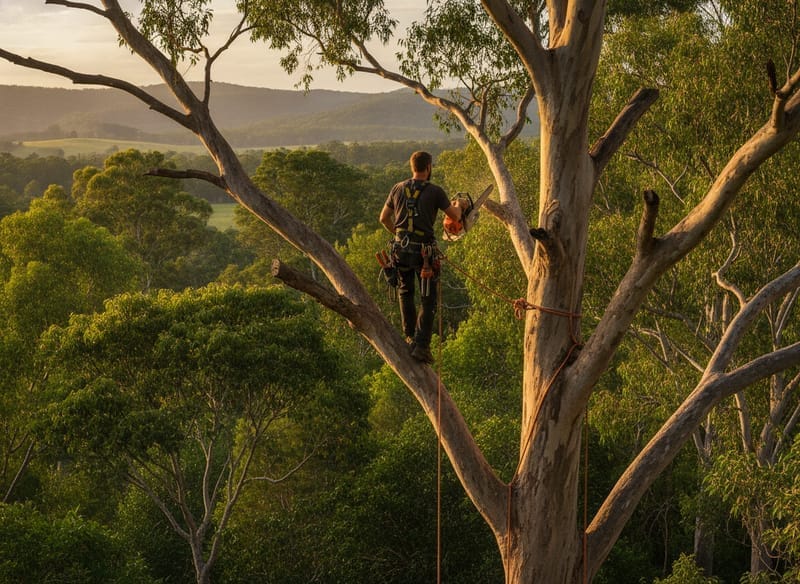
For palms overhanging homes or glass balustrades on steep Tolmans Hill blocks, free-felling is impossible. We use advanced rope-access and friction rigging to dismantle the dense, water-heavy trunk in small, manageable sections. Each multi-tonne piece is controlled via rigging blocks and safely lowered into a designated, tight drop zone without impacting the ground.
When a massive Canary Island date palm is landlocked behind a house with zero rear vehicle access, we deploy crane-assisted removals. Working alongside skilled crane operators, our arborists strap large trunk sections which are then cleanly lifted over your roofline and placed directly into our waiting tipper trucks, entirely bypassing your terraced garden.
Palm wood is highly fibrous and notoriously difficult to run through standard wood chippers, making it unsuitable for high-quality garden mulch. We process the manageable fronds using high-capacity 12-inch chippers, while the heavy, waterlogged trunk sections are loaded directly into our trucks using loader cranes (HIABs) for immediate off-site disposal.
We have carefully refined our palm removal process to handle the unique access and terrain challenges found across the Hobart hinterland.
Safety, compliance, and professional accountability are non-negotiable for our team. Every palm extraction is conducted by certified arborists holding at least an AQF Level 3 in Arboriculture, backed by current Working at Heights and Tree Felling tickets. For complex development sites or jobs requiring council approval, our AQF Level 5 consulting arborists provide comprehensive, AS4970-compliant tree protection reports to safeguard adjacent retained vegetation.
We operate as a fully insured business, carrying comprehensive public liability and WorkCover insurance policies to ensure you, your property, and our crew are completely protected. Whether we are implementing RIIWHS205D traffic management on a narrow, winding Tolmans Hill street or performing complex rigging above a glass balcony, we complete the job safely, legally, and to the highest professional standard.
Executing a flawless Palm Tree Removal Tolmans Hill requires a deep understanding of our unique local topography and regulatory environment. The western shore of the Derwent climbs sharply up kunanyi, meaning many residential blocks feature steep inclines, shallow soils over hard dolerite rock, and severely restricted rear access. Extracting heavy, waterlogged palm sections out of a terraced garden here often requires manual hauling, spider lifts, or crane lifts, rather than simple skid-steer access.
Additionally, Tolmans Hill sits directly on the wet sclerophyll bush interface. While palms are not a primary bushfire fuel like dry eucalypt bark, thick skirts of dead fronds can easily catch floating embers during summer fire events, triggering concerns under the Bushfire-Prone Areas Code. Under the Tasmanian Planning Scheme - Hobart, while everyday garden maintenance is typically exempt, any significant clearing on steep slopes may trigger the Landslip Hazard Code. We understand exactly how the City of Hobart planning instruments apply to your site and ensure your palm removal is entirely compliant.
Once the palm and its dense, fibrous root ball are removed, the soil will often require remediation before you can successfully replant. Palms heavily deplete local soil nutrients and moisture. We strongly recommend backfilling the ground-out stump cavity with high-quality topsoil and native organic mulch to restore the soil profile.
If you have other mature canopy trees on your property—such as stringybarks, oaks, or elms—we advise scheduling an annual arborist inspection to monitor their structural health, especially before the damaging winter westerly winds arrive. Should you notice any remaining trees showing signs of canopy dieback, or if you need expert advice on replanting suitable, climate-appropriate species for your Tolmans Hill garden, simply contact our team for ongoing professional support.
Palm removal pricing is driven by height, access, and dumping costs.
Clear, upfront pricing with the removal of all fronds and trunks included.
Palm management across the Hobart region.
Contact us for professional palm tree removal and cleaning in Tolmans Hill.
Get a Free Quote