Regain Control
Manage trees that are dominating your block or blocking significant light.
Safe, professional canopy reduction and height management tailored to your property.
Serving Tolmans Hill and the wider Hobart region
While many ask for 'Tree Lopping Tolmans Hill', we provide professional height reduction that achieves your goals safely.
Many older trees on Tolmans Hill blocks have outgrown their spaces. We reduce their impact without creating a future hazard from weak regrowth.
Manage trees that are dominating your block or blocking significant light.
Avoid the dangerous, poorly attached regrowth that comes from traditional 'topping'.
Proper reduction extends the life of the tree, saving you from expensive emergency removals later.
We discuss why you want the tree lopped (e.g., light, size, safety).
We propose professional reduction or thinning techniques to achieve the same result safely.
You receive a clear, itemised quote for the agreed works.
Our arborists selectively reduce the canopy to appropriate growth points.
We remove all waste and leave your property clean.
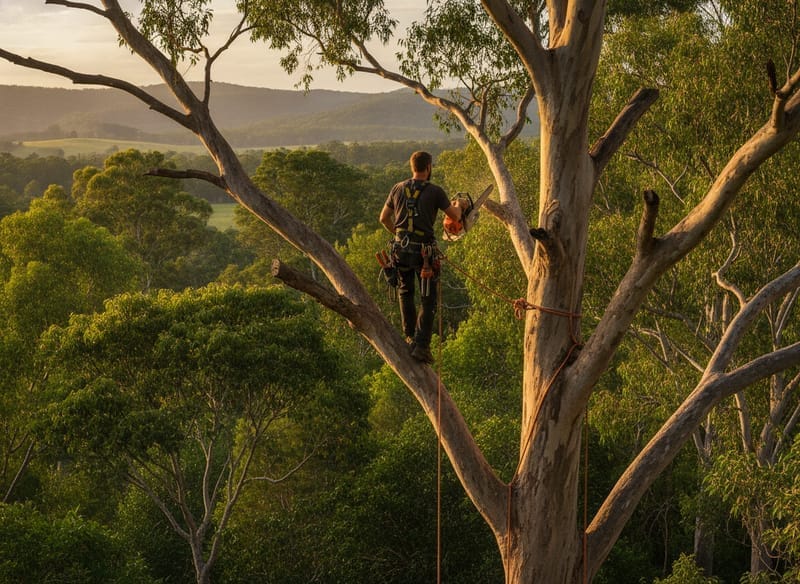
Managing large canopy trees on steep, bush-backed blocks requires a steady hand and a deep understanding of tree health. When residents search for Tree Lopping Tolmans Hill, they are usually looking for a way to safely reduce the size of an overgrown tree, clear heavy branches off a roof, or manage light and views across their property. As a locally established Hobart Arborist team, we know exactly what it takes to manage these towering eucalypts and European exotics safely.
Tolmans Hill sits right on the interface of wet sclerophyll bush and suburban living. With severe westerly winds sweeping down from kunanyi / Mount Wellington, keeping your canopy safely reduced and structurally sound is essential. Whether you are managing a sprawling stringybark overhanging your deck or needing clearance from service lines, our climbers have the equipment and local expertise to get the job done right without destroying the amenity of your landscape.
The term "lopping" is widely used by homeowners to describe cutting a tree back, but in the arboriculture industry, indiscriminate topping or heading-back is highly discouraged. Unqualified operators who just chop the top off a Tasmanian blue gum or white peppermint leave behind large, ragged stubs. This brutal approach stresses the tree, introduces decay, and forces the tree to push out weak, rapid epicormic regrowth. Within a few seasons, those poorly attached new branches become a major failure risk during Hobart's winter gales.
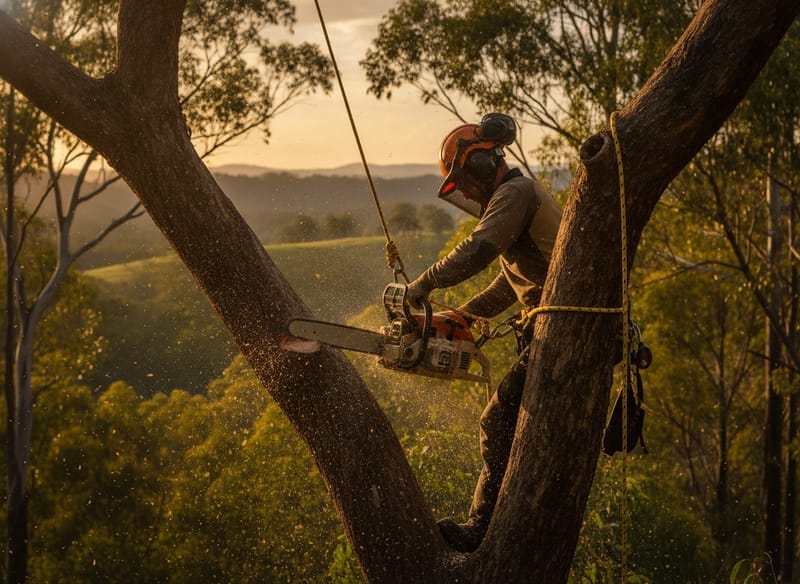
Our approach to Tree Lopping Tolmans Hill focuses on AS4373-compliant pruning. Instead of blindly hacking a tree in half, our qualified climbing arborists perform targeted crown reductions and selective pruning. We reduce the weight and height of the canopy by cutting back to appropriate branch collars and natural growth points.
This method achieves the size reduction you are looking for while maintaining the tree's natural shape and structural integrity. By choosing a team that understands proper tree biology, you ensure your property is safe, the tree remains healthy, and you avoid the costly cycle of dealing with dangerous regrowth or premature tree death.
When you ask us to "lop" or reduce a tree, we use specific, standard-compliant techniques to achieve your goals safely and sustainably.
Carefully reducing the height and spread of a tree by pruning branches back to structural laterals. This achieves a smaller footprint without compromising the tree's health or stability.
Removing the lower branches of a tree to increase vertical clearance for driveways, pedestrian paths, or buildings on steep, terraced blocks.
Selectively removing internal branches to reduce canopy density. This allows more light through to your garden and reduces wind resistance during severe westerly gales.
Targeting specific problematic limbs, such as those encroaching on roofs, gutters, or service lines, while leaving the rest of the canopy intact.
Identifying and safely removing dead, diseased, or dying wood within the canopy before it can snap and fall onto property or people below.
We take a methodical approach to every job, from the initial quote to the final site cleanup. Because many blocks in this area have limited vehicle access and steep inclines, we tailor our methodology to suit your specific terrain.
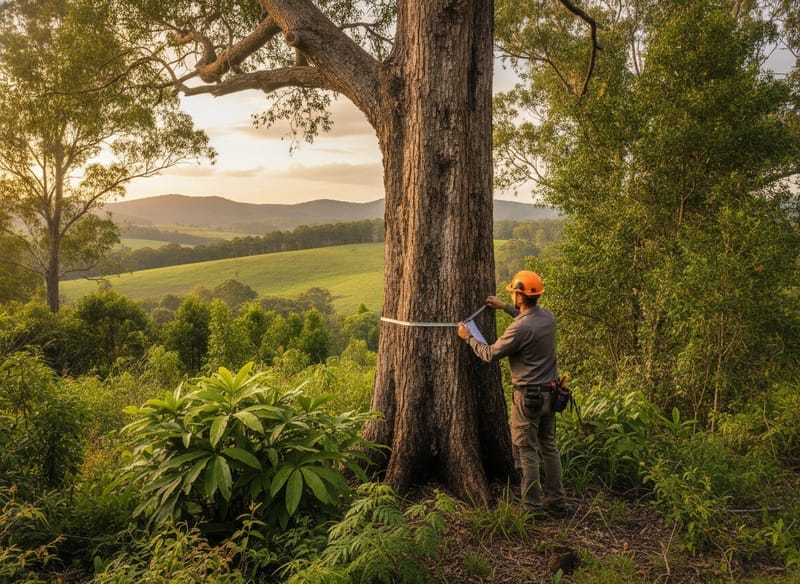
First, we visit your property to assess the trees in question. We will discuss what you want to achieve—whether that is clearing a roofline, reducing shade, or mitigating storm risks—and recommend the most effective pruning strategy. We then provide a detailed, written quote outlining the exact methods we will use.
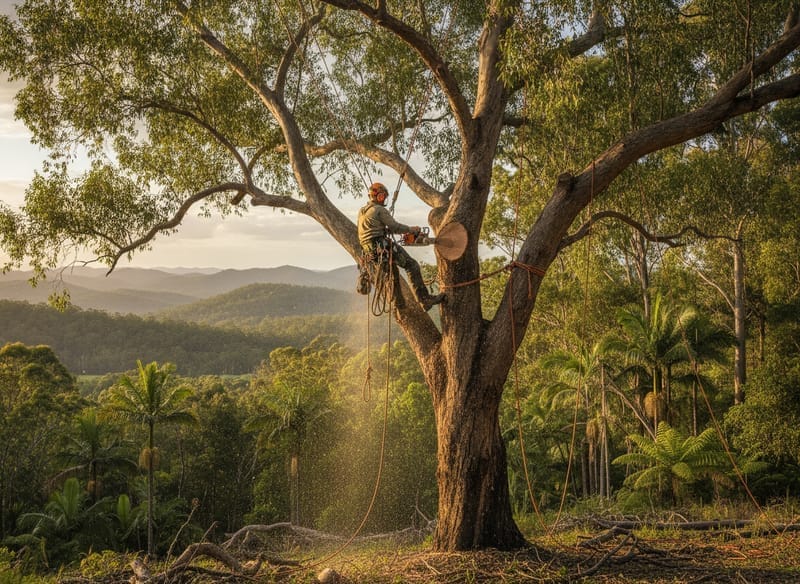
On the day of the job, our climbers access the canopy using advanced rope-access techniques, or elevating work platforms (EWPs) if the driveway allows. We carefully dismantle overhanging limbs, often using rigging systems to lower heavy wood safely to the ground without damaging your terraced gardens or structures below.
Once the cutting is complete, our ground crew processes the branches through our high-capacity wood chippers. We can leave the nutrient-rich mulch on-site for your garden or cart it away in our tipper trucks. Finally, we rake and blow down the site, leaving your property immaculate and your trees looking well-proportioned and safe.
Tree work on the steep slopes of the Hobart foothills carries inherent risks, which is why compliance and safety are non-negotiable for our team. We operate strictly in accordance with AS4373 - Pruning of Amenity Trees, ensuring every cut supports the long-term health of your canopy rather than creating future hazards.
Our crews are led by AQF Level 3 climbing arborists, and we have AQF Level 5 consulting arborists available for complex site assessments. We are fully covered by comprehensive public liability insurance and Tasmanian WorkCover. When our trucks and chippers roll up to your property, you have complete peace of mind knowing the work is protected, compliant, and executed by trained professionals.
Working in the eastern foothills of kunanyi / Mount Wellington requires specialized local knowledge. The terrain here features shallow dolerite soils and steep inclines, meaning heavy machinery often cannot reach the backyard. Our rope-access climbers are experts at navigating these tight, sloping environments to safely reduce large canopies.
Tolmans Hill borders wet sclerophyll bushland, putting many properties within the Bushfire-Prone Areas Code. Managing your Asset Protection Zone (APZ) by reducing overhanging branches and clearing fuel loads is a critical part of living here.
Additionally, tree work falls under the Tasmanian Planning Scheme - Hobart. The City of Hobart protects significant trees via the Local Historic Heritage Code and the Significant Tree Register. While everyday pruning for health and clearance is generally exempt, significant reduction or "lopping" of listed trees requires council approval. We can advise on whether your white peppermint, manna gum, or European oak requires an arborist report or a permit before works commence.
After we have safely reduced or thinned your trees, proper aftercare helps them recover and thrive. We recommend spreading the freshly chipped mulch around the base of the tree to retain soil moisture during summer, being careful to keep it pulled back slightly from the trunk to prevent collar rot.
In the months following the prune, monitor the tree for its natural response. Proper AS4373 pruning minimizes aggressive epicormic growth, but it is still wise to keep an eye out for any unusual dieback, especially after extreme summer heat or heavy snow and ice events in winter. If you notice structural changes or if the canopy begins encroaching on your roofline again in a few years, call our team for a follow-up assessment.
Pricing is based on the size of the tree and the complexity of the reduction required.
We provide competitive, transparent quotes with expert advice included.
Expert canopy management across the local area.
Contact us for professional height reduction and canopy management in Tolmans Hill.
Get a Free Quote