Reduce Bushfire Risk
Create a safe, defensible zone around your property ahead of the December-March fire season.
Professional vegetation management and block clearing for development, landscaping, and bushfire hazard reduction.
Servicing West Hobart, Ridgeway, Mount Nelson, and surrounding bushland interfaces.
Whether you are preparing a block for a new build or creating a defensible space against bushfire, our Land Clearing West Hobart service delivers safe, compliant results.
Because of West Hobart's steep terrain and shallow dolerite rock, heavy machinery is often unsuitable. Our crews utilise manual felling, winching, and portable chippers to clear challenging slopes effectively.
Create a safe, defensible zone around your property ahead of the December-March fire season.
Deliver a clean, safe site for builders and surveyors.
Reclaim overgrown areas of your block for terraced gardens or landscaping.
We walk your West Hobart block with you to understand exactly what needs clearing and what must be retained.
We verify if your project triggers the Natural Assets Code or Landslip Hazard Code.
Our team clears the vegetation, starting with undergrowth and progressing to larger timber.
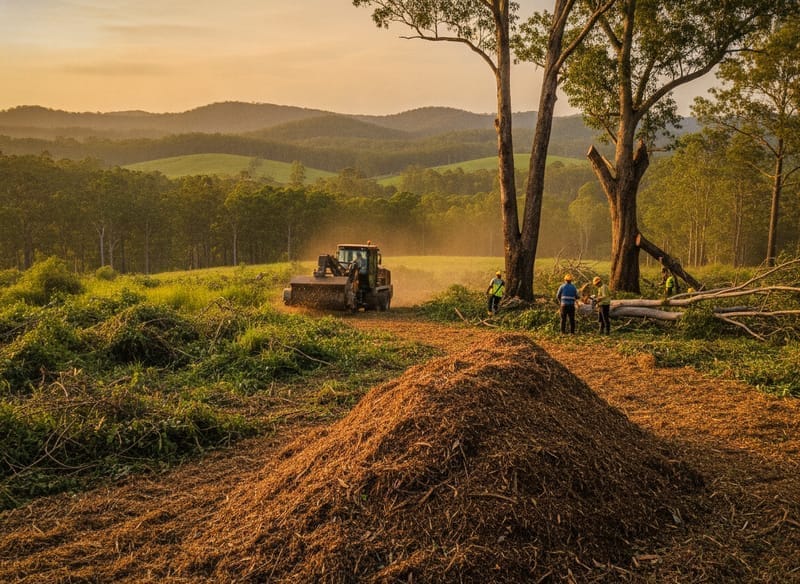
Vegetation is chipped. You can choose to keep the mulch for your gardens or have us remove it entirely.
When it comes to preparing a property for development, expanding your garden, or creating a safe asset protection zone, professional Land Clearing West Hobart is essential. Properties in this area are unique, often characterised by steep eastern foothills rising towards kunanyi, narrow winding streets, and a mix of historic 1880s garden plantings and native dry sclerophyll bushland. Clearing a block here is rarely as simple as driving a bulldozer onto a flat lot; it requires careful planning, technical dismantling, and a deep understanding of the local terrain.
Whether you are a homeowner reclaiming an overgrown backyard, a builder preparing a site with limited rear vehicle access, or a property manager addressing bushfire hazards on the urban fringe, our team provides safe and efficient land clearing solutions. We utilise specialised equipment and proven rigging techniques to process vegetation precisely, protecting your property, managing erosion risks on shallow dolerite soils, and ensuring your site is ready for its next phase.
Undertaking land clearing without the right expertise or heavy machinery can quickly turn into a costly and dangerous ordeal. DIY clearing or hiring under-qualified operators on Hobart's steep, terraced blocks often leads to severe soil erosion, property damage, and the accidental destruction of retained heritage trees. Heavy-handed clearing methods can crush the Structural Root Zones (SRZ) of trees you want to keep, leading to their slow decline and eventual failure during the strong winter westerlies.
Furthermore, indiscriminate clearing can easily breach local planning schemes. Heavy machinery on sloping blocks can inadvertently trigger the Landslip Hazard Code, while the removal of registered significant trees without approval can result in heavy council fines.
We provide a strategic, AS4373 and AS4970-compliant approach to land clearing. Our climbers and ground crews carefully assess the site, selectively fell target vegetation, and actively protect the trees you wish to retain. We manage the complex logistics of working in narrow access areas, safely breaking down everything from dense scrub to large Tasmanian blue gums, leaving your block clean, safe, and compliant.
We utilise specialised machinery, advanced rigging, and targeted felling techniques to handle the demanding terrain and access limitations of Hobart's western suburbs.
We carefully remove dense understory, invasive scrub, and hazardous saplings while retaining significant heritage trees or healthy eucalypts. This method improves block usability and aesthetics without destroying the established canopy.
For properties abutting the bushland interface, we clear vegetation to meet AS3959 bushfire building standards. We reduce ground fuel loads and create vertical separation in the canopy to mitigate bushfire risks.
Complete footprint clearing for new homes, subdivisions, or extensions. We ensure all targeted vegetation and root systems are safely extracted so your builders have a clean, ready-to-work canvas.
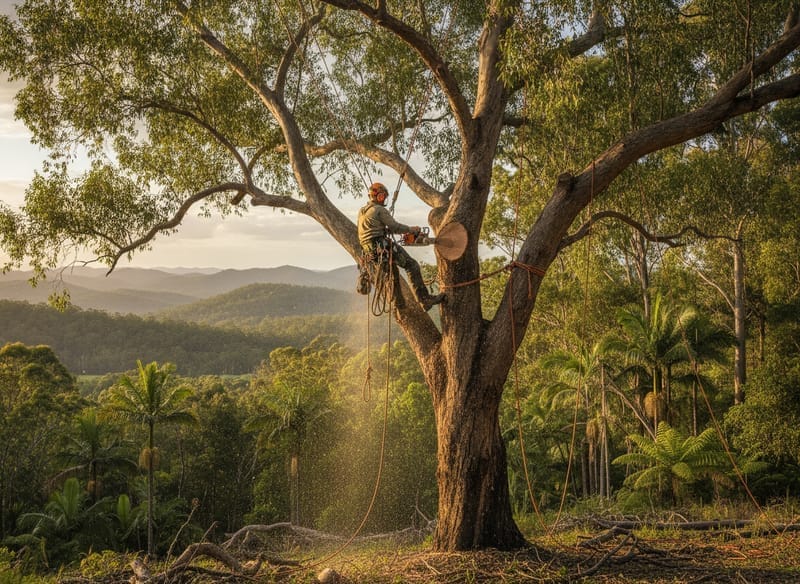
Using advanced rope-access techniques and loader cranes, we safely extract large timber from terraced blocks, steep inclines, and properties with zero rear vehicle access.
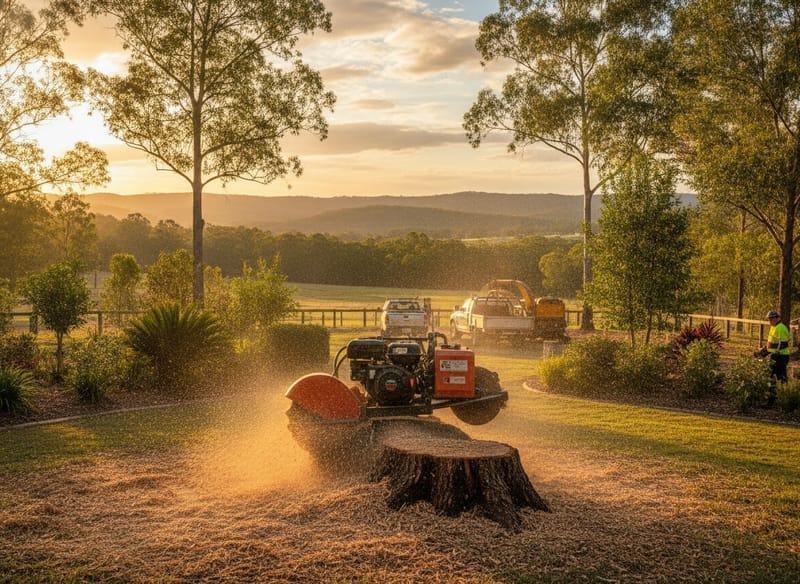
All cleared brush and limbs are processed through our high-capacity wood chippers. We can leave the valuable mulch on-site for erosion control or remove all green waste via our tipper trucks.
Step 1: Comprehensive Site Assessment. We begin by inspecting your property to evaluate the terrain, assess access limitations for our trucks, and identify the vegetation scope. We also review the Tasmanian Planning Scheme - Hobart to identify any overlays, such as the Local Historic Heritage Code or significant tree registers, that apply to your block.
Step 2: Quotation and Compliance Planning. You receive a detailed, transparent quote outlining the exact scope of works. If you are retaining certain trees, we factor in the establishment of Tree Protection Zones (TPZ) in accordance with AS4970 to ensure they remain undisturbed by machinery.
Step 3: Site Establishment and Traffic Management. Given the narrow, winding streets typical of the area, we carefully manage parking and traffic control. We position our wood chippers, tipper trucks, and spider lifts to ensure safe and efficient workflow without blocking local access.
Step 4: Systematic Felling and Clearing. Our AQF Level 3 arborists get to work. We drop smaller scrub and selectively dismantle larger trees using rope access or crane assistance where necessary. We never use crude bulldozing tactics that damage the surrounding topsoil.
Step 5: Processing and Cleanup. Timber is chipped on-site, and large logs are removed. We clean the area thoroughly, leaving your land clear, stabilised, and prepared for your next project.
Operating heavy machinery and felling timber on steep slopes requires strict adherence to safety protocols. We are fully insured with comprehensive public liability and WorkCover for all our staff. When pruning retained trees on a clearing site, we strictly follow AS4373 - Pruning of Amenity Trees, ensuring we never use harmful lopping practices.
For development sites, we apply AS4970 - Protection of Trees on Development Sites to establish structural root zones and protect heritage plantings. All our climbers hold an AQF Level 3 in Arboriculture, and our ground crews carry the necessary high-risk work licences, EWP tickets, and chainsaw cross-cutting units required to process large timber safely.
Clearing land on the eastern foothills of kunanyi presents specific challenges. Shallow soils over dolerite mean that heavy machinery can easily destabilise a slope. If your clearing project exceeds 1,000 square metres, it may trigger the Landslip Hazard Code under the Tasmanian Planning Scheme.
The City of Hobart does not rely on a blanket size trigger for tree removal; instead, trees are protected if they are listed on the Significant Tree Register or fall under the Local Historic Heritage Code. This includes many of the grand 1880s oaks, elms, and macrocarpa found locally, as well as native white peppermint and Tasmanian blue gum.
Importantly, Tasmania has no 10/50 bushfire clearing rule. Routine garden maintenance is exempt, but clearing significant listed trees—even for fire hazard reduction—requires an approved plan or a permit supported by a report from an AQF Level 5 consulting arborist, which we can help facilitate.
Once your land clearing is complete, it is vital to manage the newly exposed soil, particularly on sloped blocks where rain and winter winds can cause rapid erosion. We highly recommend spreading the chipped mulch we generate over the cleared areas to stabilise the topsoil and suppress weed growth.
If you are proceeding with construction, ensure that builders keep heavy machinery and material stockpiles strictly outside the Tree Protection Zones of any retained trees. Keep an eye on trees that have suddenly been exposed to new wind dynamics; if you notice excessive swaying, dropped limbs, or epicormic shoot growth on the trunks, contact us for a follow-up assessment.
Land clearing is priced based on the density of vegetation and the terrain.
We provide detailed, transparent quotes outlining exactly what will be cleared.
We provide land clearing to suburbs on the urban-bushland interface.
Contact our experienced team today for a free site assessment and quote.
Get a Free Quote