Restore Your Property
Clear away the mess quickly so you can return your garden to normal.
Comprehensive post-storm cleanup for fallen limbs, broken canopies, and uprooted trees.
Serving West Hobart, Lenah Valley, Dynnyrne, and greater Hobart.
Our Storm Damage Tree Removal West Hobart service handles everything from a single snapped limb to a completely uprooted canopy.
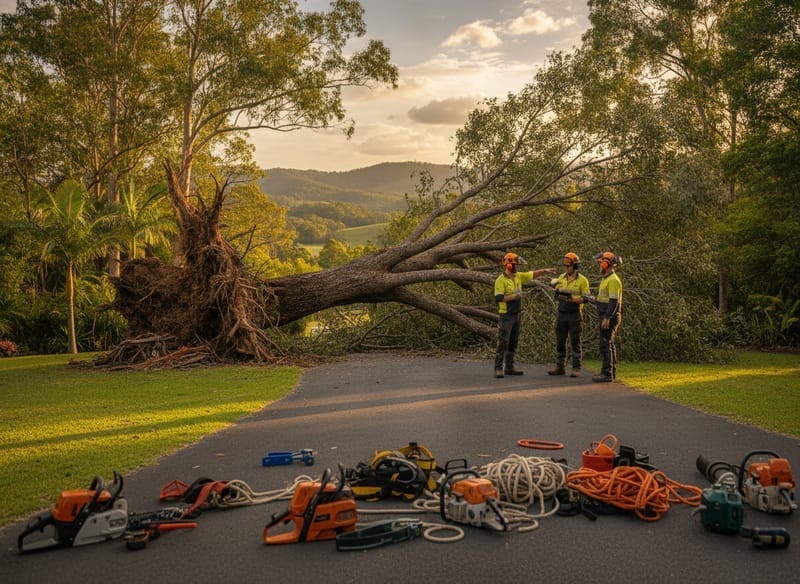
Snow and ice loads on the upper slopes of West Hobart combined with saturated dolerite soils often lead to entire root plates lifting. We safely winch and process these massive root balls.
Clear away the mess quickly so you can return your garden to normal.
We identify and remove compromised limbs that survived the storm but are ready to fall.
We handle the heavy lifting, dangerous rigging, and debris disposal.
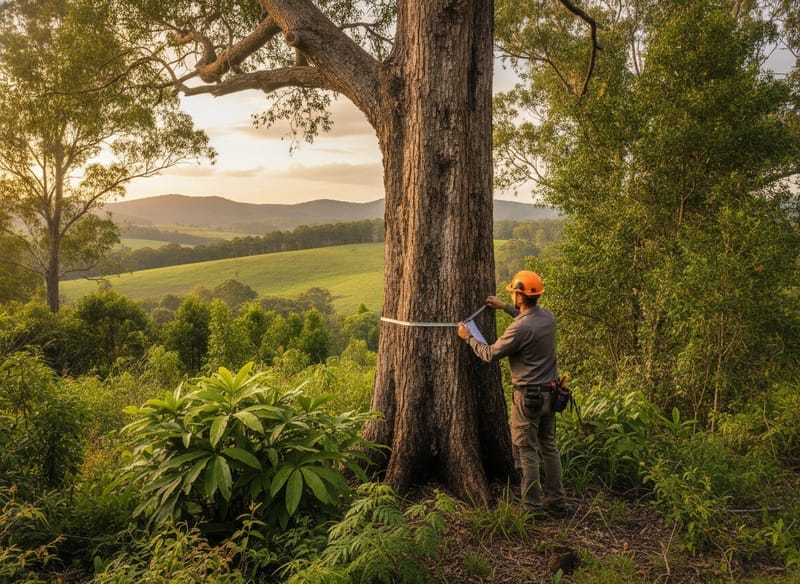
We assess the storm damage across your West Hobart property and identify any residual hazards in the canopy.
We deal with branches threatening your home, powerlines, or accessways first.
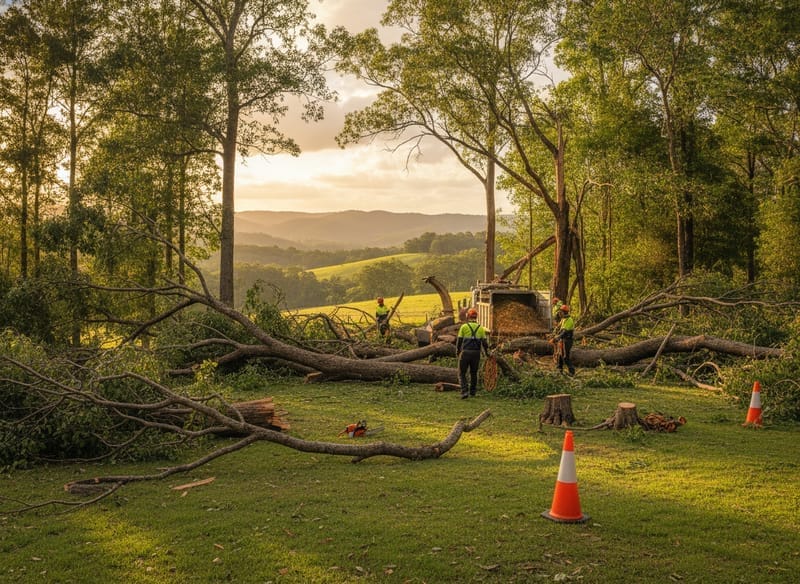
Our crew systematically cuts, chips, and removes the fallen timber.
We provide you with a comprehensive invoice detailing the storm-related damage.
When severe westerly frontal systems tear across the slopes of kunanyi, the aftermath often leaves residential properties exposed, damaged, and dangerous. If you are dealing with crushed fences, blocked driveways, or heavy hung-up limbs over your roof, our local team provides fast, safe Storm Damage Tree Removal West Hobart to secure your home. Living on the steep, terraced blocks of the foothills means windthrow, root-plate failure, and branch snapping are constant threats during winter and spring storms.
We are the arborists you can rely on when mature Tasmanian blue gums, towering stringybarks, or historical garden oaks fail under extreme wind loads. Time is of the essence when heavy timber is suspended over living areas or power lines. Our immediate priority is deploying our qualified climbers and rigging experts to make your site safe, followed by a complete, clean, and highly controlled removal of the compromised canopy.
Attempting to clear storm-wrecked trees yourself is incredibly hazardous and often leads to catastrophic secondary damage. When a massive white peppermint or heavy oak limb snaps and falls, the timber is subjected to extreme, unpredictable tension and compression forces. Cutting into a windthrown tree without understanding these bound-up loads can cause the trunk to violently snap, roll, or barber-chair, putting anyone nearby at risk of severe injury.
Furthermore, under-qualified operators or local handymen lack the specialised rigging gear and comprehensive insurance necessary for complex, high-risk dismantles over homes. A botched DIY job can easily send heavy timber crashing through your roof or retaining walls—damage your home insurer is unlikely to cover if the work was performed by an unlicensed operator.
Our team brings a fully qualified, AS4373-compliant approach to every emergency. We assess the complex load dynamics of fallen and hung-up trees before we ever start a chainsaw. By using proper rope-access techniques, advanced rigging, and cranes where necessary, we systematically dismantle the hazard without risking further damage to your West Hobart property.
Clearing shattered canopies on steep, access-limited blocks requires highly specialised techniques. We deploy advanced methods to extract massive storm-damaged trees safely.
Upon arrival, our arborists immediately tag trees by priority. We address immediate hazards (timber over homes, power lines, or blocking access) first. We stabilise the highest-risk timber, severing the immediate threat before moving to secondary hazards like hung-up limbs.
Using top-handle climbing saws and heavy-duty ground saws, our AQF Level 3 operators employ advanced cutting techniques to safely relieve bound-up kinetic energy in fallen trunks, preventing violent rolling or splitting during the breakdown process.
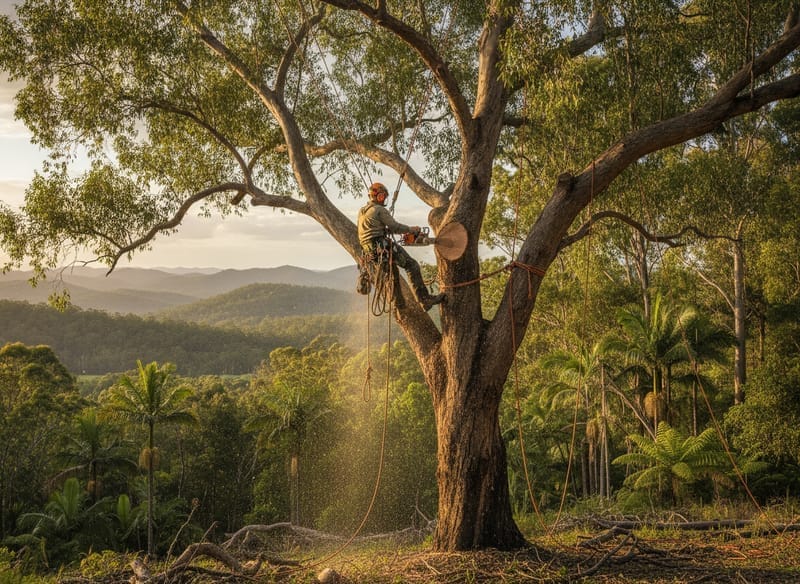
On steep dolerite blocks where wheeled machinery cannot tread, our climbers use double-rope access techniques to ascend compromised canopies. We use friction devices and heavy-duty rigging lines to lower heavy timber piece-by-piece, protecting terraced gardens below.
For whole-tree failures over houses or tight boundary lines, we coordinate loader cranes to carefully extract heavy timber sections vertically. This bypasses narrow access paths entirely and eliminates the risk of ground impact on your property.
Once the hazard is neutralised, we process the foliage and branches through high-capacity 12-inch wood chippers. Heavy logs are cross-cut and removed via our tipper trucks, leaving your site entirely clean and safe.
We know that time is critical when a massive tree has compromised your home or driveway. Here is exactly how our team handles emergency storm damage removals from the moment you call:
Step 1: Rapid Assessment and Triage Upon arriving at your property, our arborists conduct an immediate site walk-through. We identify the most urgent threats—such as a mature eucalypt leaning dangerously toward a bedroom window or broken limbs hung up over a driveway—and secure the immediate drop zone.
Step 2: Make-Safe Dismantling Our primary goal is to stop further damage. We safely dismantle the sections of the tree that pose an immediate risk to structures, vehicles, or pedestrian access. This often involves our climbers tying into safe anchor points and systematically rigging out the broken limbs.
Step 3: Complete Processing and Cleanup Once the immediate threat is neutralised, our ground crews step in to process the remaining timber. We use heavy-duty chippers to convert smaller branches into mulch and block down large logs for removal, ensuring your yard is completely cleared of storm debris.
Step 4: Insurer Documentation We provide you with a fully itemised quote breaking out each tree, along with detailed arborist notes and before-and-after photographs. This comprehensive documentation ensures your home insurance claim can be submitted smoothly and processed without delays.
Emergency tree work demands the absolute highest level of safety and operational discipline. Our crews consist of AQF Level 3 qualified climbers and AQF Level 5 consulting arborists, fully equipped to manage the chaos of storm-damaged sites. We carry comprehensive Public Liability and WorkCover insurance, protecting your property against any unlikely secondary incidents.
When a tree is partially damaged but potentially salvageable, we strictly adhere to AS4373 (Pruning of Amenity Trees) to perform targeted reduction or crown thinning. This prevents the hazardous practice of lopping, ensuring retained trees can recover safely. We also implement strict Safe Work Method Statements (SWMS) for all tension-loaded timber cutting and high-angle rope access.
Executing a successful Storm Damage Tree Removal West Hobart requires deep familiarity with both the rugged local geography and stringent council regulations. Operating in the foothills of kunanyi brings unique challenges. The steep dolerite terrain, narrow winding access roads, and terraced gardens mean standard bucket trucks are often useless. We regularly rely on advanced rope access and crane lifts to extract large windthrown trees from tight residential boundaries.
We are also deeply familiar with the Tasmanian Planning Scheme - Hobart. Many properties here feature historical 1880s–1920s garden plantings—like large oaks, elms, and macrocarpa—that fall under the Local Historic Heritage Code or sit on the City of Hobart Significant Tree Register. While regular removal of a listed tree requires a complex permit, standing exemptions exist for trees that pose an unacceptable safety risk. In a post-storm emergency, our AQF Level 5 arborists provide the necessary written statements to validate the urgent removal of a dangerous, storm-wrecked heritage tree, keeping you fully compliant.
After a major westerly wind event, clearing the fallen timber is only the first step. We strongly recommend having our arborists inspect the remaining trees on your block. Extreme wind loads can cause micro-fractures in large branches or minor root-plate heaving that isn't immediately obvious from the ground.
Keep a close eye on the soil around the base of any large retained eucalypts for signs of cracking or lifting, which indicates compromised stability and a severe risk of future windthrow. If a significant tree was lost, we can advise on suitable replacement plantings that align with council requirements and are better suited to local wind corridors. Reach out to our team to schedule a comprehensive post-storm risk assessment.
Storm damage cleanup is quoted based on the volume of debris and complexity of removal.
We provide honest, upfront pricing to help you get your property sorted fast.
We provide storm cleanup services right across the western foothills.
Call our expert arborists for fast, safe, and fully insured post-storm tree removal.
Get a Free Quote