Long-Term Cost Savings
Proper pruning requires less frequent maintenance than managing the explosive, dangerous regrowth of a lopped tree.
If your trees have outgrown your West Hobart yard, we offer safe, long-term height reduction alternatives to traditional lopping.
Servicing West Hobart, Mount Stuart, Lenah Valley, and surrounds.
When property owners ask us for Tree Lopping West Hobart, they usually want more sunlight, better views, or hazard reduction. We deliver these outcomes using correct arborist techniques.
In the terraced gardens of West Hobart, trees often block views of the Derwent River. We can selectively prune to open up sightlines without destroying the tree through crude lopping.
Proper pruning requires less frequent maintenance than managing the explosive, dangerous regrowth of a lopped tree.
Healthy, well-structured trees add significant value to heritage West Hobart properties.
Proper reduction limits wind sail area safely, preventing limb failure during Hobart storms.
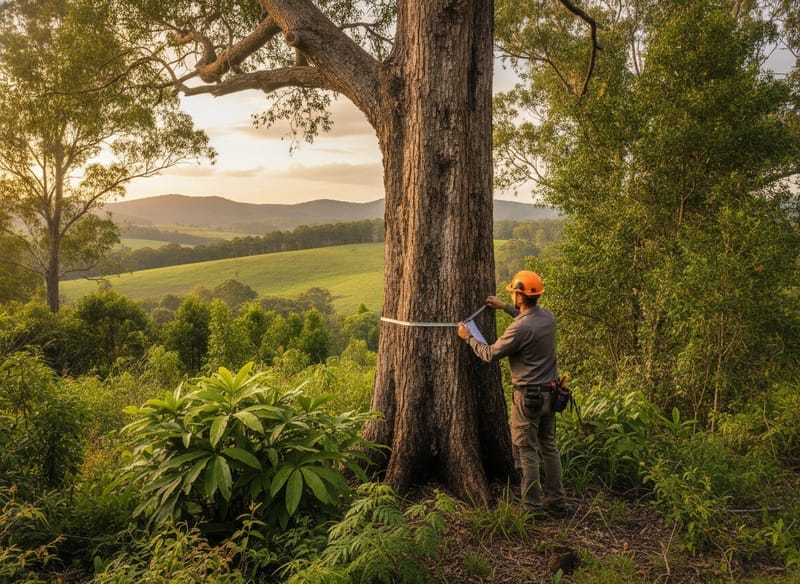
We evaluate your overgrown tree to determine if reduction, thinning, or full removal is the best option.
We explain why AS4373-compliant pruning will give you a better result than indiscriminate topping.
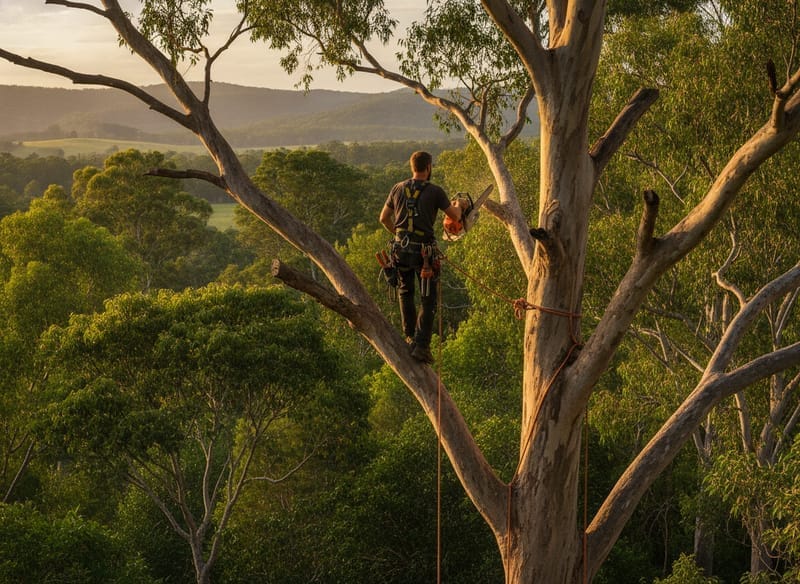
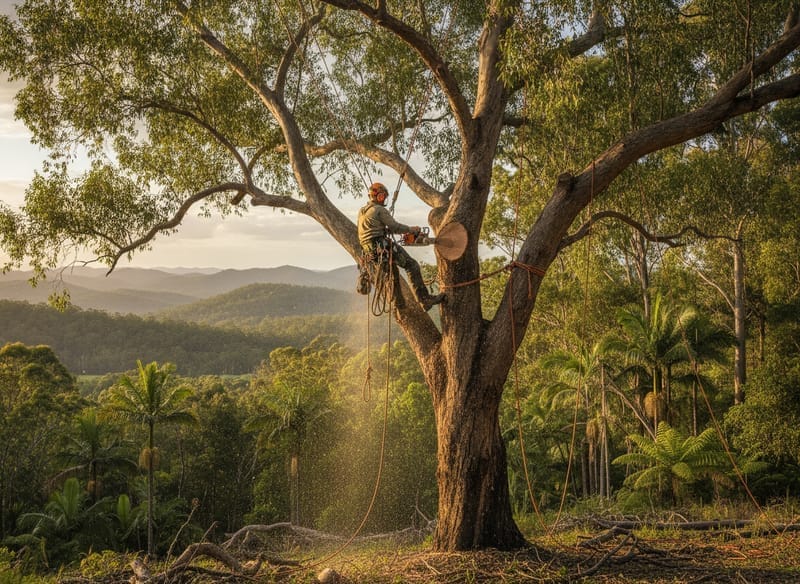
Our climbers carefully reduce the canopy to appropriate growth points.
All debris is chipped and removed, leaving your West Hobart yard tidy.
Living on the steep eastern foothills of kunanyi / Mount Wellington brings spectacular views, but managing the large canopy over your property is a serious responsibility. If you need professional Tree Lopping West Hobart, our local team of qualified arborists is here to help. Whether you are managing an overgrown Tasmanian blue gum on a steep block or a sprawling century-old oak near an 1880s heritage home, we provide safe, tailored solutions.
Many homeowners ask us to simply 'lop' a tree to make it smaller. As your local Hobart arborists, we take a long-term approach. We do not just hack branches back; we use industry-approved techniques to reduce height, clear rooflines, and improve safety without destroying the tree's health.
With terraced gardens and narrow, winding streets defining our local terrain, having an experienced, fully equipped team matters. We bring the right rope-access gear, specialized machinery, and arborist expertise to handle the most challenging trees safely and efficiently.
When property owners want a tree made smaller, they often ask for 'lopping'. However, in the professional arboriculture world, true lopping—making indiscriminate heading cuts across branches—is highly damaging. It leaves large, ugly stubs that struggle to heal, inviting decay and disease right into the heartwood of the tree.
In areas like West Hobart and Mount Stuart, the climate exacerbates these risks. Harsh westerly wind events regularly batter the slopes. When a tree is poorly lopped, it responds by rapidly shooting out epicormic growth. These new branches are weakly attached to the decaying stubs. As they grow heavier, they become extreme hazards during winter storms, often snapping and falling onto roofs, cars, or powerlines.
Our solution is AS4373-compliant pruning. Instead of topping the tree, our AQF-qualified climbers use targeted reduction cuts. We prune back to a suitable growth point or branch collar, preserving the tree's natural defence mechanisms. This maintains a healthy, structurally sound canopy that can withstand Hobart's intense frontal systems while achieving the clearance and size reduction you actually need.
When you request tree lopping, we assess your specific goals—whether that is clearing a view, protecting a roofline, or allowing more sunlight into the garden. We then apply AS4373-compliant pruning techniques to achieve these results safely and effectively.
This is the correct alternative to lopping. We carefully reduce the overall height and spread of the tree by cutting branches back to healthy lateral growth points. This retains the natural shape while significantly reducing wind resistance and weight.
Perfect for clearing space over driveways, footpaths, or terraced gardens. We cleanly remove the lower branches of the canopy, providing essential clearance without stressing the upper structure of the tree.
We selectively remove secondary branches throughout the canopy to allow winter sunlight and wind to pass through. This is highly beneficial for dense species and reduces the risk of windthrow during Hobart's intense westerly gales.
When a specific limb is overhanging a house, boundary line, or power connection, we target just that problem area. We use precision cuts to eliminate the hazard without compromising the rest of the tree.
If a tree has been historically lopped and is now structurally unsound, retaining it may not be viable. We use advanced rope access and rigging to dismantle dangerous trees piece by piece in tight, steep-access locations.
Delivering high-quality Tree Lopping West Hobart requires careful planning, especially on the complex, tiered blocks common to our area. Our process ensures your property is protected from the first cut to the final cleanup.
First, we conduct a thorough site assessment. We evaluate the tree's health, species, and structural integrity. We also check for any access constraints—such as steep driveways or zero-rear-access yards—and verify if the tree is listed under the City of Hobart's Local Historic Heritage Code.
Next, we plan the safest access method. While we use elevating work platforms (EWPs) where possible, the steep terrain of the western suburbs often requires our AQF Level 3 climbers to use advanced single and double-rope access techniques to safely navigate the canopy.
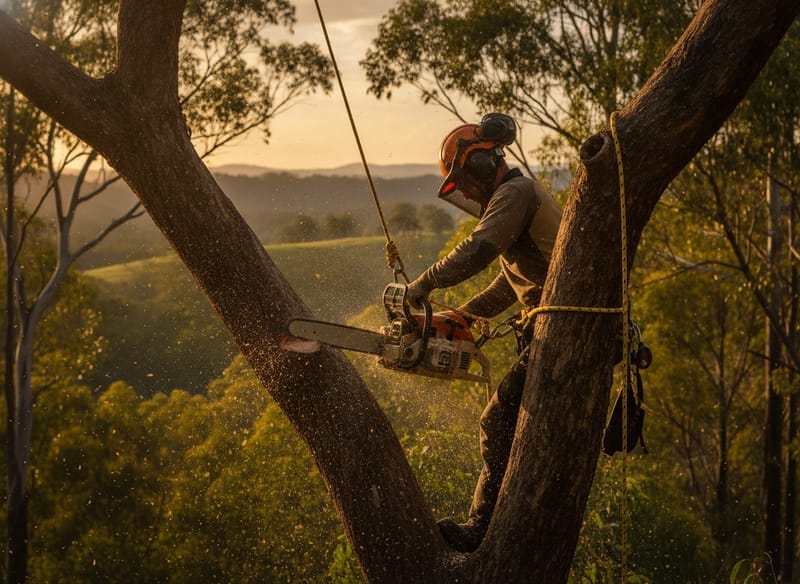
During execution, our climbers use top-handle chainsaws to make precise, AS4373-compliant cuts. All heavy limbs are carefully lowered to the ground using friction devices and rigging ropes, ensuring zero impact on the gardens or heritage structures below.
Finally, we process all material through our high-capacity wood chippers. We rake and sweep the site entirely, hauling away the green waste in our tipper trucks, leaving your West Hobart property pristine and safe.
Safety and compliance are non-negotiable on every job we undertake. Our operations strictly align with the Australian Standard AS4373 (Pruning of Amenity Trees), ensuring every cut supports long-term tree health. If your project involves construction or development, we also provide arborist reports aligned with AS4970 (Protection of Trees on Development Sites).
Every climber on our team holds an AQF Level 3 in Arboriculture, while our consulting arborists hold AQF Level 5 qualifications. We carry comprehensive Public Liability insurance and complete WorkCover for all employees. From working at heights to complex traffic management on narrow hillside streets, we hold all required tickets to execute your job legally and safely.
Managing trees in this area requires a deep understanding of local compliance. Work on private land here falls under the Tasmanian Planning Scheme - Hobart. A critical consideration for Tree Lopping West Hobart is the Local Historic Heritage Code.
Many properties in West Hobart, Battery Point, and South Hobart feature magnificent 1880s–1920s garden plantings—enormous oaks, elms, planes, and cedars. If your tree is on the City of Hobart Significant Tree Register, or located within a heritage precinct, you will require a permit for heavy reduction or removal. Minor pruning for health and appearance is generally exempt, provided it does not alter the normal growth habit.
Furthermore, the Landslip Hazard Code applies to many of the steep blocks running up the foothills, meaning significant clearing works require careful council approval. As your local experts, we can guide you through the permit process, providing the necessary AQF Level 5 arborist reports to satisfy council requirements.
Proper aftercare ensures your newly pruned trees recover well. In the weeks following our work, maintain a consistent watering schedule, especially if the pruning occurs during a dry Hobart summer. Deep watering encourages healthy root function and reduces stress on the tree.
Keep an eye on the canopy over the coming months. While our AS4373-compliant cuts minimise the risk of rapid, weak epicormic growth, it is still wise to monitor the tree's response as the seasons change.
We recommend scheduling a follow-up inspection every two to three years to maintain canopy structure. Should a severe westerly wind event or heavy winter snow occur, contact us immediately to assess the canopy for any newly damaged or hanging branches that may require selective clearing.
The cost of canopy reduction depends on the tree's size and access.
We offer transparent, fixed-price quotes for all tree reduction and removal work.
We provide expert canopy management across the local Hobart area.
Contact us for professional, AS4373-compliant canopy management and tree removal.
Get a Free Quote