Healthier Trees
Removing diseased or crossing branches promotes robust, structurally sound growth.
AS4373-compliant pruning to enhance the health, safety, and aesthetics of your trees.
Servicing West Hobart, Battery Point, Sandy Bay, and inner Hobart.
When you book Tree Pruning West Hobart with our team, you receive horticultural expertise designed to extend the life of your trees.
West Hobart gardens often feature large canopies shading steep blocks. We can strategically lift and thin canopies to restore winter sunlight to your home without destroying the tree's amenity value.
Removing diseased or crossing branches promotes robust, structurally sound growth.
Strategic thinning allows dappled light to reach your garden and home.
Removing deadwood eliminates the danger of falling limbs over pathways and roofs.
We inspect the tree's structure and species to determine the optimal pruning strategy.
We ensure the planned pruning meets AS4373 standards and any City of Hobart exemptions.
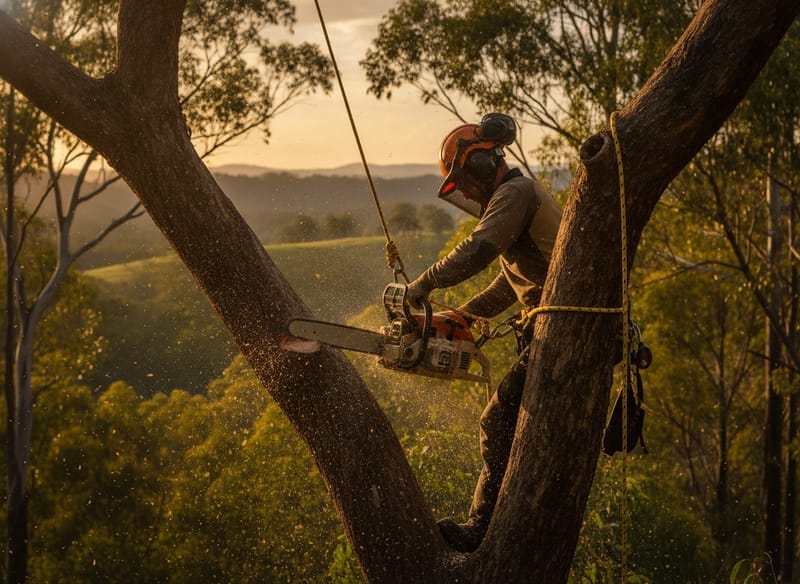
Our climbers use specialised hand tools and saws to make clean, target-cut wounds that heal quickly.
All prunings are chipped and removed from your property.
For property owners in the steep foothills of kunanyi / Mount Wellington, professional tree pruning West Hobart is essential for maintaining a safe, healthy, and visually appealing landscape. Whether you are managing an established heritage garden or a native bush block, our team provides the specialised care your trees need to thrive in our unique cool temperate maritime climate.
Living in West Hobart means dealing with challenging terrain, shallow dolerite soils, and exposure to intense westerly and north-westerly wind fronts. When mature trees are neglected, these seasonal wind events can lead to catastrophic limb failure over homes, retaining walls, and powerlines. By investing in proactive canopy management, we help you preserve the amenity and shade of your trees while dramatically reducing structural risks.
Our climbers are highly experienced in navigating the narrow streets and limited rear-access properties common to West Hobart, Battery Point, and Mount Stuart. We combine advanced rope-access techniques with industry-leading arboricultural knowledge to deliver pruning solutions that protect your property, enhance your garden, and keep your valuable trees standing strong for generations to come.
One of the most common issues our arborists encounter across Hobart's older suburbs is the legacy of poor tree pruning. Unqualified operators and DIY attempts often default to "lopping" or "topping"—a harmful practice where branches are indiscriminately cut back to stubs. This is highly damaging to the tree, explicitly discouraged by Australian standards, and ultimately creates a much more dangerous environment for your property.
When a tree is lopped, it responds by rapidly pushing out epicormic shoots. These new branches are weakly attached to the outer layers of the bark rather than deeply anchored in the tree's structural wood. As these heavy, fast-growing limbs mature, they become highly susceptible to snapping during the strong westerly winds that regularly sweep off the mountain and through West Hobart's corridors.
Furthermore, poor pruning techniques like "lions-tailing"—stripping all internal foliage and leaving only a tuft of leaves at the ends—shift the wind load entirely to the branch tips, increasing the likelihood of whole-branch failure over expensive historic homes.
Our team exclusively uses techniques aligned with AS4373 standards. We make clean cuts at the branch collar, allowing the tree to compartmentalise the wound naturally and preventing the onset of decay. Whether we are managing a sprawling heritage oak or a towering white peppermint, proper pruning focuses on keeping the tree healthy, balanced, and structurally sound.
We strictly adhere to the Australian Standard for Pruning of Amenity Trees (AS4373) to ensure your trees remain structurally sound and healthy. Our qualified arborists utilise a range of targeted techniques to address your specific property needs without compromising tree vitality.
The selective removal of small live branches evenly throughout the canopy. This allows wind to pass safely through the tree, significantly reducing the "sail effect" during winter gales on the mountain flank, while preserving the tree's natural shape. We carefully monitor this process to ensure we never remove more than 25–30% of the live foliage in a single prune.
The careful removal of lower branches to increase vertical clearance under the canopy. This is a common requirement in West Hobart for improving pedestrian access, clearing steep driveways, enhancing street sightlines, or bringing more natural light into terraced gardens without sacrificing the tree.
The targeted shortening of branches back to a lateral branch of suitable size. Distinct from harmful lopping, this technique is used sparingly and precisely to reduce the overall height or spread of a tree that has outgrown its environment, ensuring the remaining structure can naturally support the new growth.
The systematic removal of dead, dying, diseased, or heavily damaged branches. We highly recommend deadwooding for any mature eucalypts or large exotics overhanging living areas, play spaces, or roofs. Dead timber loses its flexibility and is always the first material to fall during a Hobart storm.
Addressing specific structural issues or physical conflicts on the property. This includes safely clearing branches away from rooflines, gutters, and powerlines, or addressing co-dominant stems that pose a long-term splitting risk if left unmanaged.
Early-life shaping of young trees to establish a strong, safe structure. By encouraging a single dominant leader and well-spaced scaffold branches early on, we prevent major structural defects from developing as the tree matures into the canopy.
Delivering professional tree care in our hillside suburbs requires meticulous planning and precision execution. Our process begins with a comprehensive site assessment. One of our qualified arborists will visit your property to evaluate the tree's health, species, and structural condition. We also assess the site's access constraints and review the City of Hobart's planning overlays to ensure total compliance with local regulations.
Once we understand your goals and the tree's requirements, we provide a detailed, itemised quote outlining the exact AS4373-compliant pruning methods we recommend. If traffic management is required for narrow street access, we handle those logistics entirely.
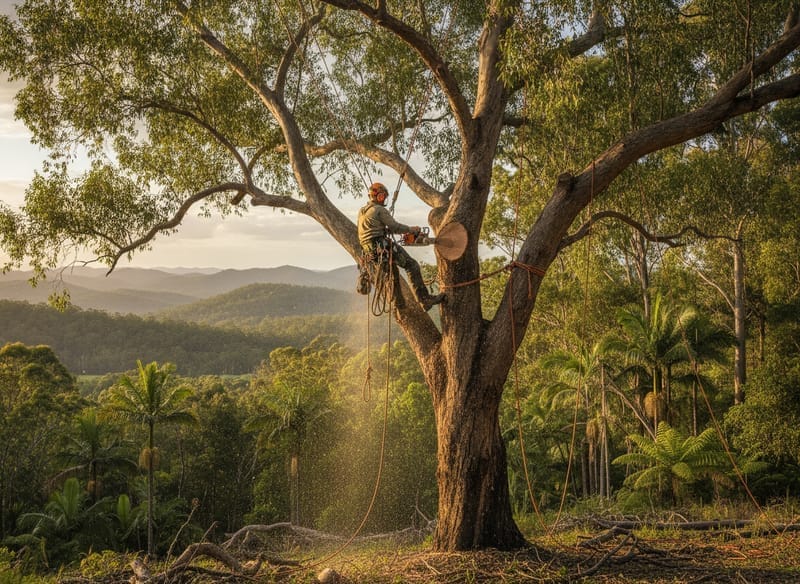
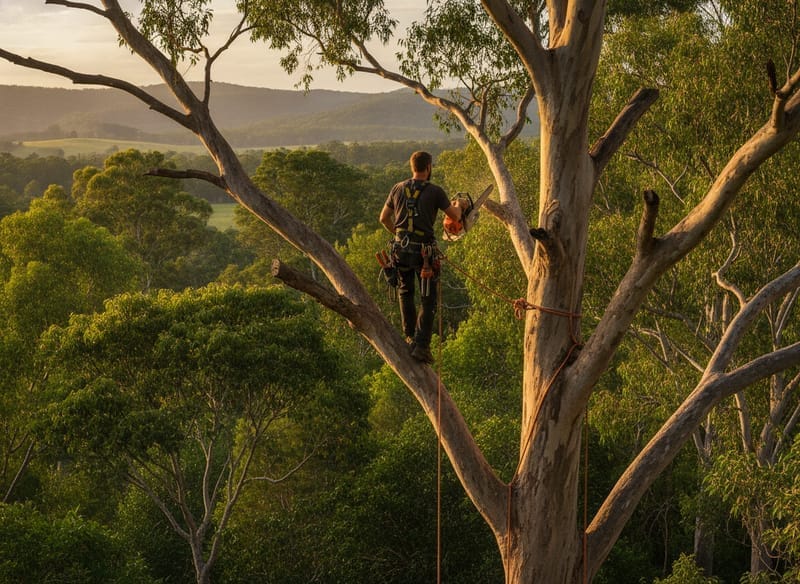
On the day of the job, our team arrives fully equipped. Because many blocks in West Hobart lack rear vehicle access, our climbers frequently utilise advanced single-rope (SRT) and double-rope (DRT) access techniques to safely navigate the canopy. Using precision top-handle chainsaws and hand saws, we carefully lower branches using rigging systems to ensure your garden beds, retaining walls, and home are completely protected from impact.
Finally, we process all cut material efficiently. Our wood chippers convert the branches into high-quality mulch, which we can either leave on-site to nourish your garden or haul away in our tipper trucks. We pride ourselves on leaving your property immaculate.
Tree work in tight residential environments carries inherent risks, which is why safety and strict compliance are at the core of everything our team does. We operate in full accordance with AS4373 (Pruning of Amenity Trees) to ensure tree health, and AS4970 (Protection of Trees on Development Sites) for construction-related canopy management.
Every climber on our team holds an AQF Level 3 in Arboriculture, ensuring they have the technical training to execute complex aerial work safely. For properties requiring formal development applications, our AQF Level 5 consulting arborists can provide the necessary documentation. We are fully insured with comprehensive Public Liability and WorkCover policies, giving you complete peace of mind.
Executing tree pruning West Hobart requires a deep understanding of both the natural environment and local council regulations. Our urban forest is an interesting mix of dry sclerophyll native foothills—featuring white peppermint (Eucalyptus pulchella), Tasmanian blue gum, and stringybark—overlaid with an extensive 1880s–1920s European heritage canopy of massive oaks, elms, planes, and cedars.
The City of Hobart protects its canopy primarily through the Tasmanian Planning Scheme - Hobart, specifically the Local Historic Heritage Code. While there is no general size trigger for tree work, many mature trees in West Hobart sit on the Significant Tree Register or within historic landscape precincts. Pruning a listed tree to improve its health or appearance is generally exempt, provided its normal growth habit is not retarded. However, heavy reduction requires careful assessment.
Additionally, the steep dolerite slopes mean the Landslip Hazard Code can apply. Our team understands these overlays intimately and ensures all pruning work remains perfectly compliant with local exemptions.
Proper post-pruning care ensures your trees recover quickly and continue to thrive. While our clean, collar-compliant cuts allow the tree to compartmentalise wounds naturally, we recommend keeping the root zone well-watered during the drier summer months. If we have left mulch on-site, applying a 50–100mm layer around the base of the tree (keeping it clear of the trunk) will help retain vital moisture in Hobart's shallow hillside soils.
We recommend having your mature trees inspected by our arborists every two to three years, or immediately following a severe winter storm or snow event on kunanyi. Regular, minor maintenance pruning is always safer, healthier, and more cost-effective than dealing with major structural failures.
Pruning costs depend on the size and location of the tree in your West Hobart garden.
We offer free on-site assessments and transparent, written quotes.
We provide expert pruning services across the local area.
Enhance the health and safety of your trees with our qualified arborists.
Get a Free Quote